[ads2]
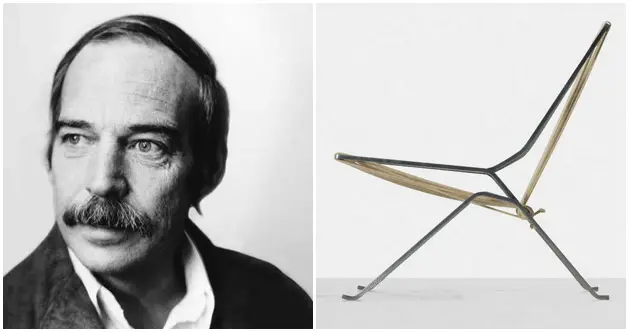
Isamu Noguchi was a furniture designer vital to the Herman Miller company in its heyday. But he was also much more.
Born in Los Angeles in 1904 to a Scottish-American mother and a Japanese father, his childhood was spent between both parents’ home countries. His father, Yone Noguchi, was a poet who consciously sought to bridge the gap between East and West. The younger Noguchi saw his sculptural practice in much the same way, trying to identify “oneness” in the world. Indeed, Isamu felt that it was the sculptor’s role to give order and meaning to space, and to make art that was at one with its surroundings.
[tabs type=”horizontal”]
[tabs_head]
[tab_title] Related Books [/tab_title]
[/tabs_head]
[tab]
[one_third]
[one_third]
 [/one_third]
[one_third_last]
 [/one_third_last]
[/tab]
[/tabs]

Isamu Noguchi 3AD lamp, Vitra
Considered a creative polymath, Noguchi also distinguished himself in the fields of set design, lighting, interiors, sculpture and landscaping. Moreover, even within these fields, his work was extremely varied, sometimes figurative, other times manifestly abstract and spanning any medium he had at his disposal. Training under the modernist sculptor Constantin Brancusi, he achieved acclaim for his work with modern dance innovators such as Martha Graham and Merce Cunningham. Characterised by beautiful, flowing organic forms, Noguchi’s design vocabulary made a considerable impact on 1950s design.
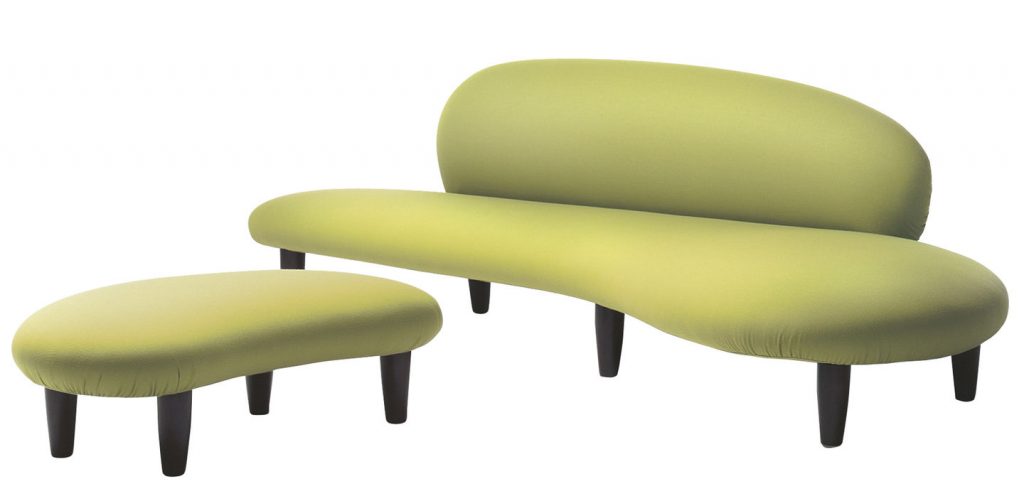
Isamu Noguchi, Freeform sofa and Ottoman
Noguchi’s Freeform Sofa is a triumph of simple, organic design. Unlike the hard edges that dominated other minimalist designs of the period, Noguchi’s work is much more sculptural, fluid and friendly. Like a pair of pebbles meeting momentarily on a sandy beach, they achieve a smoothness so inviting you want to reach out and grab them.
The sofa and its accompanying Ottoman were first introduced in 1950, and only ever in limited edition. As a result, they tend to reach very high prices at auction. However, Vitra Design Museum has been reproducing the iconic set since 2002, making this lovely design once again available to a contemporary audience.
[ads1]
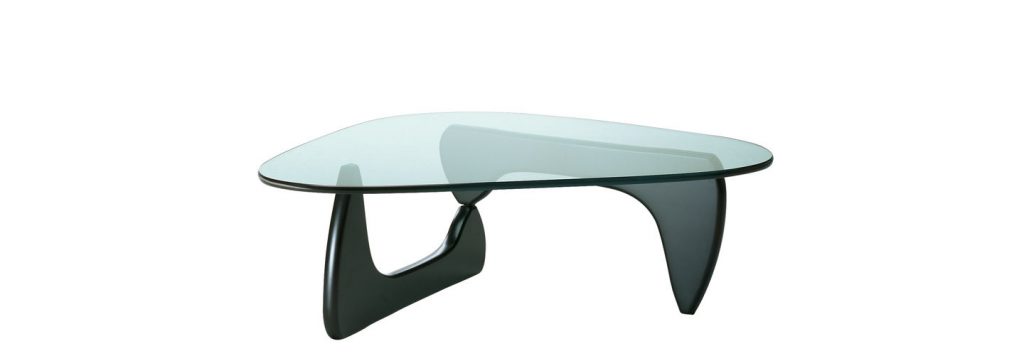
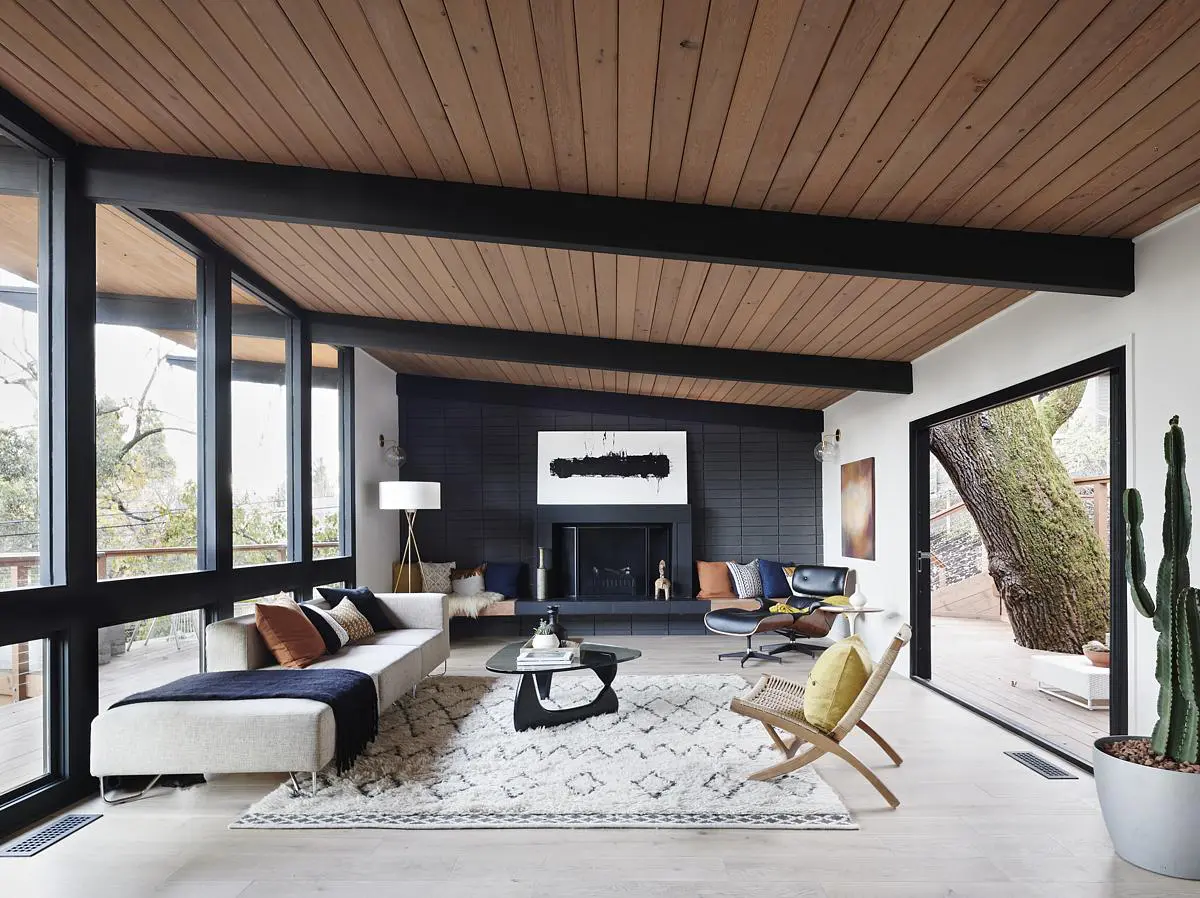
Noguchi built the IN-50 coffee table in 1948 for the US furniture manufacturer Herman Miller. It is perhaps the piece he is best remembered for. But for a nine-year break between 1974 and 1983, it has been in production ever since. A conspicuously soft and simple design, its glass top is reminiscent of the Space Age style that was all the rage later in the period. What sets Noguchi’s table apart from Space Age is its peculiar asymmetrical wood supporting legs, a nod to Noguchi’s Japanese education. Meanwhile, in their almost amoeba-like shape they point to the organic forms which made all Noguchi’s designs stand out.
ALSO READ: George Nelson, the Designer of the Mid-Century Era
Do you live in a mid-century or modernist-inspired contemporary house and want to be featured on MidCenturyHome? Contact us with some photos and a short description of your house at: info@midcenturyhome.com