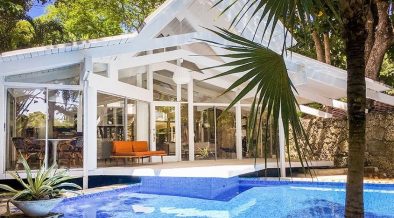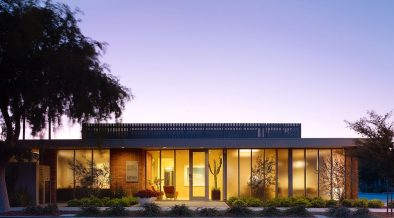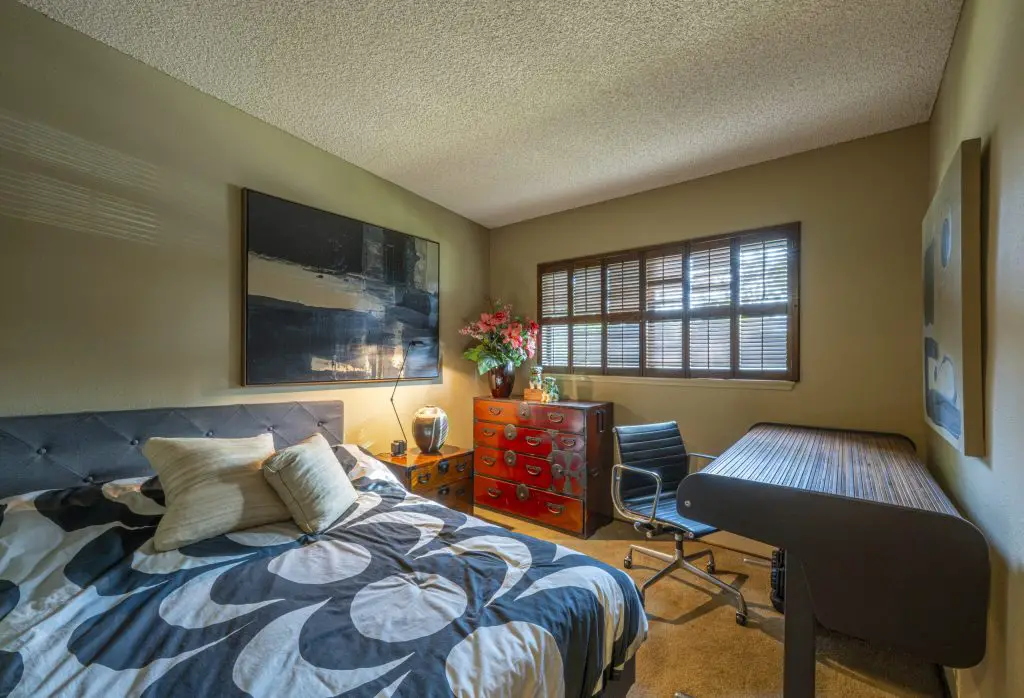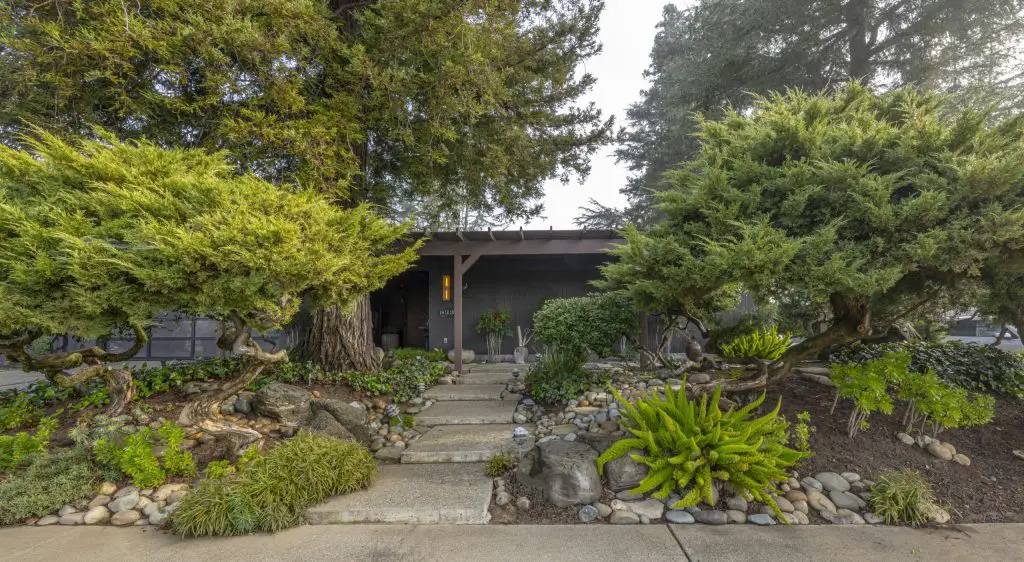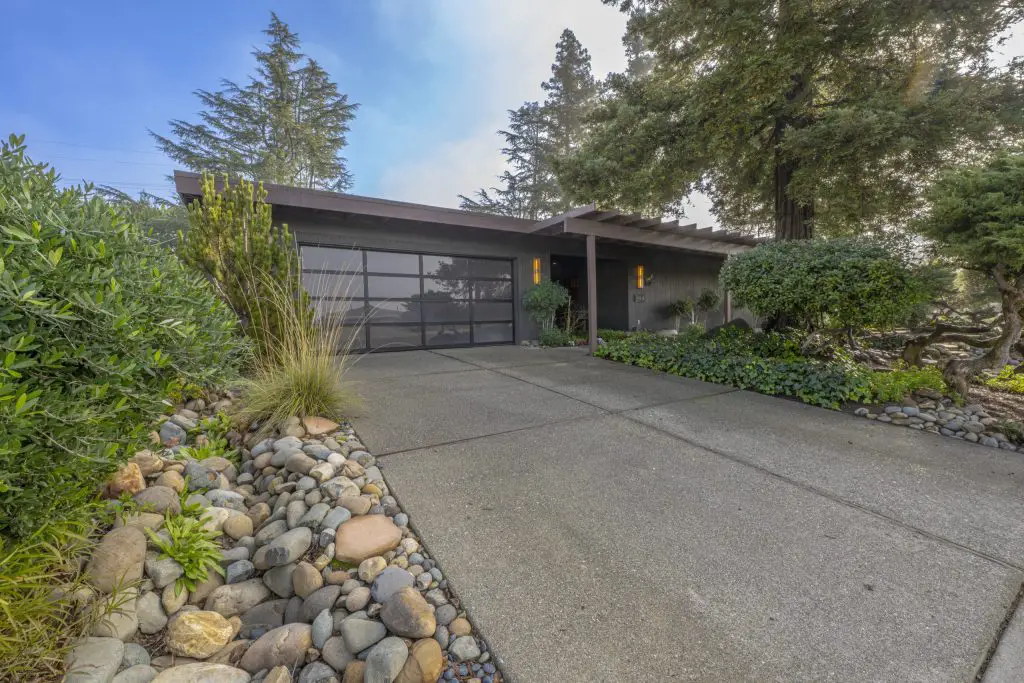
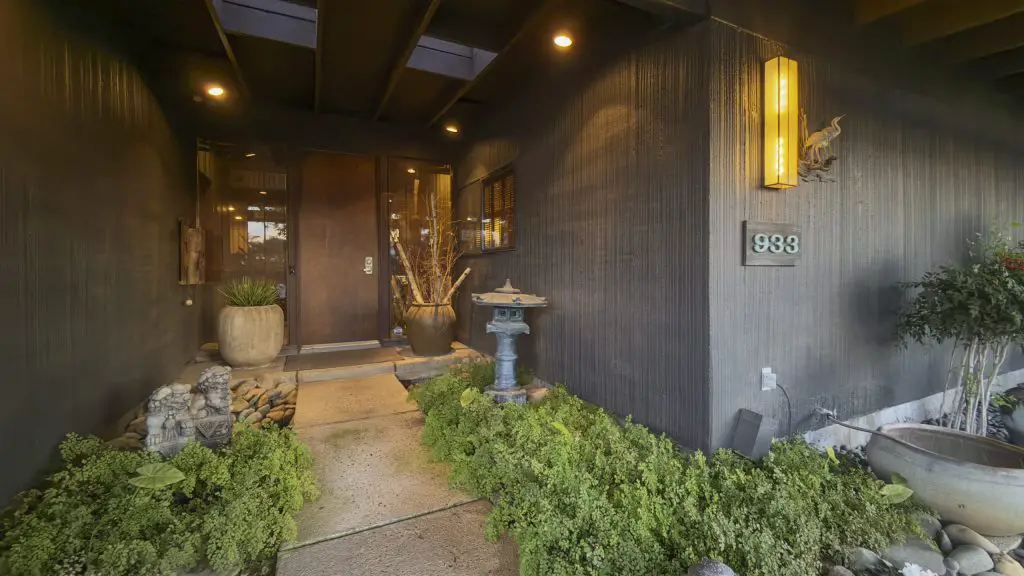

This house is currently for sale, check the listing for all the details. In Woodland, California, this 1977 Streng Bros. home offers a rare chance to inhabit a fully articulated vision of Northern California modernism. Designed by Carter Sparks for Streng Bros. and custom shaped by interior designer Larry C. Fernandez, the house has been preserved with care, updated with restraint, and held within the same family for nearly five decades. Fernandez was not only a professional designer, he was also the current owner John Dark’s uncle, and his imprint is both personal and architectural.
Streng Bros., founded by Jim and Bill Streng, helped define a distinctly regional expression of mid-century living. Influenced by Eichler yet rooted in the Sacramento Valley, their homes embraced atriums, post and beam structures, and long walls of glass that dissolved the boundary between indoors and out. They were designed as practical modern dwellings, climate responsive and open, built for everyday life.
Dark grew up in a Streng home and remembers the process clearly. “We already knew we loved the Streng way of living,” he says, recalling earlier meetings with the Streng brothers around the drafting table. When the family planned the Woodland house, they returned with experience and intention. “The indoor-outdoor character is what sold us the first time, the covered atrium, the walls of glass, an open floor plan that still gives you privacy. But this house took all of that and elevated it. My mother never wanted to live anywhere else.”
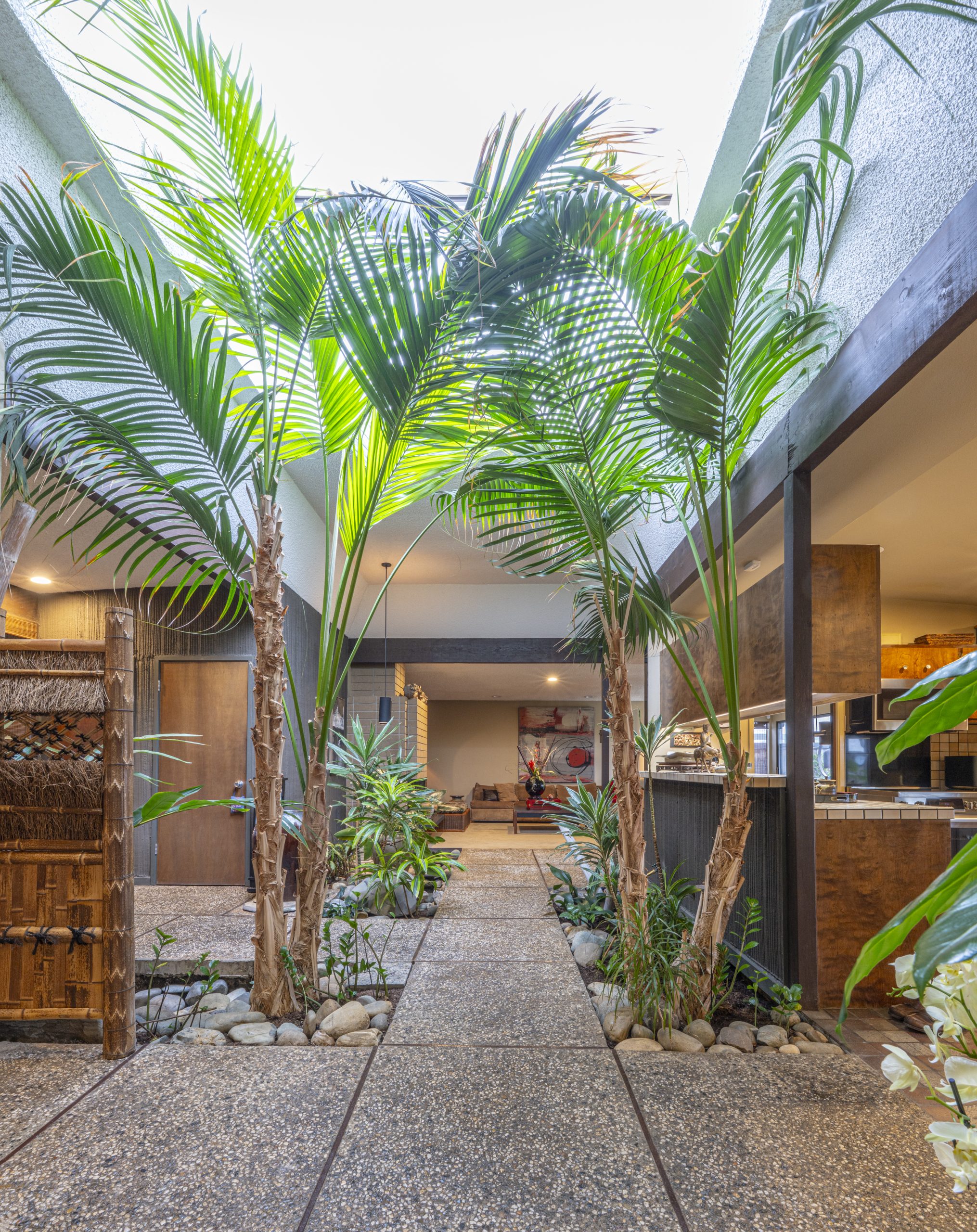
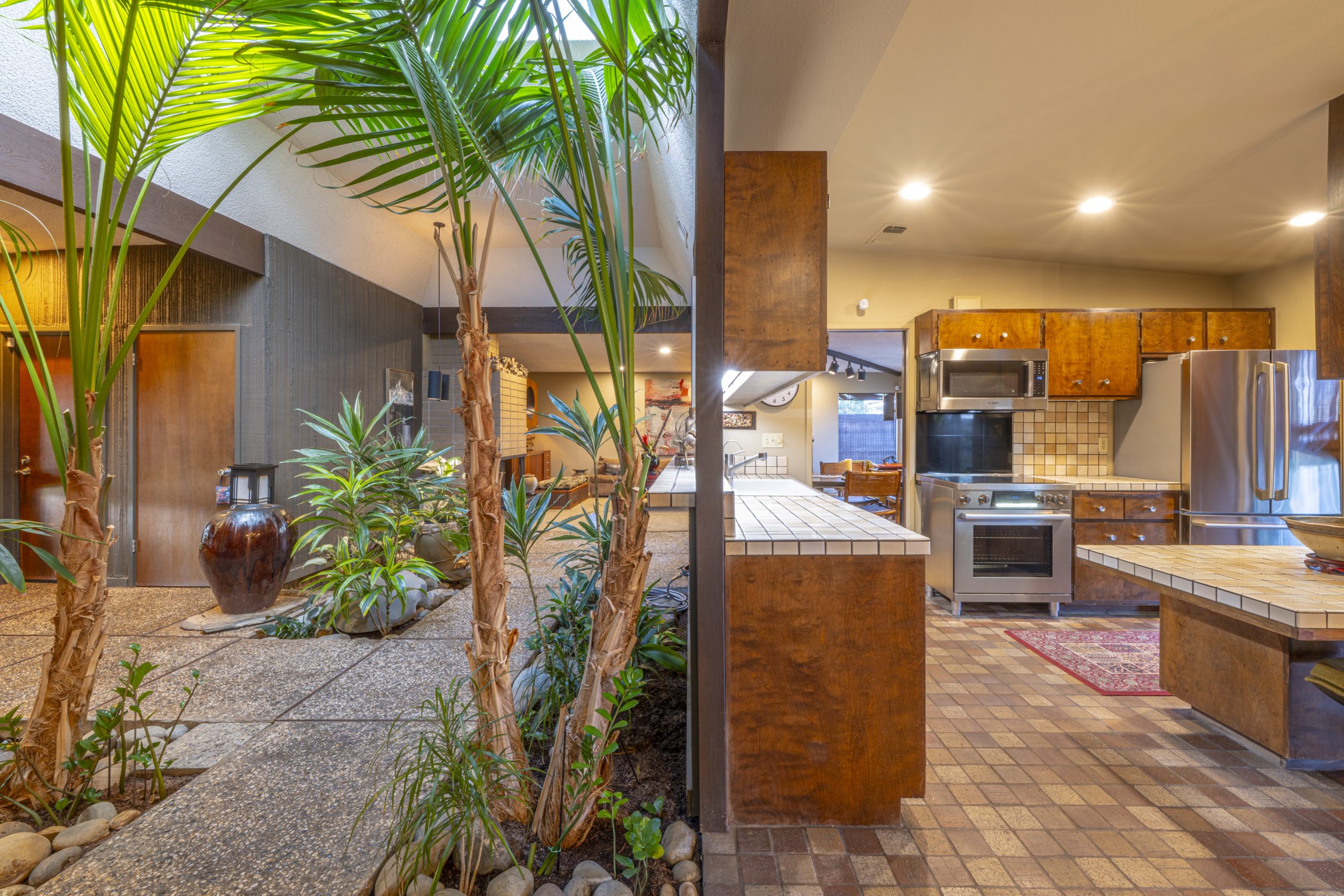
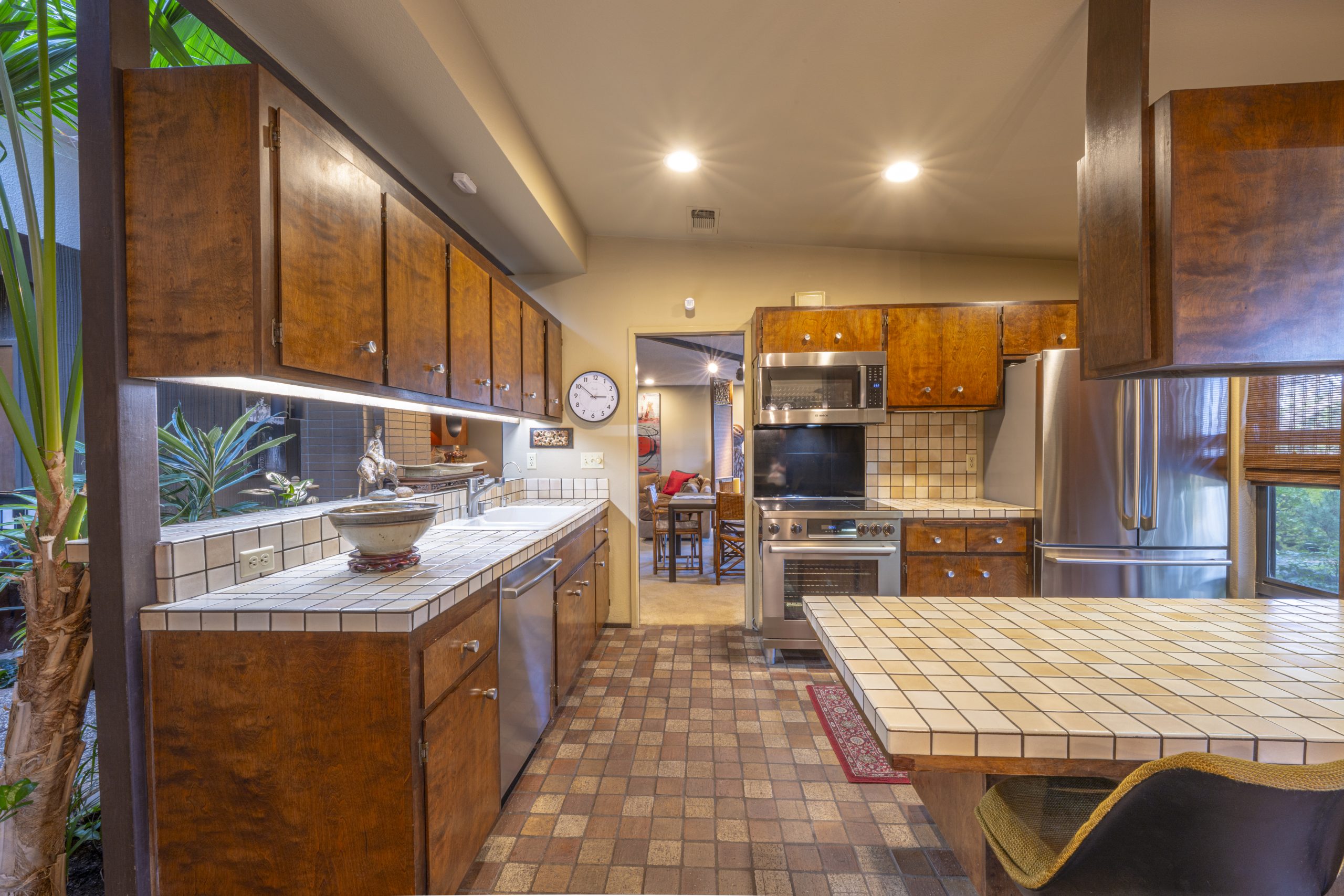
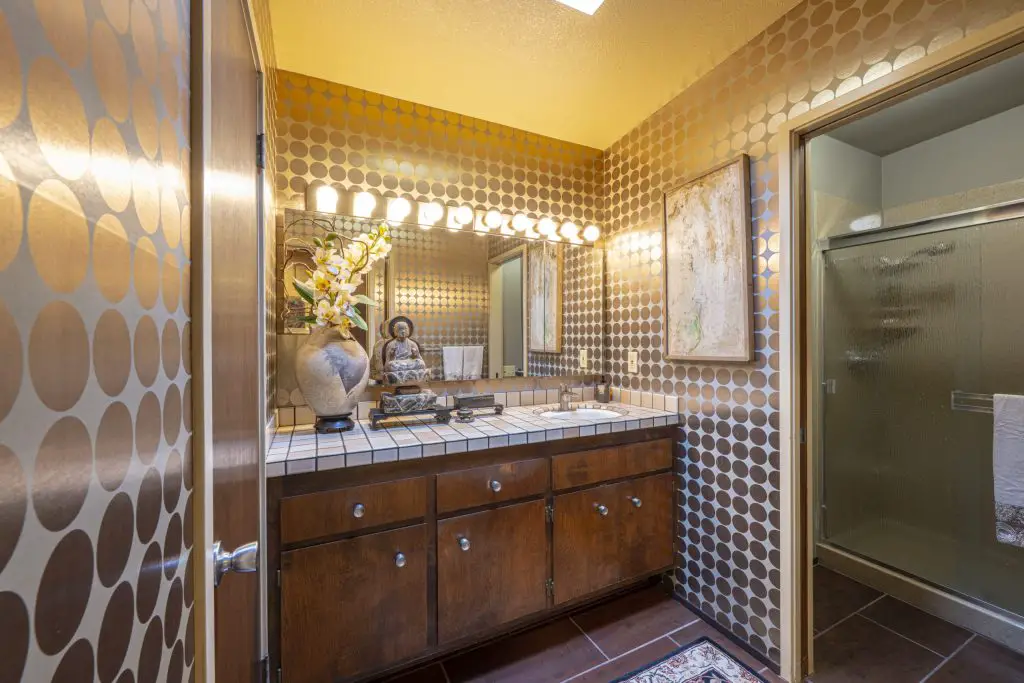
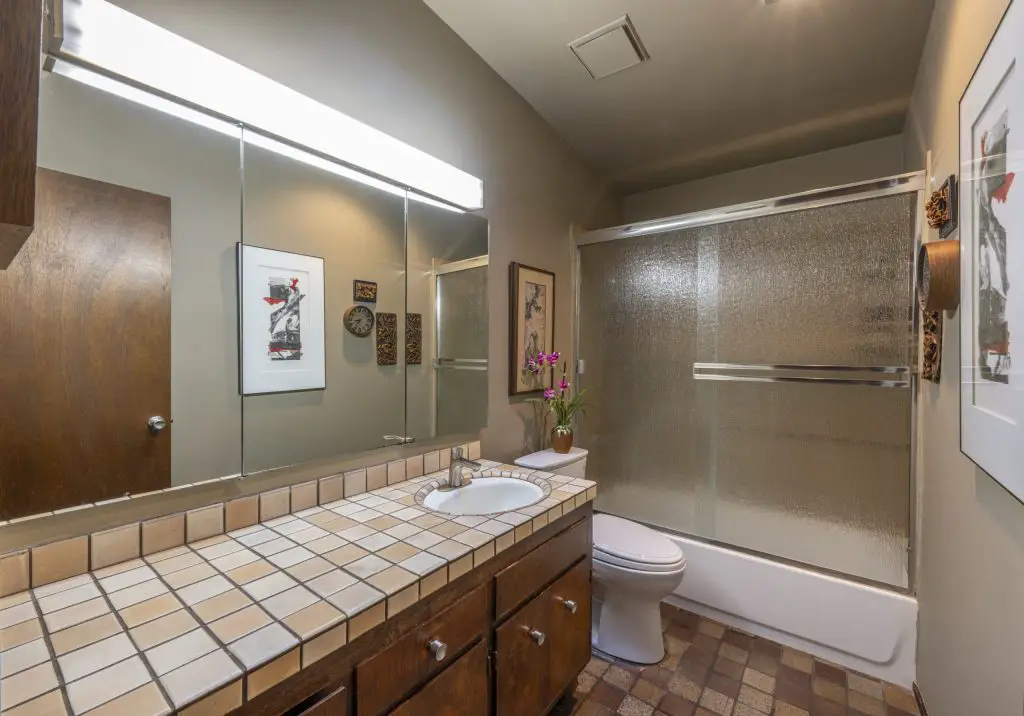
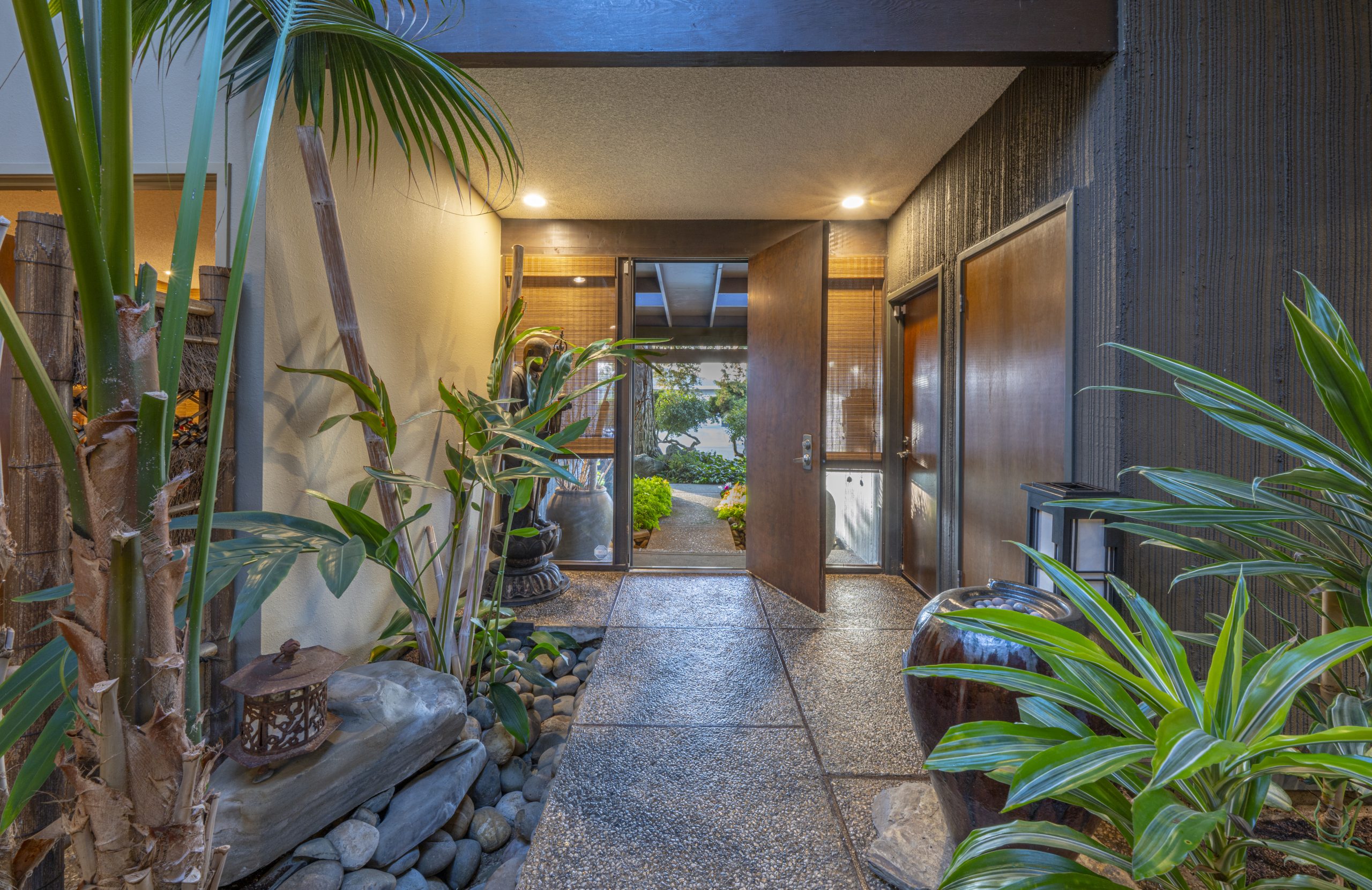
The starting point was the classic atrium model, one of Streng’s most celebrated layouts. Here, additional windows were introduced to soften the corners, and a floor to ceiling glazed entry created a true moment of arrival. Finishes moved beyond standard specification. Ceramic tile counters replaced laminate. Japanese textured floor tiles were selected to match the exposed aggregate of the atrium so that interior and exterior read as one continuous surface.


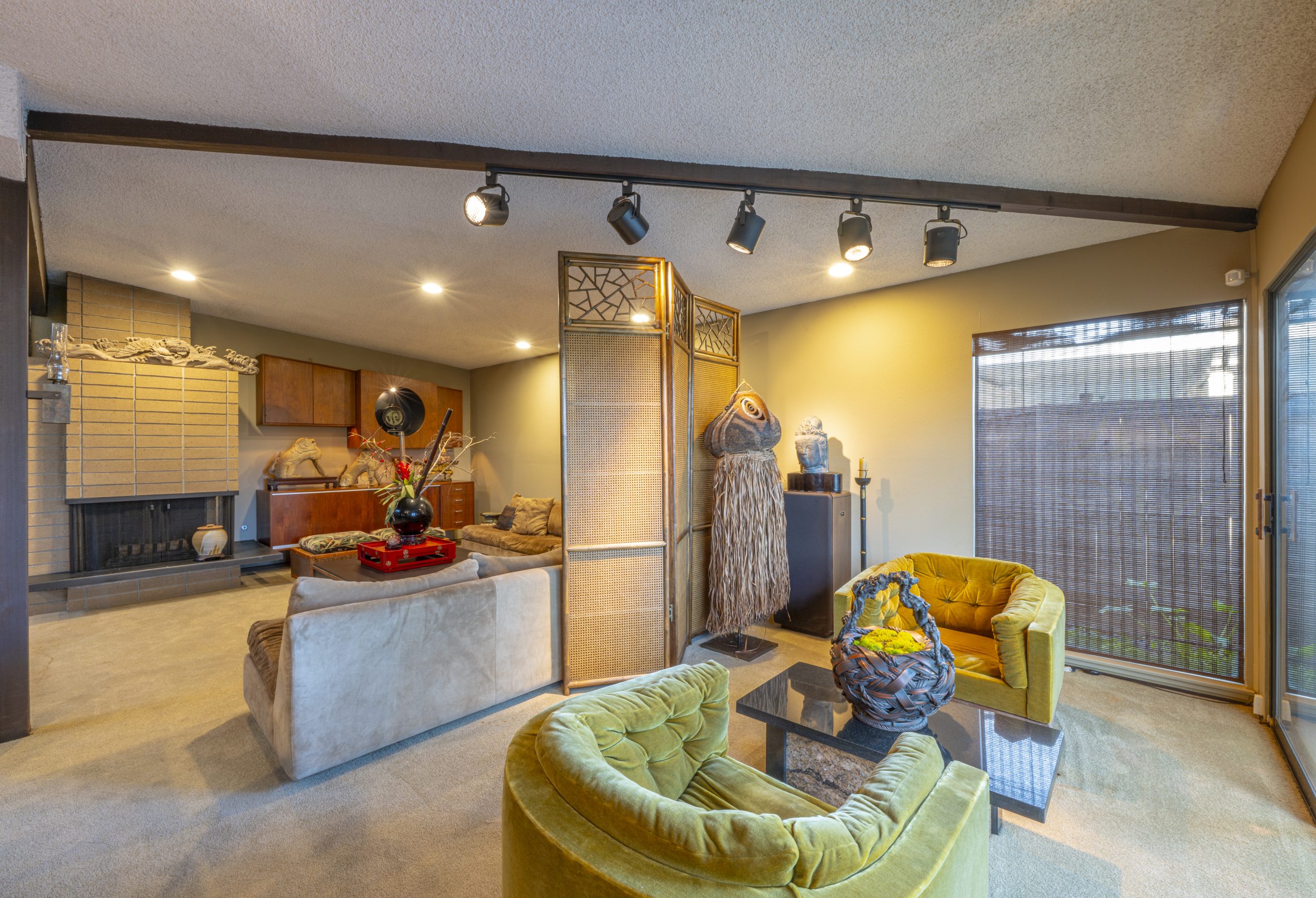
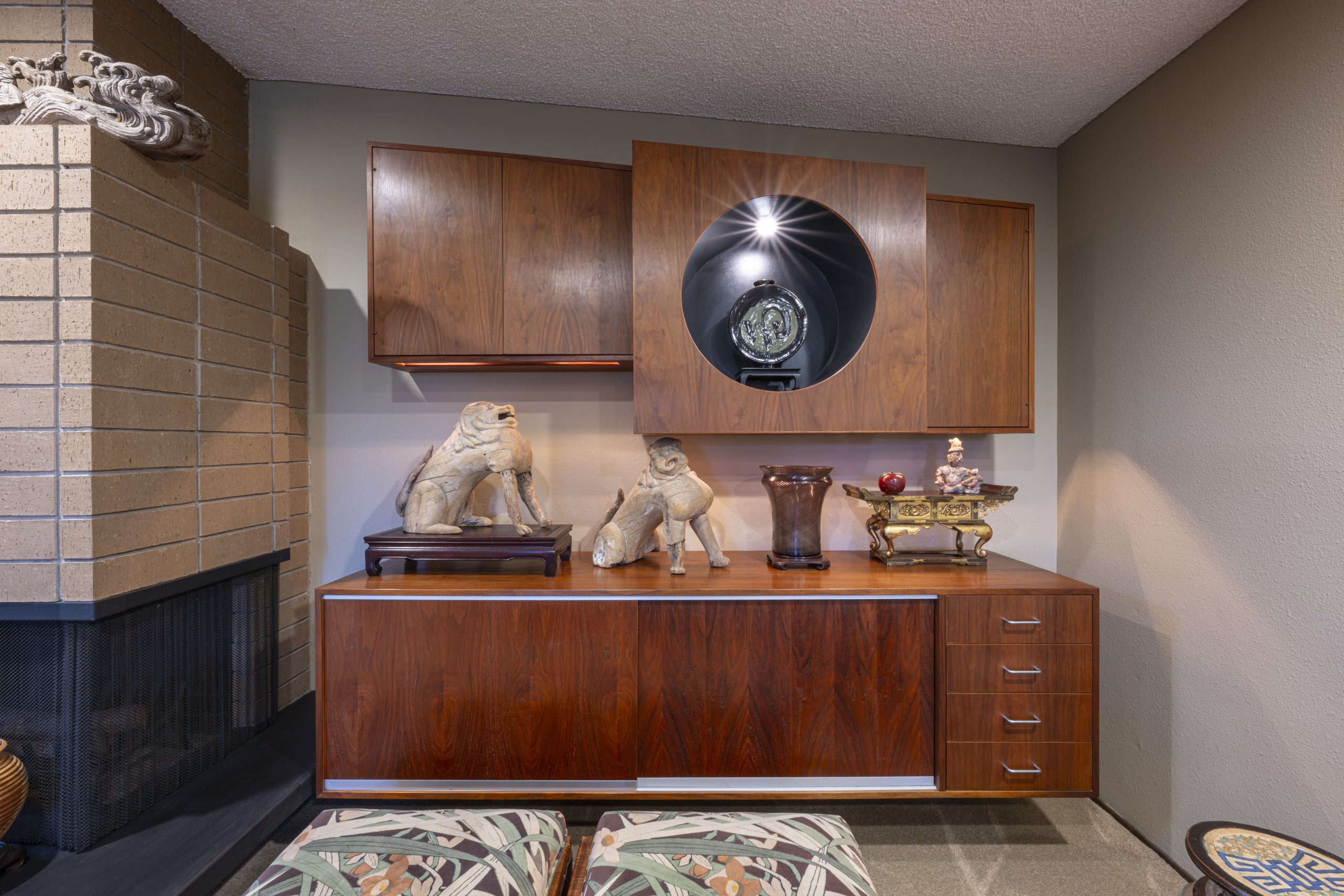
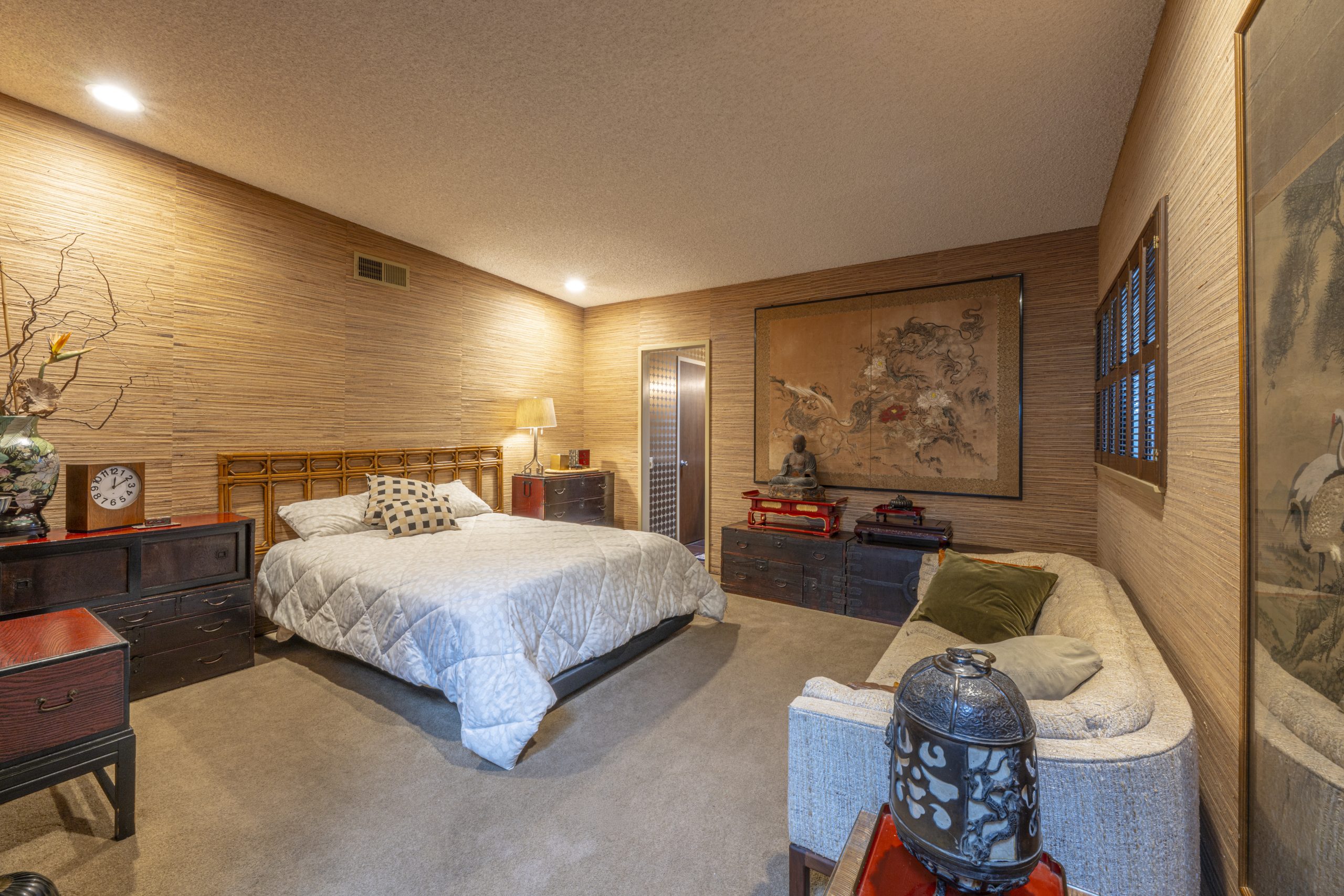
Fernandez described his approach as “comfortable drama and illusion,” a phrase Dark repeats with affection. His uncle’s sensibility combined modern architecture with antique Asian art and natural elements, deeply influenced by Japanese garden design. “His specialty was modern environments filled with antique Asian art and natural elements,” Dark explains.
The designer’s signature gesture was the dry creek. In this house, it begins at the enclosed entry, runs alongside the exposed aggregate walkways of the atrium, continues into the backyard, and disappears behind a berm. “You always feel the creek keeps going, out into the landscape beyond,” Dark says. Fernandez would even hide a small bubbling fountain out of sight so “you’d swear the creek actually had water.”
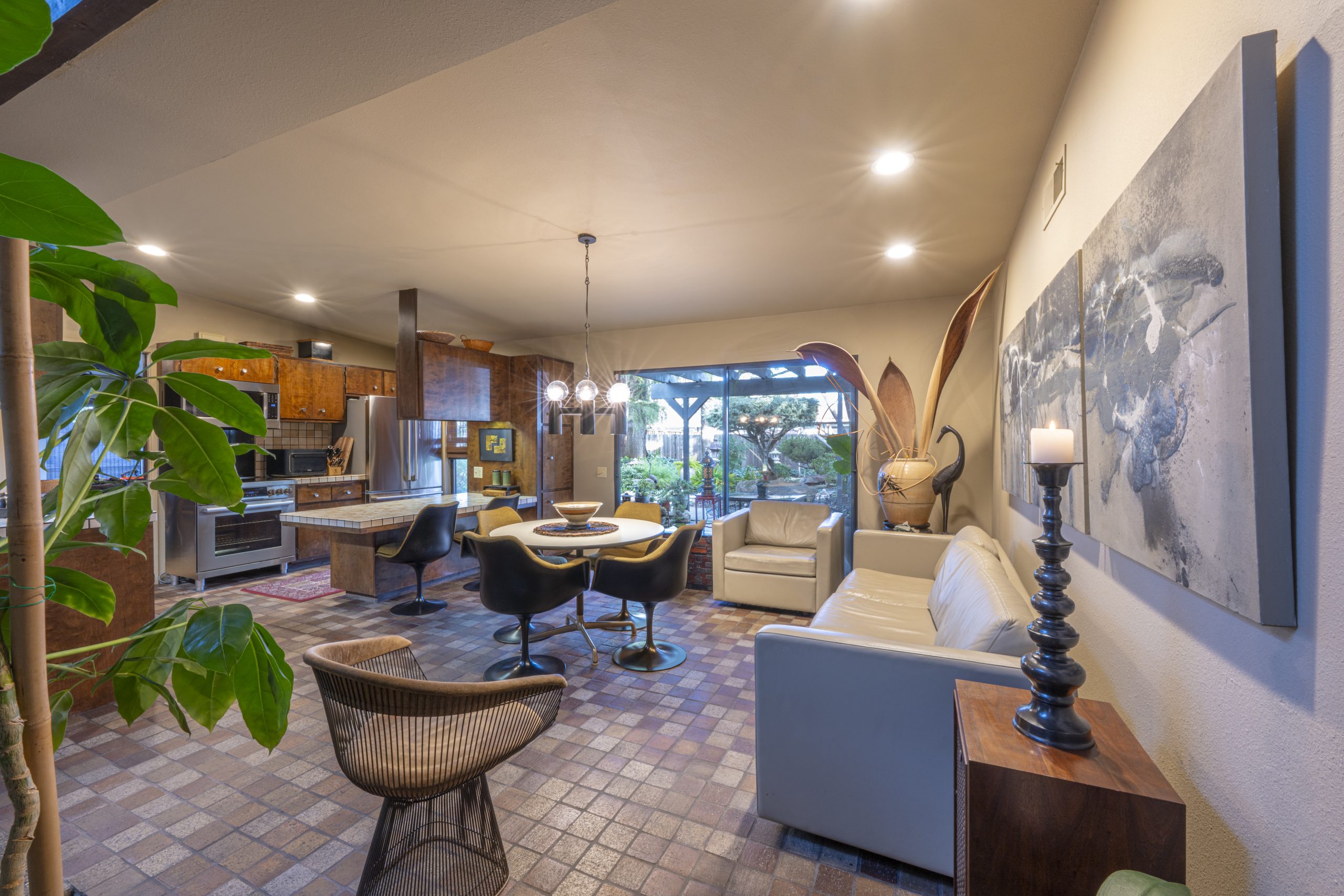
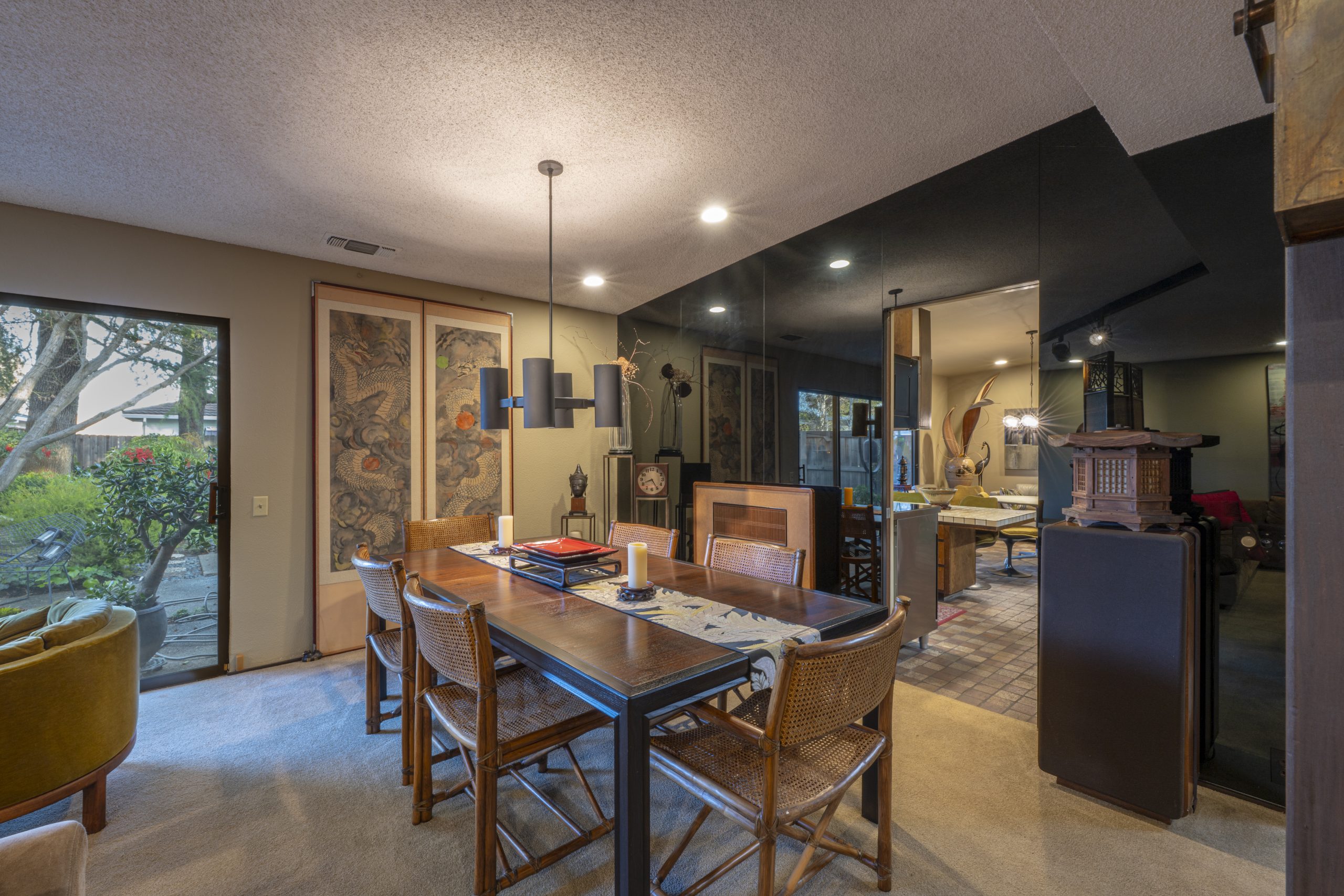
Inside, a black glass wall in the dining area remains one of his boldest moves. “It makes the dining space feel intimate and theatrical even though there’s no partition on the other side,” Dark notes. With candles lit, the reflective surface creates depth and atmosphere within the open plan.
One of the most meaningful architectural changes was the relocation of the kitchen. In the original Streng plan it was tucked into a corner. Here it anchors the center of the home, with the backs of cabinets forming a subtle screen to the atrium. It became what Dark describes as his mother’s “command center,” a place where she could cook, grade papers, and stay connected to the private wing and living areas at once.
Material discipline ties everything together. Warm walnut slab cabinetry continues through kitchen and baths. Beige tile repeats across counters. Exposed redwood beams in their original Mission Brown stain provide structure and warmth. “It all works together as a single composition, and that’s entirely Larry’s discipline,” Dark says.
Outside, more than twelve hundred square feet of exposed aggregate patio extend beneath pergolas that filter the Central Valley sun. The redwoods and cedars are now nearly fifty years mature. In winter, with soft misty light washing through the east facing wall of glass, Dark says the house feels “like a Japanese tea house,” warm inside and open to the garden beyond.
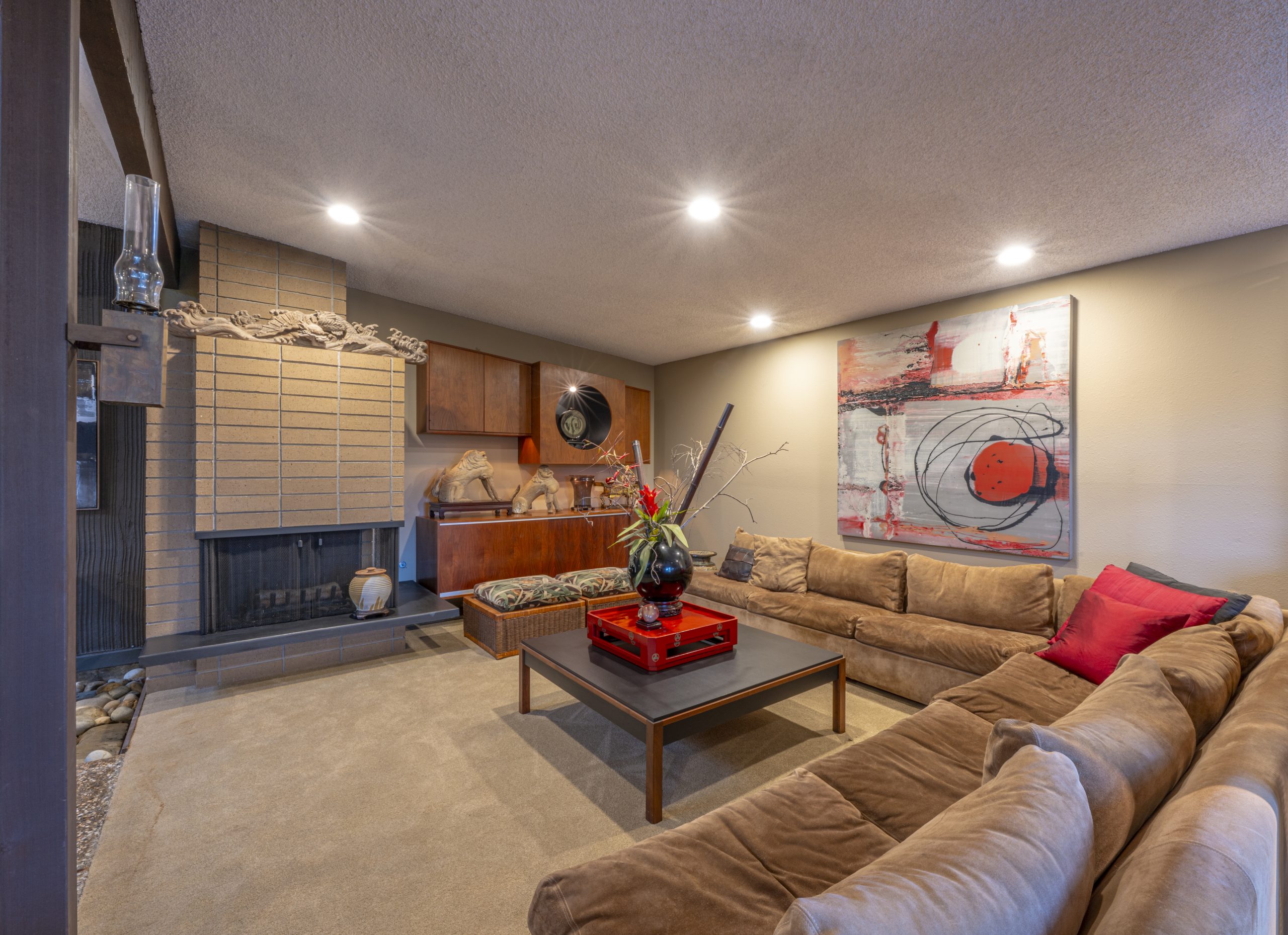
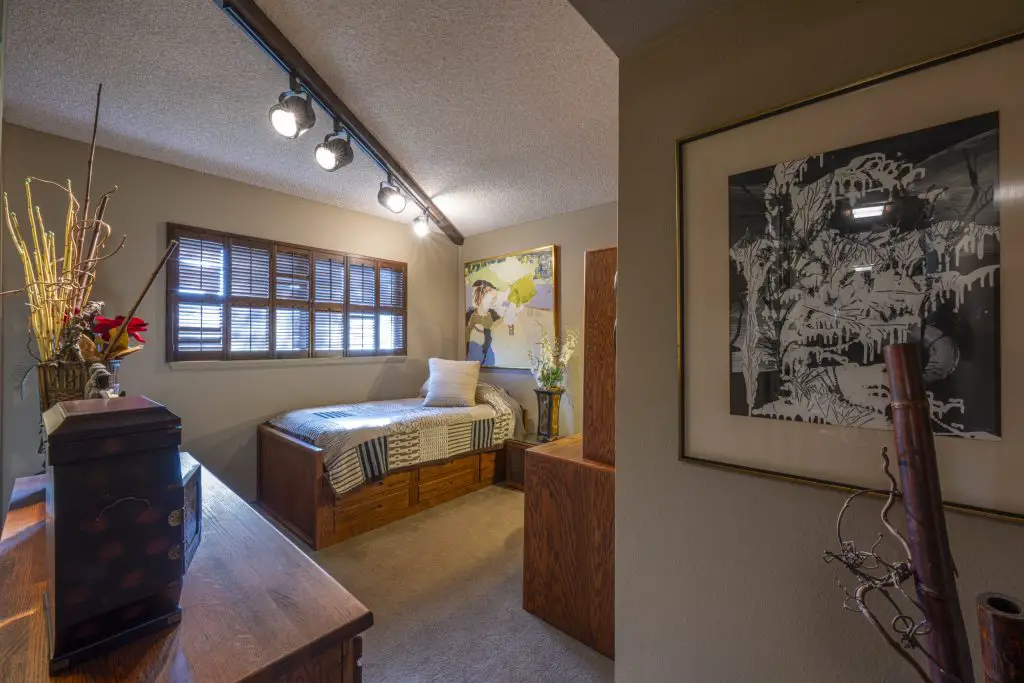
The home spans 2,190 square feet with four bedrooms and two baths. It includes an open living and dining area with an original Streng fireplace, a family room with integrated dining, and a two-car garage. Solar panels and a heat pump system have been integrated discreetly. Reflecting on the updates, Dark is clear: “It was never a question of reinventing. It was a question of honoring what was there.” This house is currently for sale, check the listing for all the details.