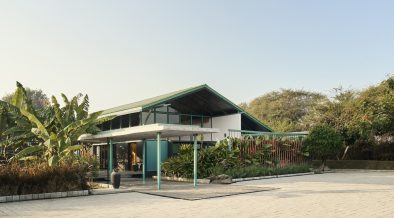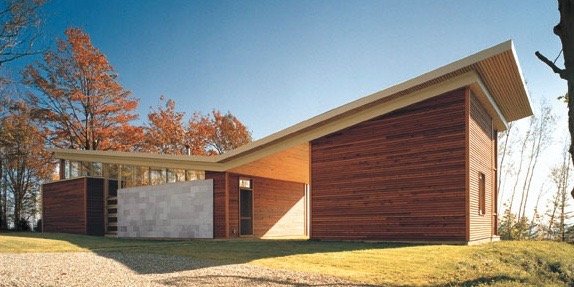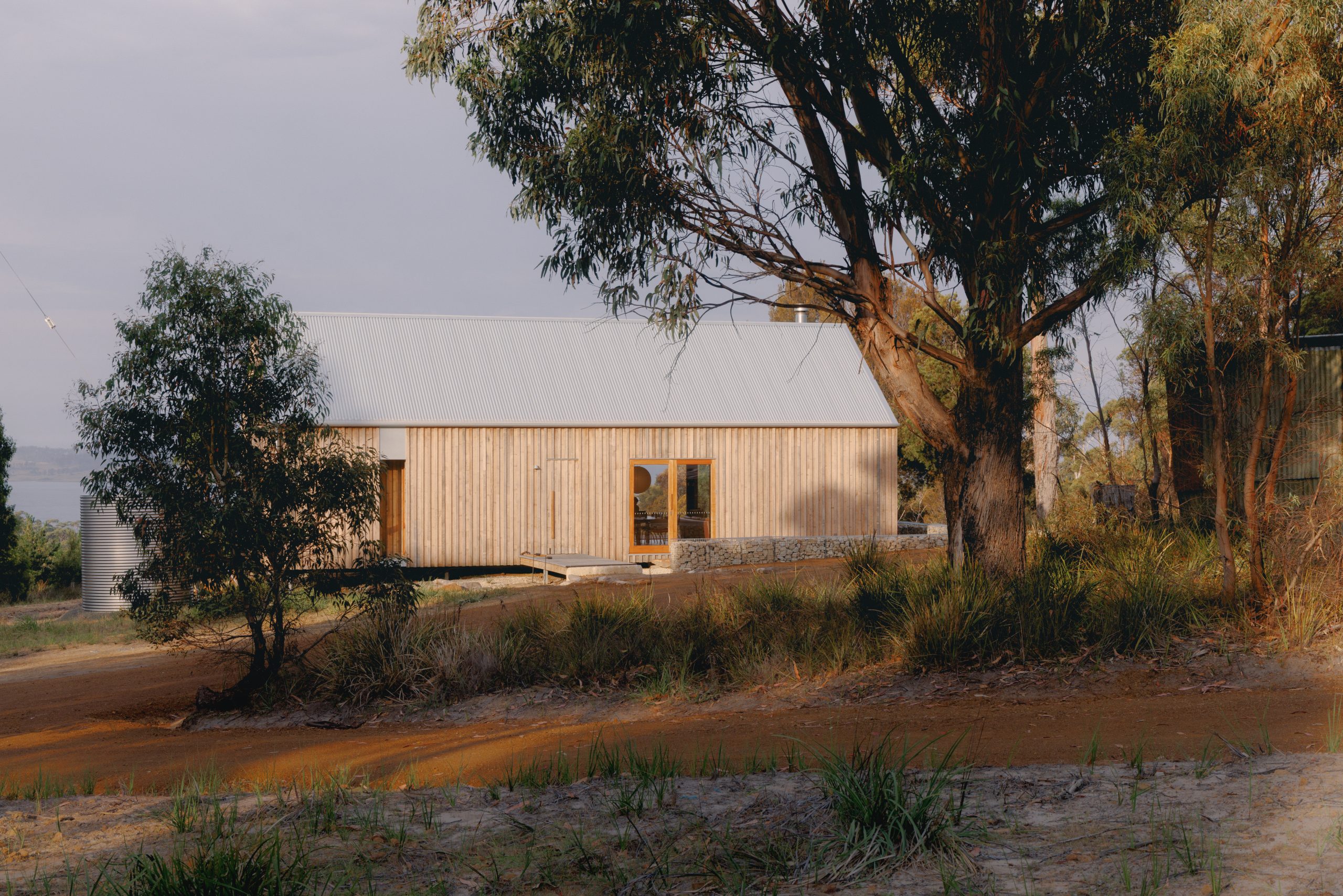

On Palawa Country, Australia, Scale Architecture has built a small timber pavilion resting in the bush. Just 100 square metres in footprint, the house was conceived as a retreat for two people, with the flexibility to welcome family when needed. Compact in plan, it feels expansive in experience, shaped as much by the landscape as by its walls.
The site tells a layered story. Once cleared for agriculture, it had been stripped back and overtaken by invasive weeds. Today it is part of a slow ecological repair. Native trees and groundcover are being reintroduced, and around the house a marsupial lawn is being seeded to restore the disturbed soil. The building sits within this process of regeneration, not as a finished object but as a participant in a longer cycle of growth.
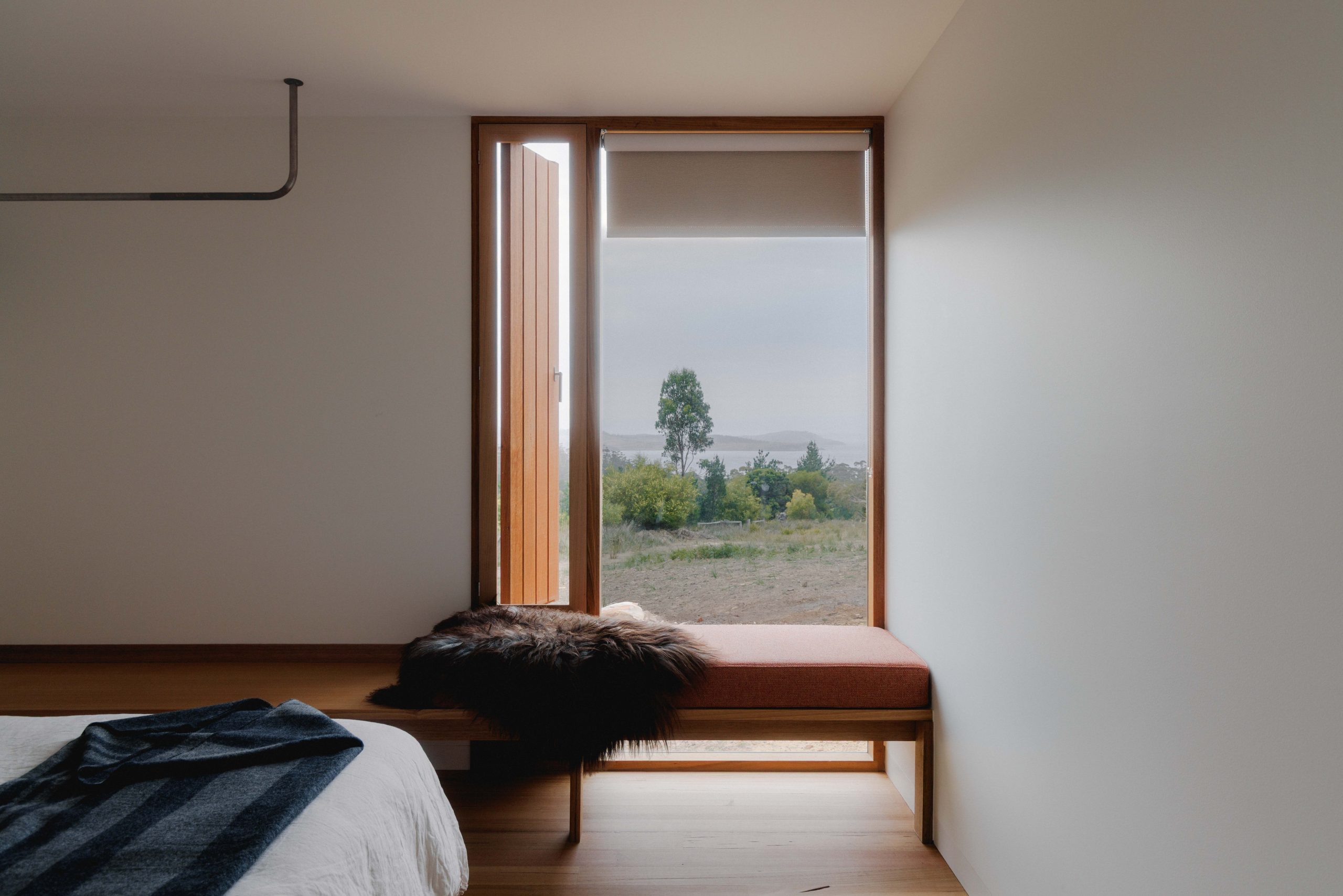
Elevated on its bush site, the pavilion looks north across Spring Beach. Its form is simple and deliberate, framing distant views while opening gently to the landscape. The plan is organised through orientation and volume rather than corridors or walls. Bedrooms line the northern edge, capturing long views and soft light. Communal spaces occupy the eastern half, surveying the site and connecting directly to the deck and surrounding bush.
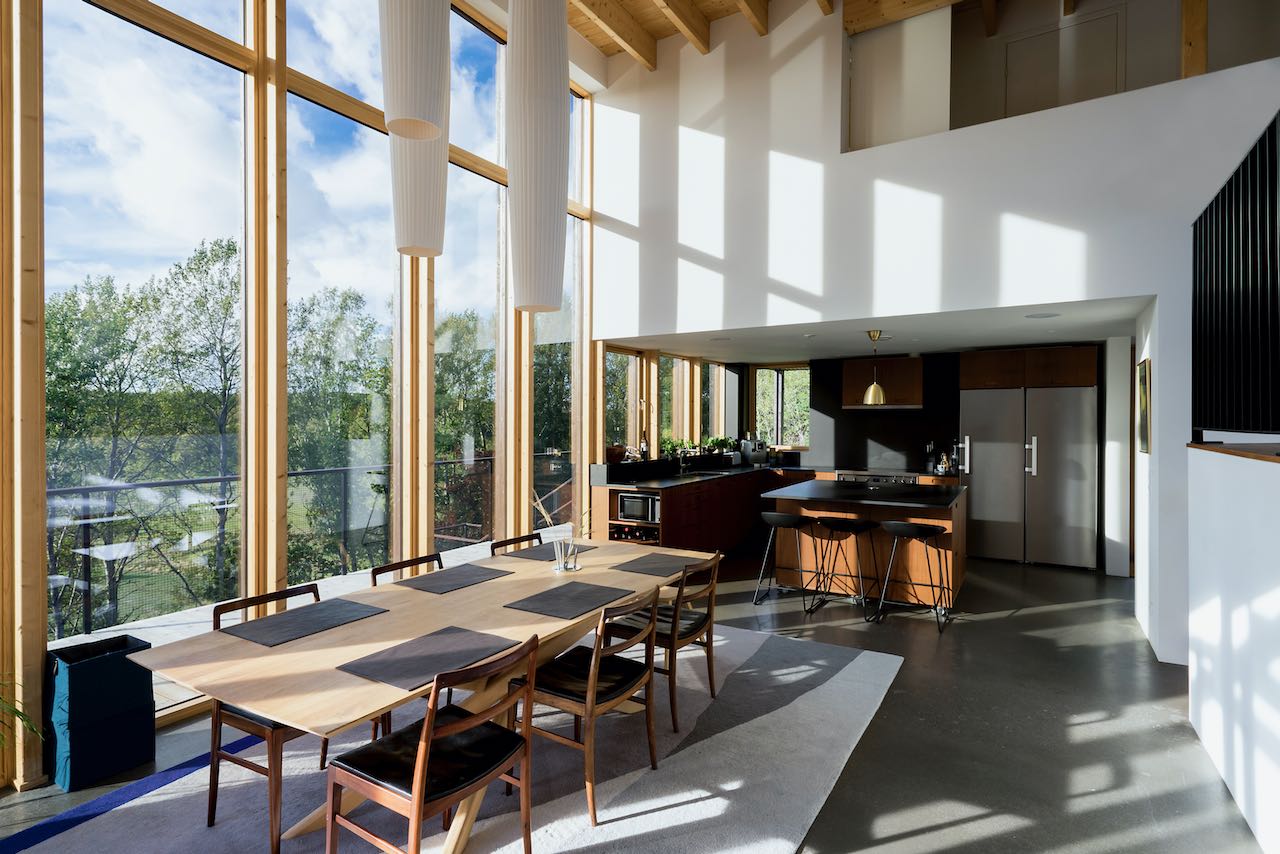
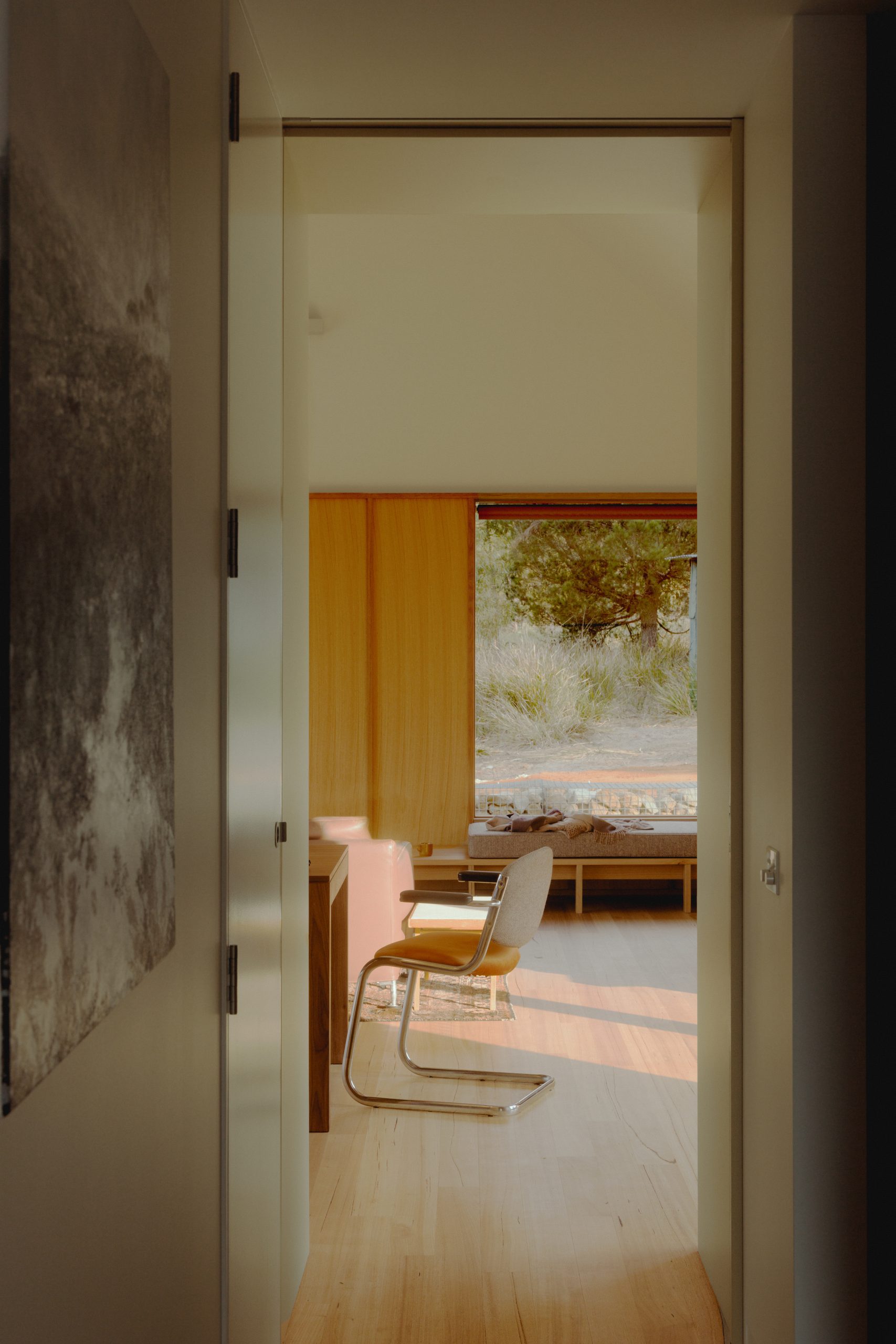
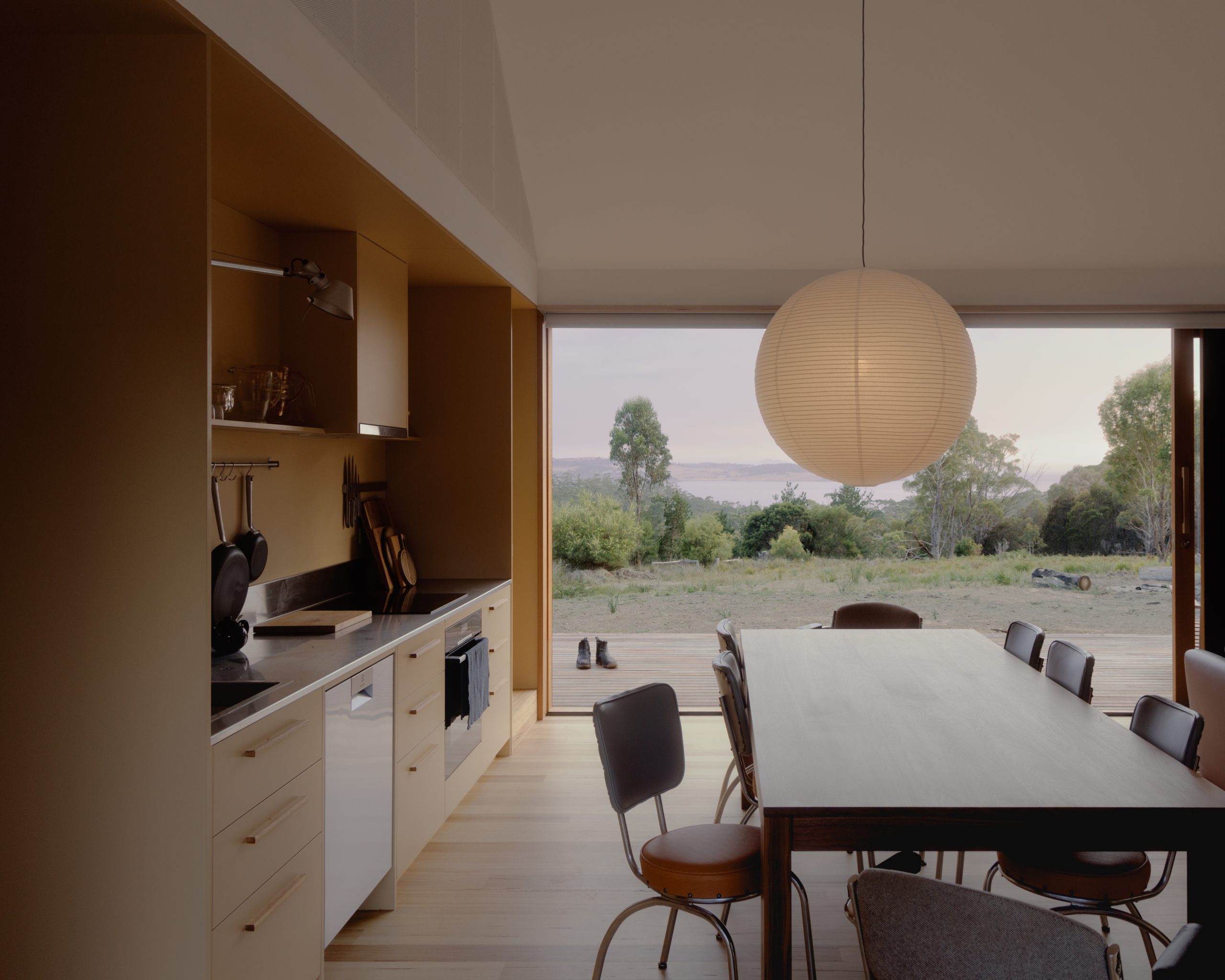
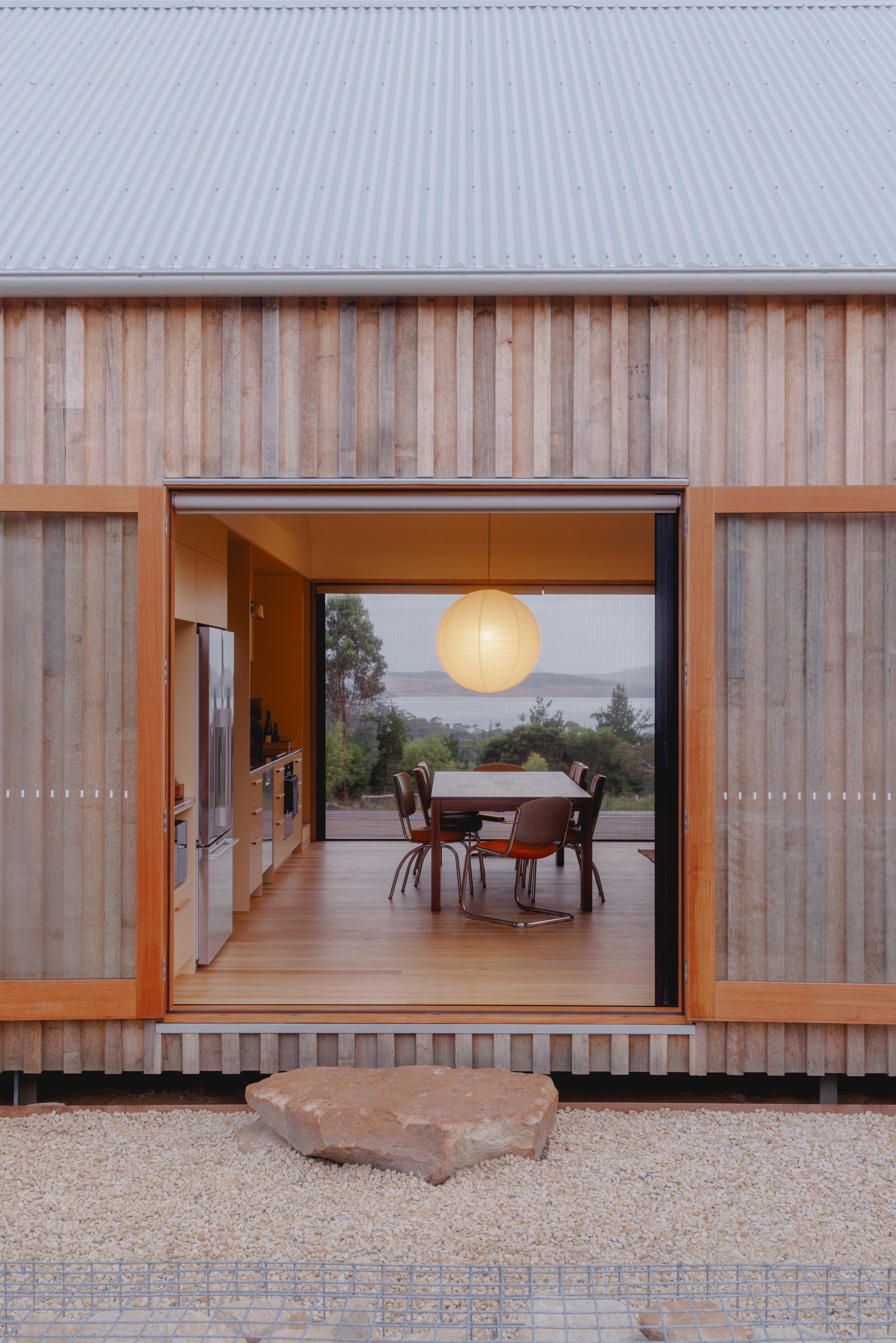
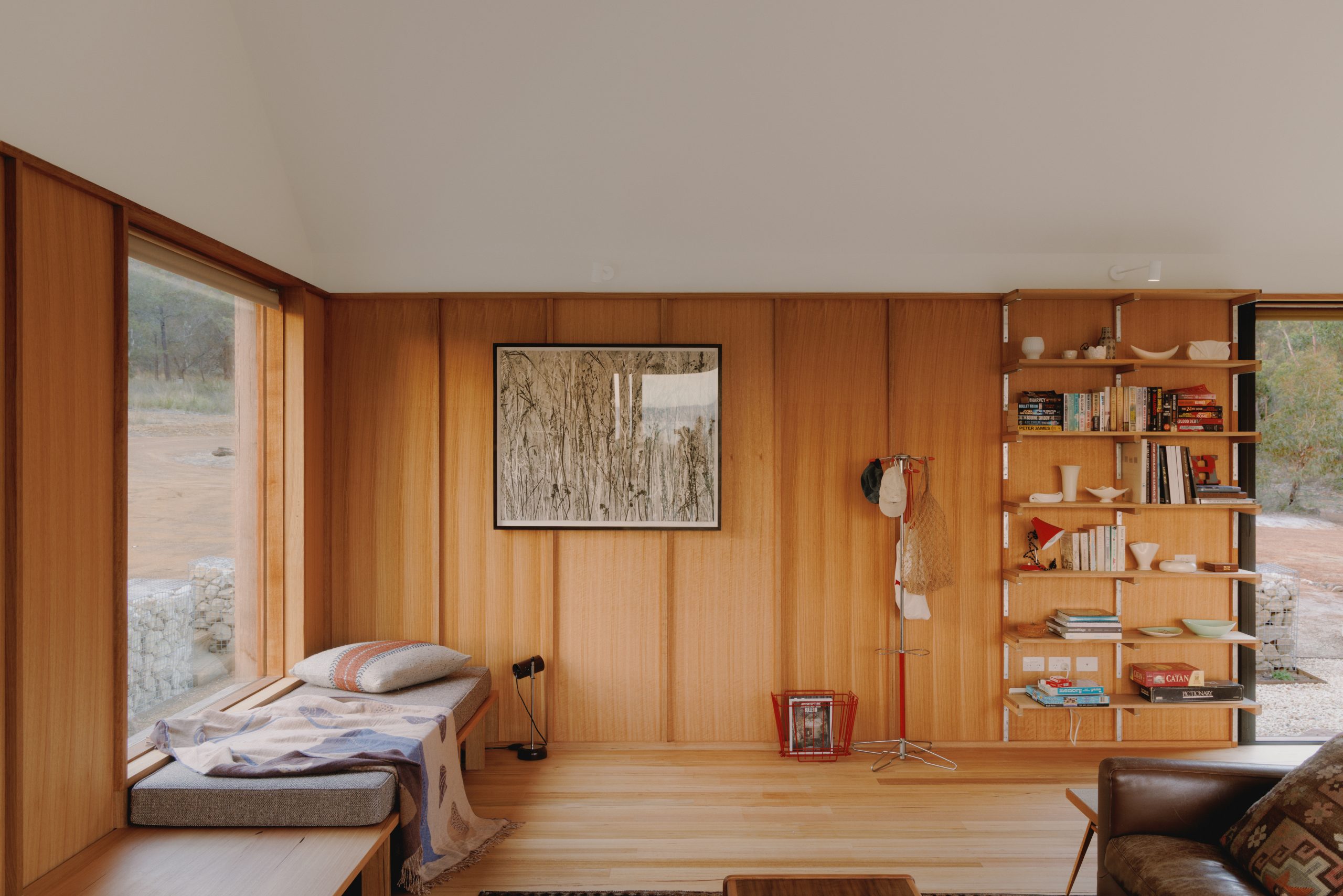
Large Tasmanian Oak doors slide open on both sides of the living space, dissolving the boundary between inside and out. The deck becomes an outdoor room, extending daily life into the landscape. Nearby, a semi private area shelters an outdoor bath, offering a place of retreat within the retreat. Here, exposure and refuge are held in balance. The house protects from the often harsh coastal elements, yet remains deeply open to sky, wind and shifting light.

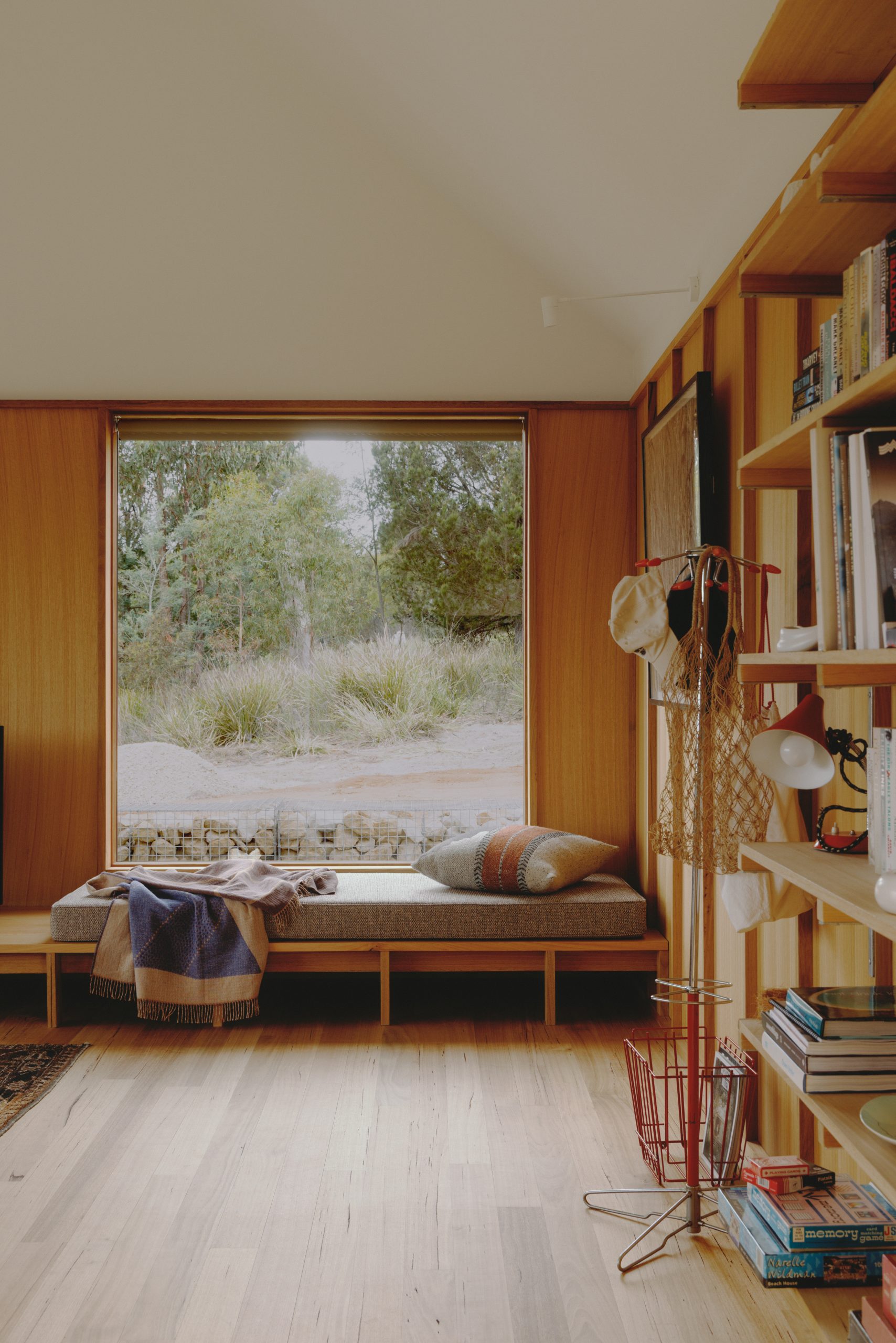
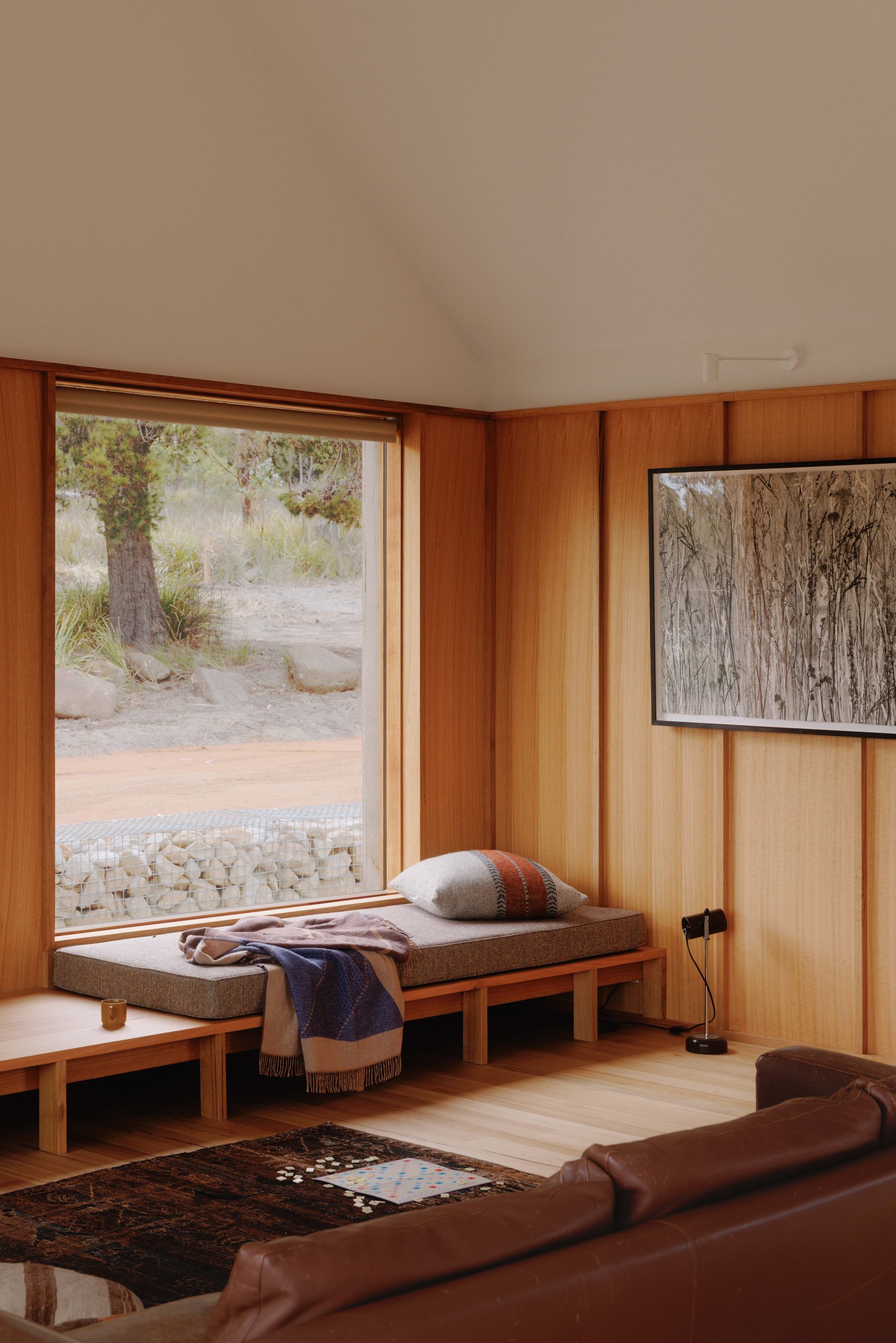
Material choices are rooted in place. Local timbers are used for structure, cladding, lining and furniture. Their tones echo the trunks and branches beyond the glazing. The intention is not for the house to stand out, but to weather and soften over time, becoming more recessive as the surrounding bush regenerates. Craft is central to this approach. Built by Axis Homes with contributions from craftspeople across Tasmania, each element carries a sense of care, from joinery to smaller bespoke details.
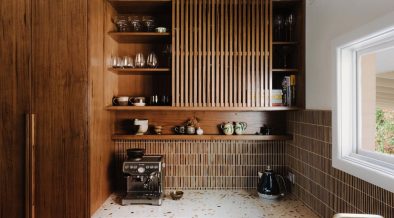
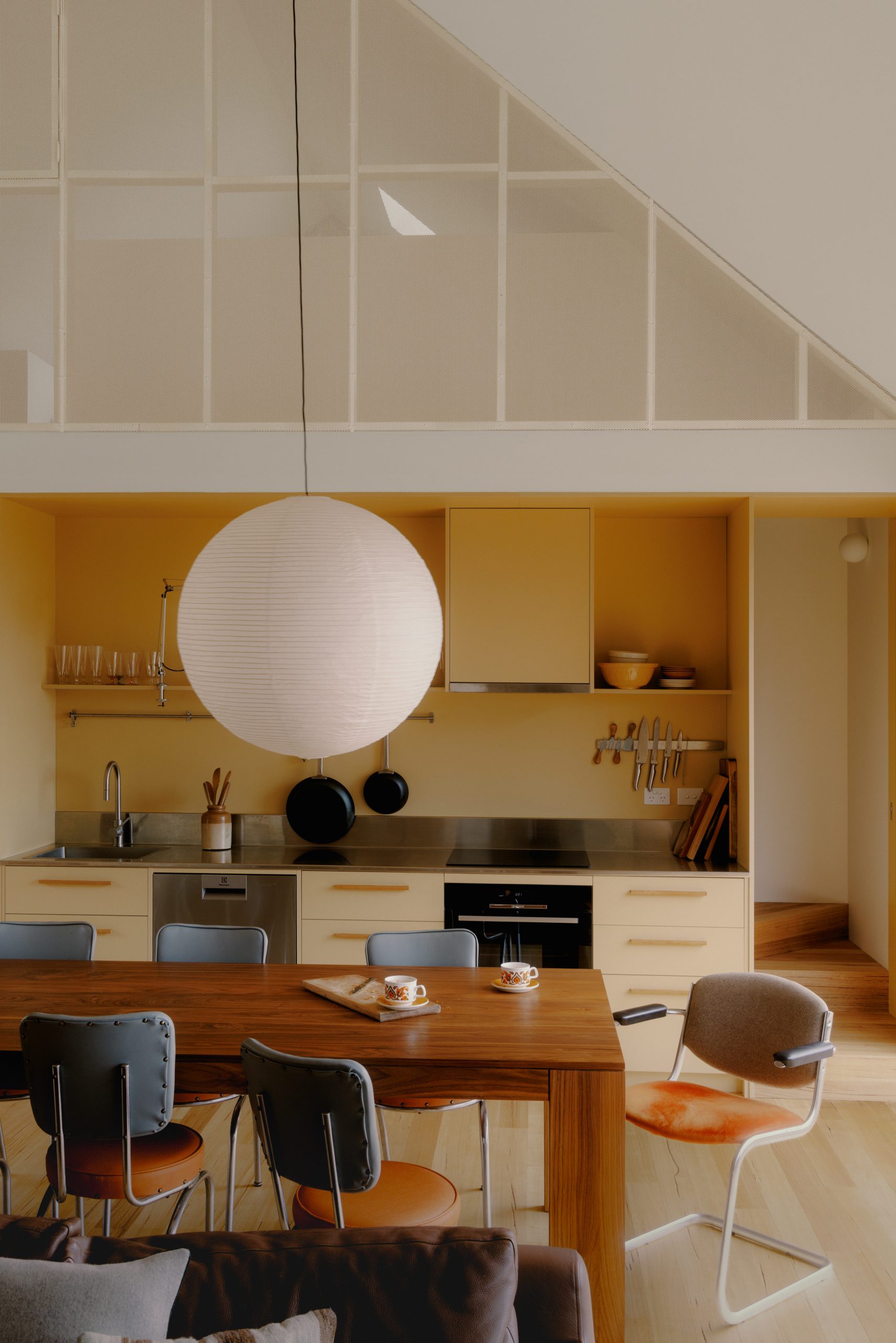
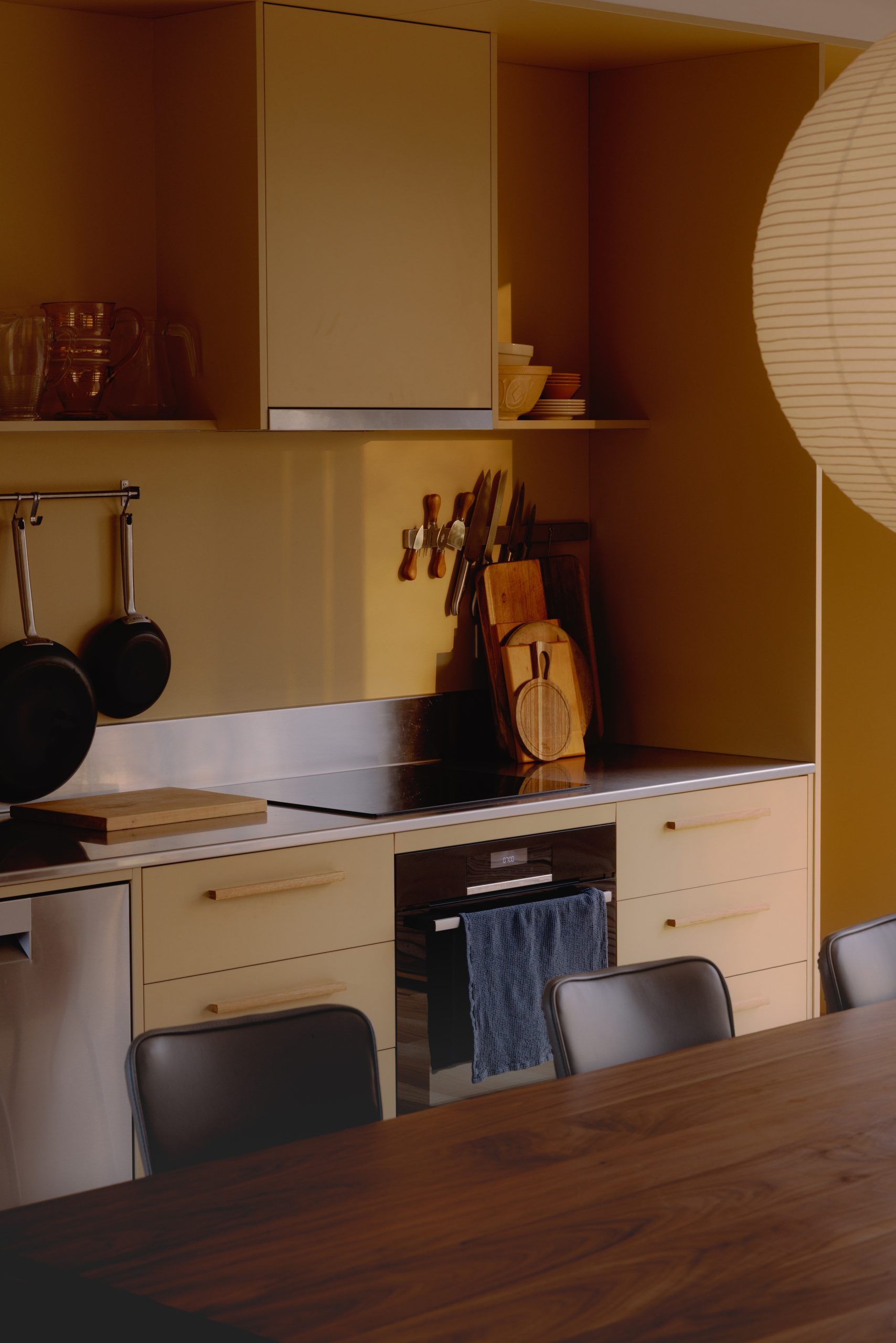
At the centre of the plan, the Pale Honey kitchen reads as a solid block of colour. It anchors the interior and gently separates private from communal zones. Its warmth responds to the dry grasses and sandy soil outside, while its simplicity reinforces the clarity of the overall layout. There is no excess here. Instead, beauty is found in proportion, texture and light.
The project succeeds through a careful balancing of contrasts. The footprint is small, yet the spaces feel generous. The budget was modest, yet the ambition was bold, seeking moments of quiet luxury through thoughtful detailing rather than spectacle. The house offers shelter from wind and weather, while framing the vastness of the coast and bush beyond.
As it ages, silvering and softening, the pavilion will continue to settle into its site. In time, the regenerating landscape will hold it more closely. What remains is a compact home that understands its place, offering calm, clarity and a deep connection to land.