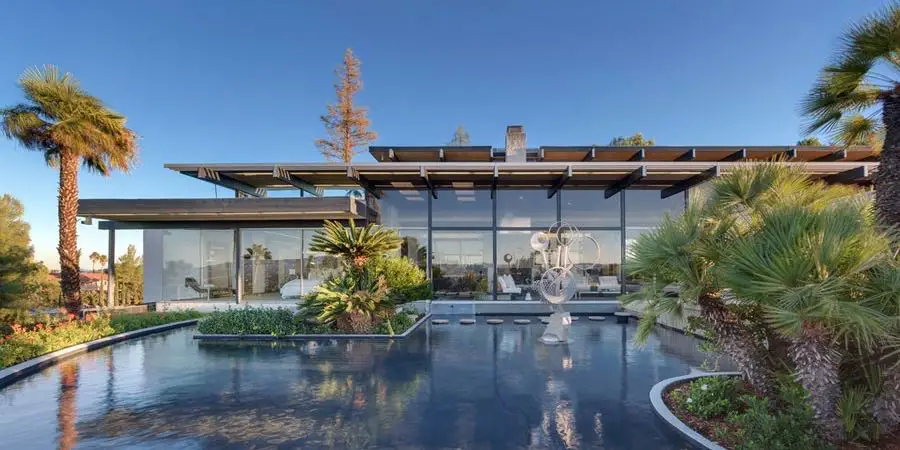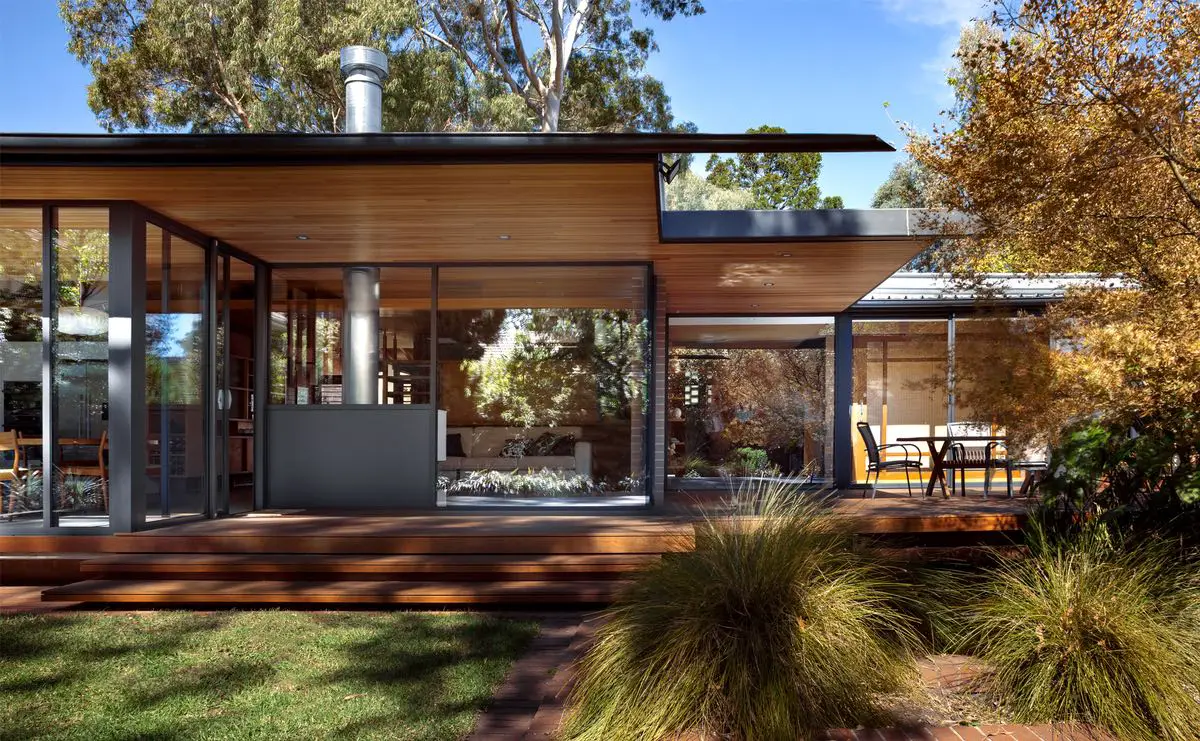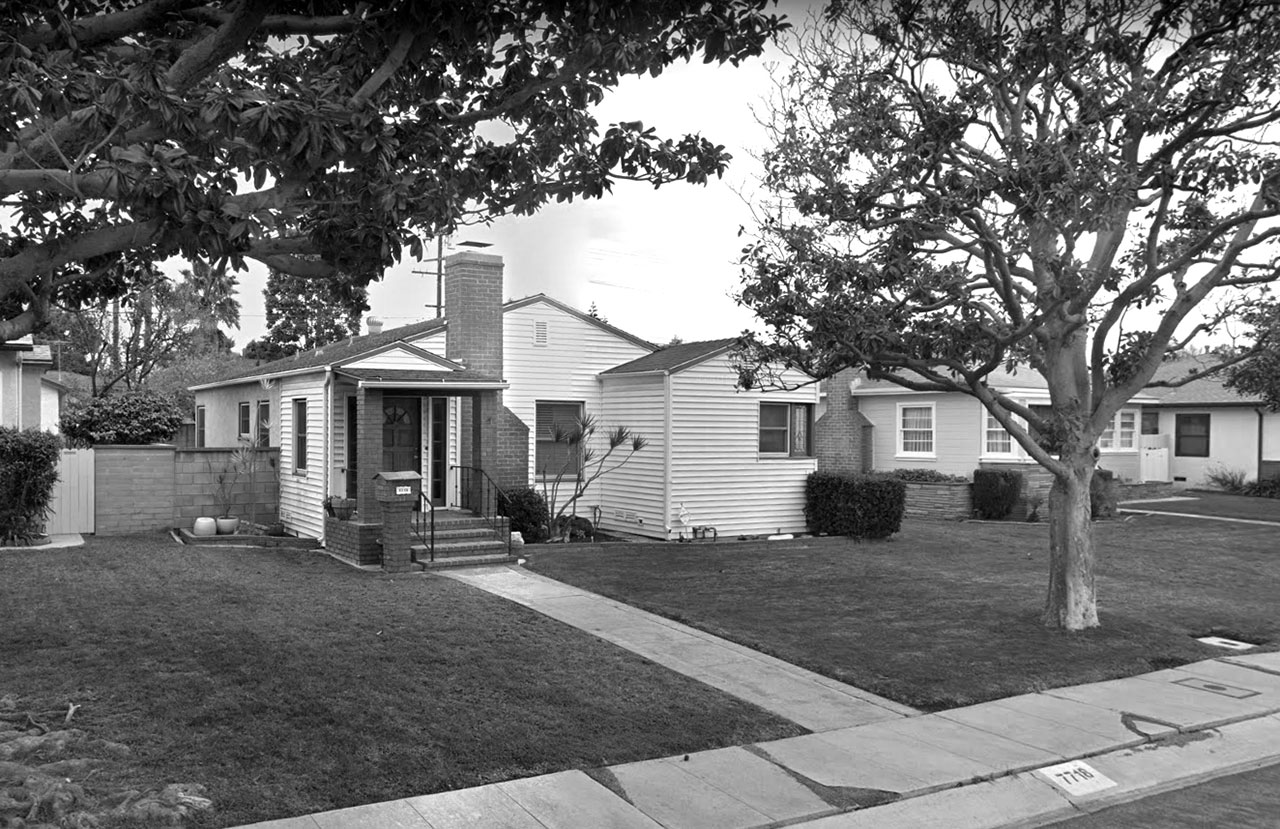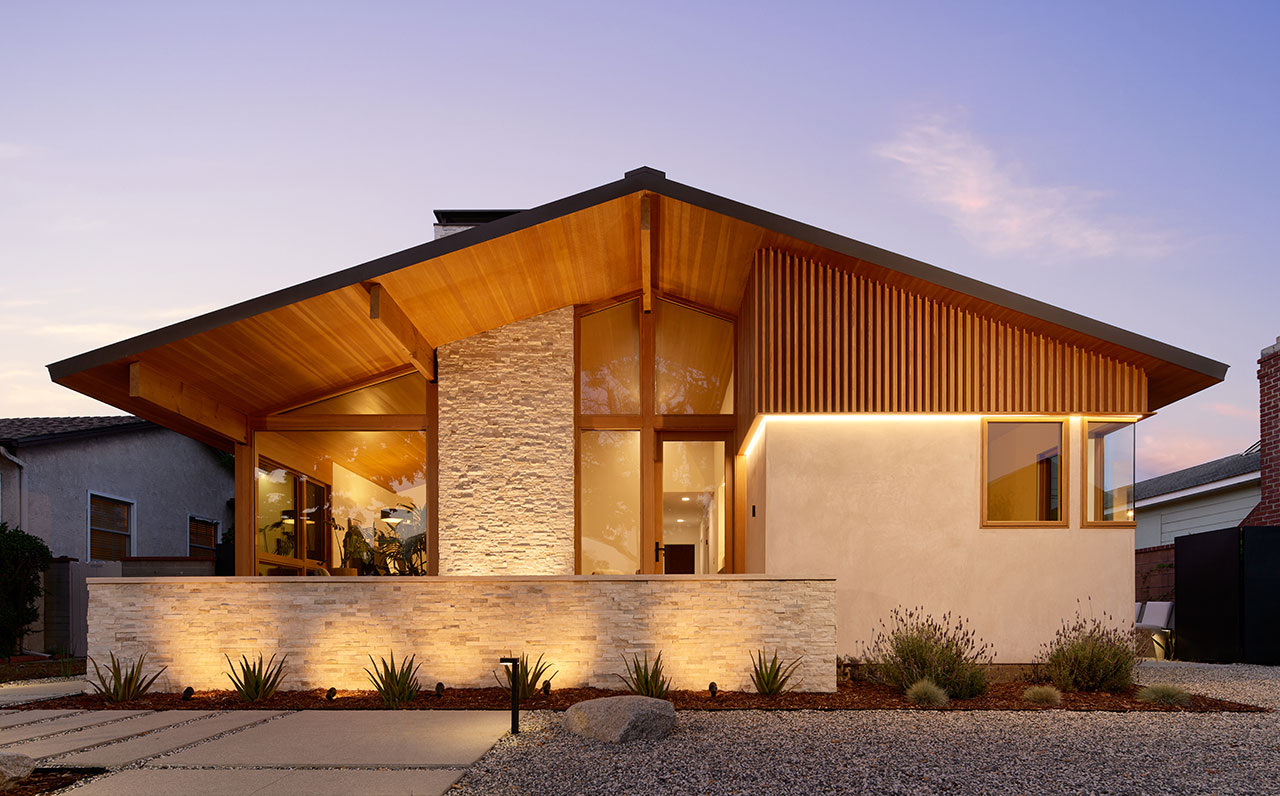
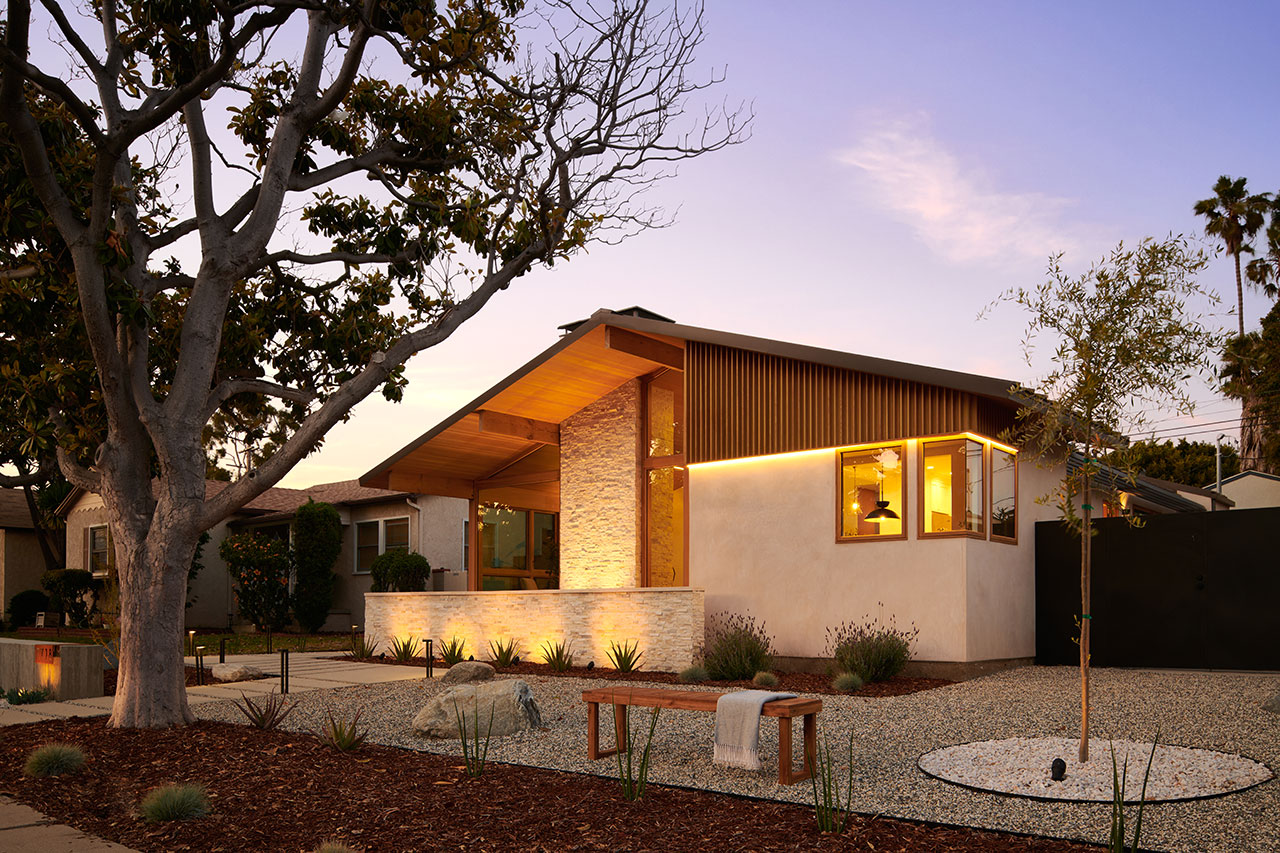

Wagoya House sits on a quiet street in Westchester, Los Angeles. From the outside, it reads as a low, single story ranch. Until recently, it was just that. The original house was wrapped in vinyl siding, fitted with aging windows, and cut off from its garden. The renovation by Alloi rethinks the structure completely, turning a standard suburban home into a measured study in space, structure, and material.
The project takes its name from the wagoya roof system, a traditional Japanese post and beam construction method. Rather than treating structure as something to hide, the design brings it forward. The rhythm of beams and posts organizes the plan and sets the tone for the interior. It also creates a clear dialogue with mid century modern principles, where structure, proportion, and light work together.
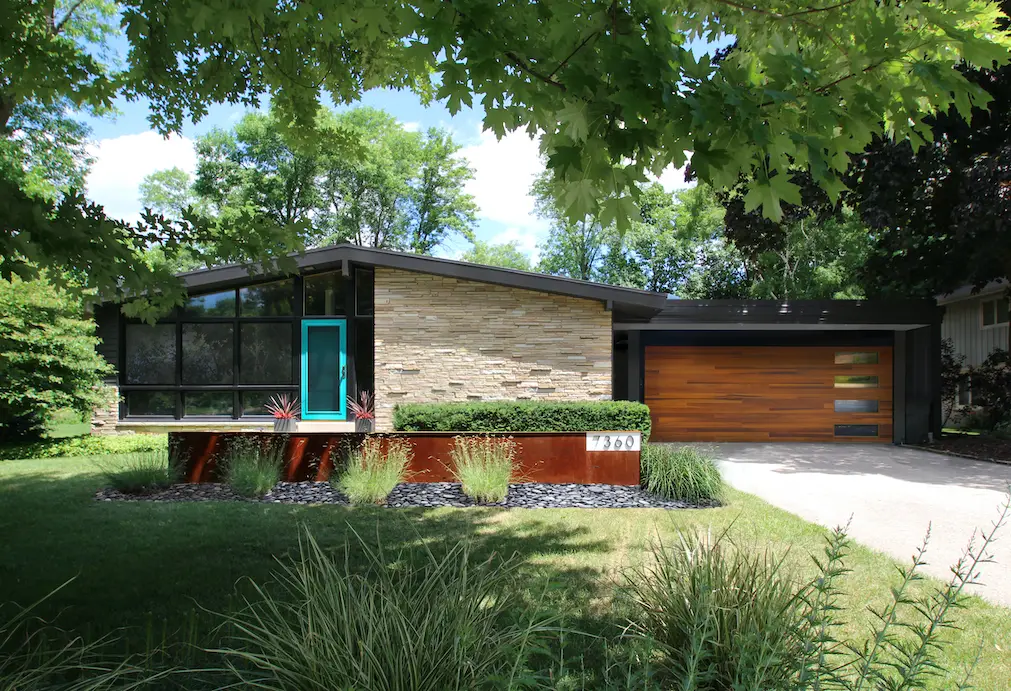
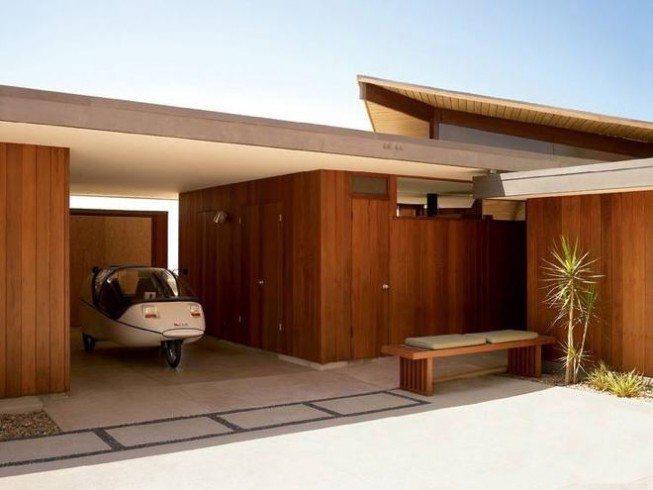
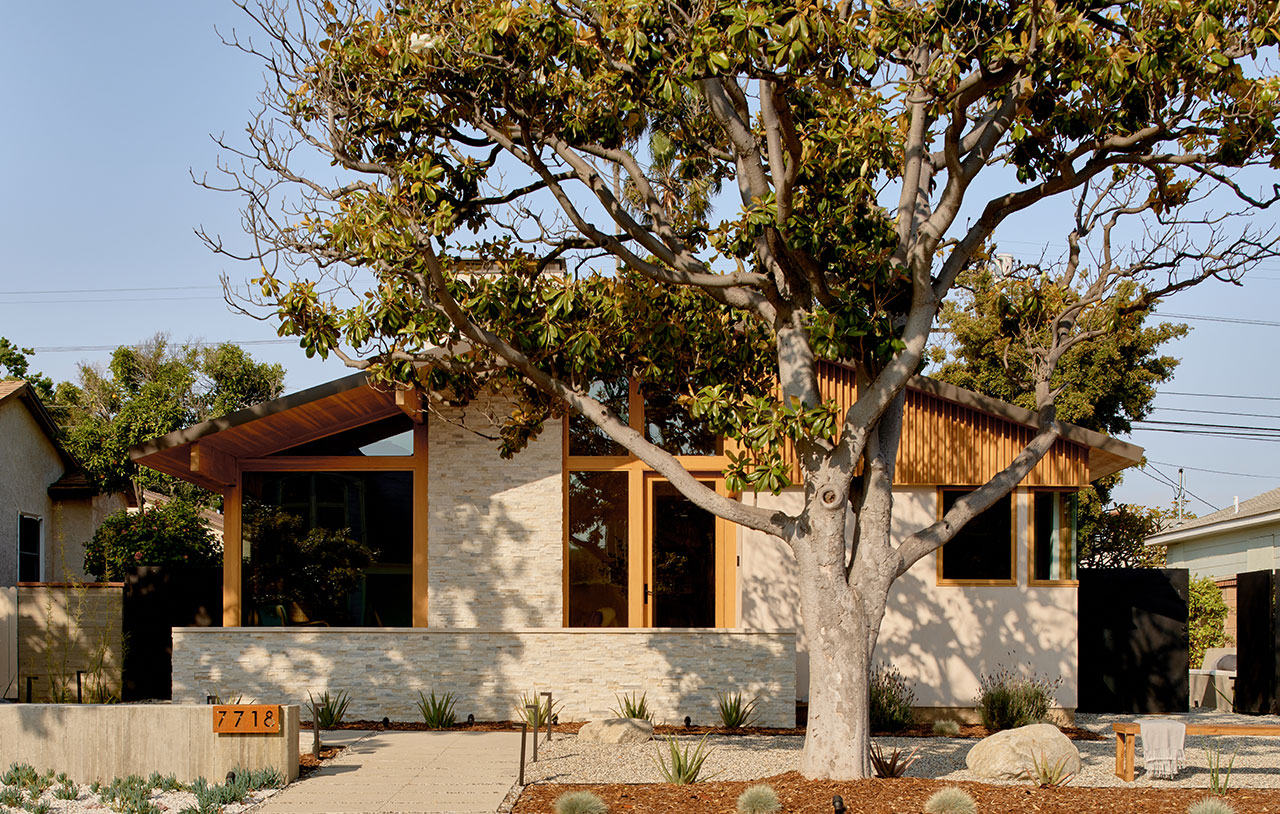
The entry sequence establishes this shift. A concrete wall defines the front boundary and creates privacy from the street. A corten steel house number is set into the surface and will weather over time. New Douglas fir doors and windows replace the old openings, introducing natural wood to the facade. A vertical slat screen adds depth and filters views without closing the house off. The changes are restrained, but they alter the character of the home.
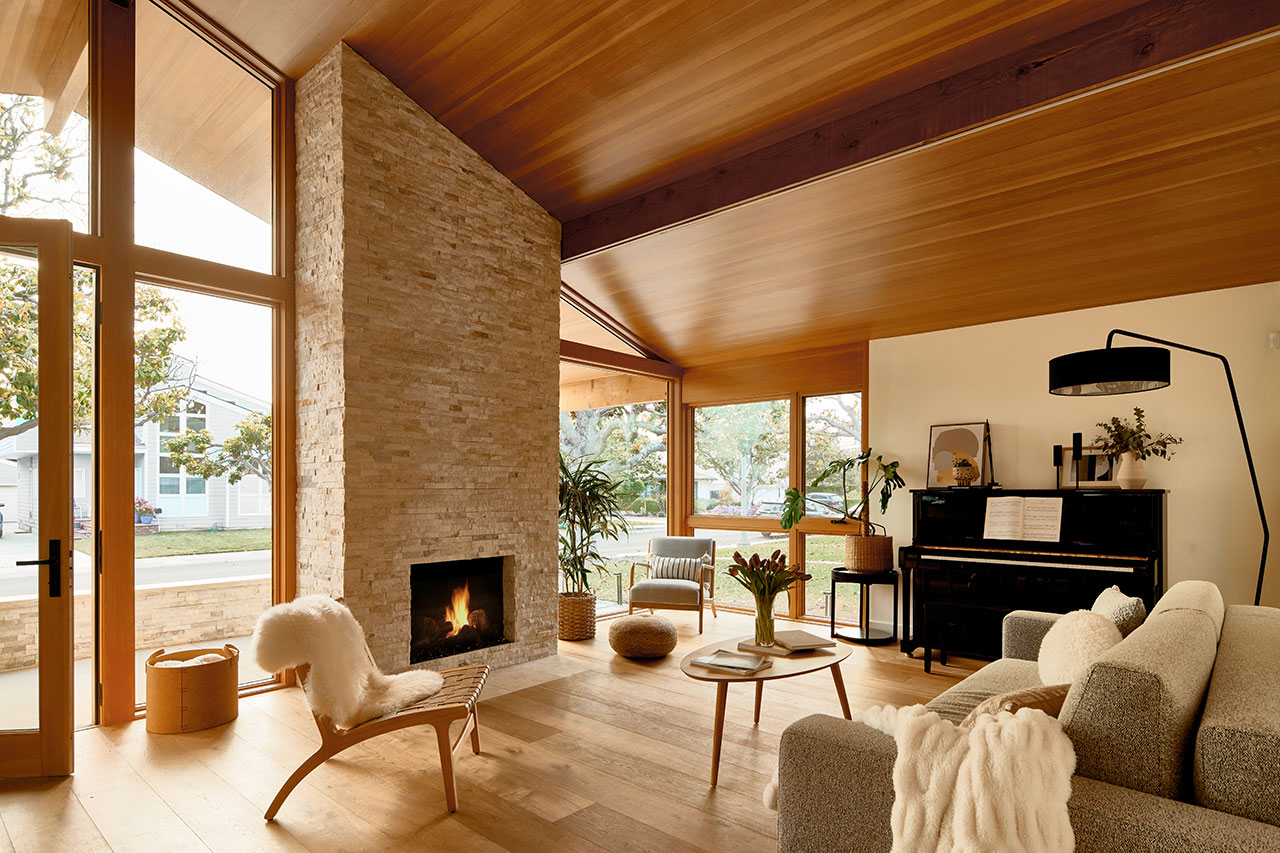
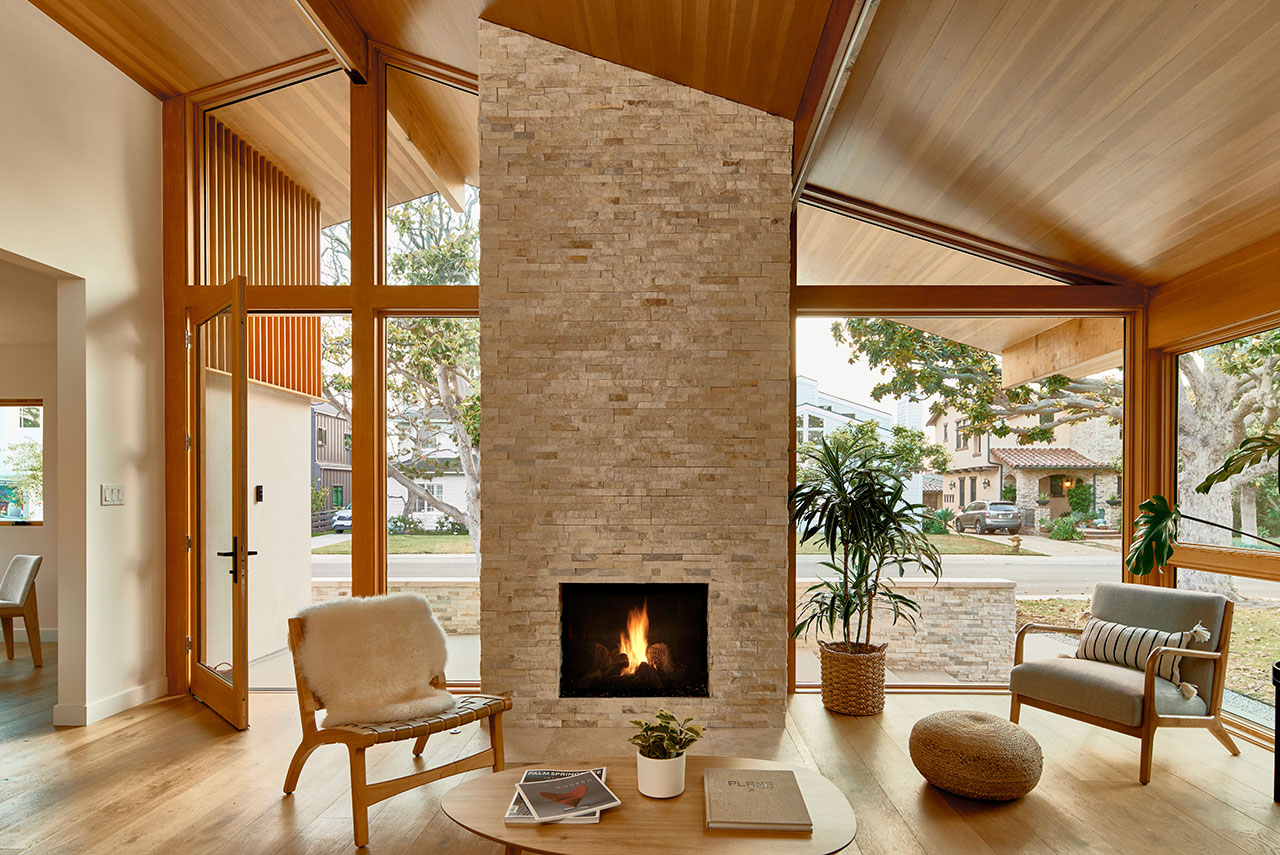
Inside, the layout opens toward the backyard. Large panes of glass replace small windows, allowing the living area to extend outward. The garden becomes part of daily life. Light moves across oak floors and exposed wood elements, reinforcing the connection between interior and exterior. The original low ceilings have been reconsidered, and the new roofline gives the main space greater height and continuity.

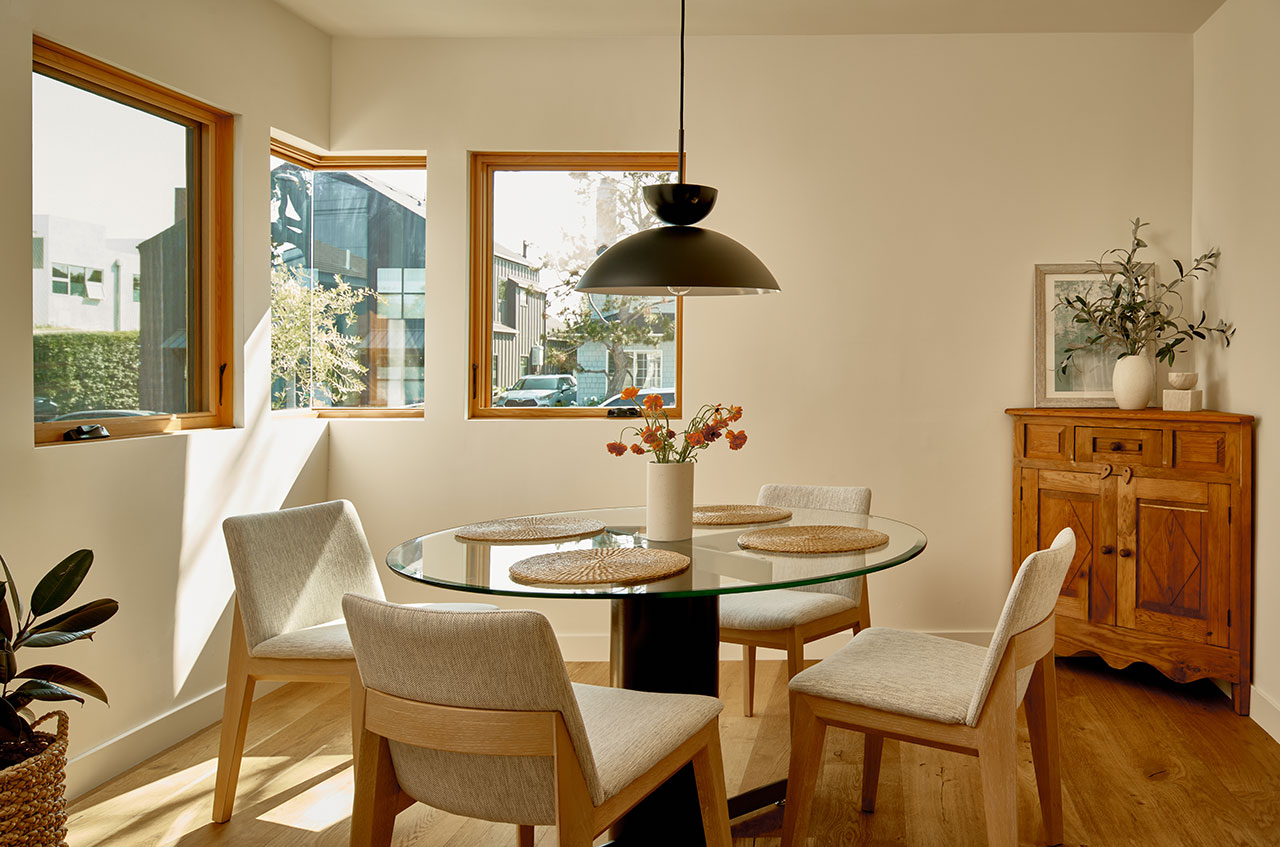
At the center of the house, a stone chimney anchors the living area. It provides a point of focus without dominating the room. The kitchen and dining areas sit alongside, connected rather than divided. Cabinetry is integrated into the architecture, with flat fronts and minimal hardware. Storage is handled with care, so surfaces remain clear and the geometry of the space stays intact.
The Japandi influence is evident but not overstated. Instead of layering decorative elements, the design relies on proportion and material. Wood, stone, and concrete are used in their natural state. The palette is limited. The effect comes from the relationship between surfaces, not from contrast or ornament.
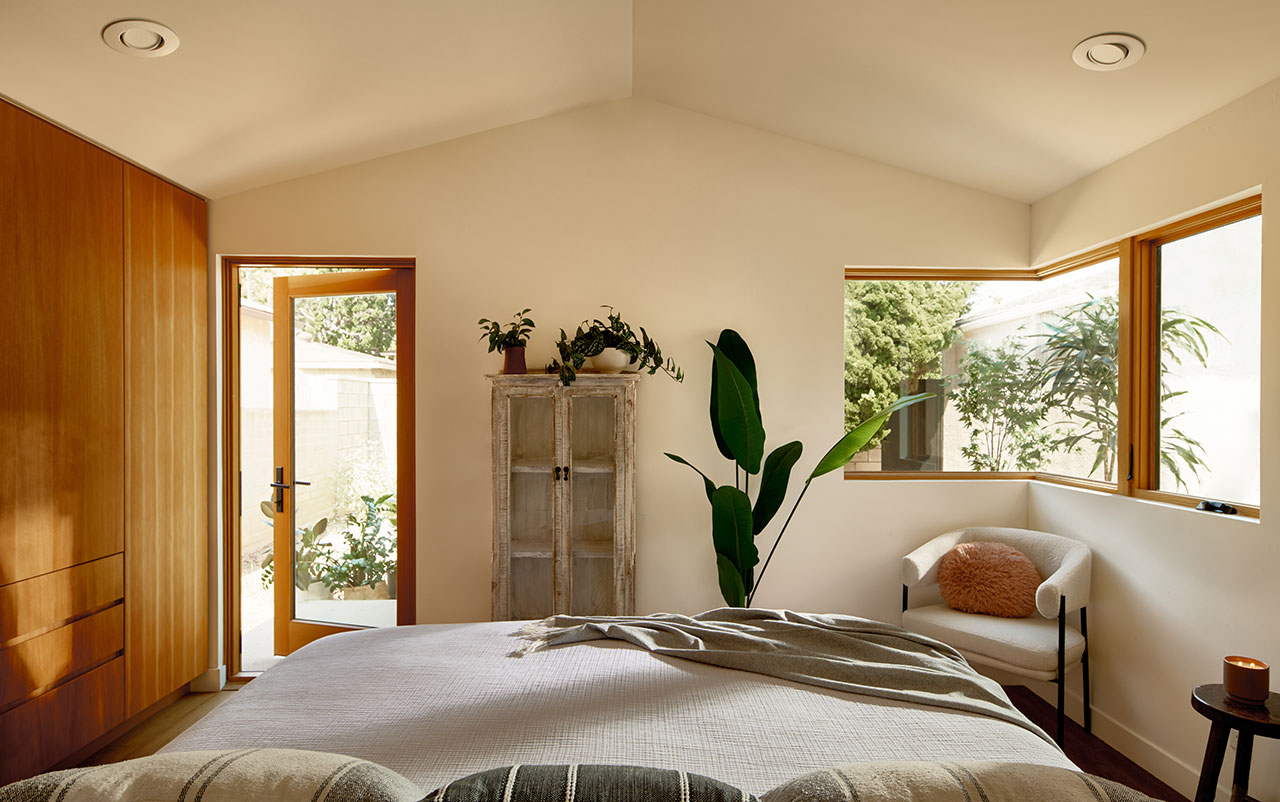
In the primary bedroom, glazing frames views of planting outside. The room feels connected to the garden, but still protected. Built in storage runs along one wall, flush with the structure. There is little visual noise. The emphasis is on rest and continuity.
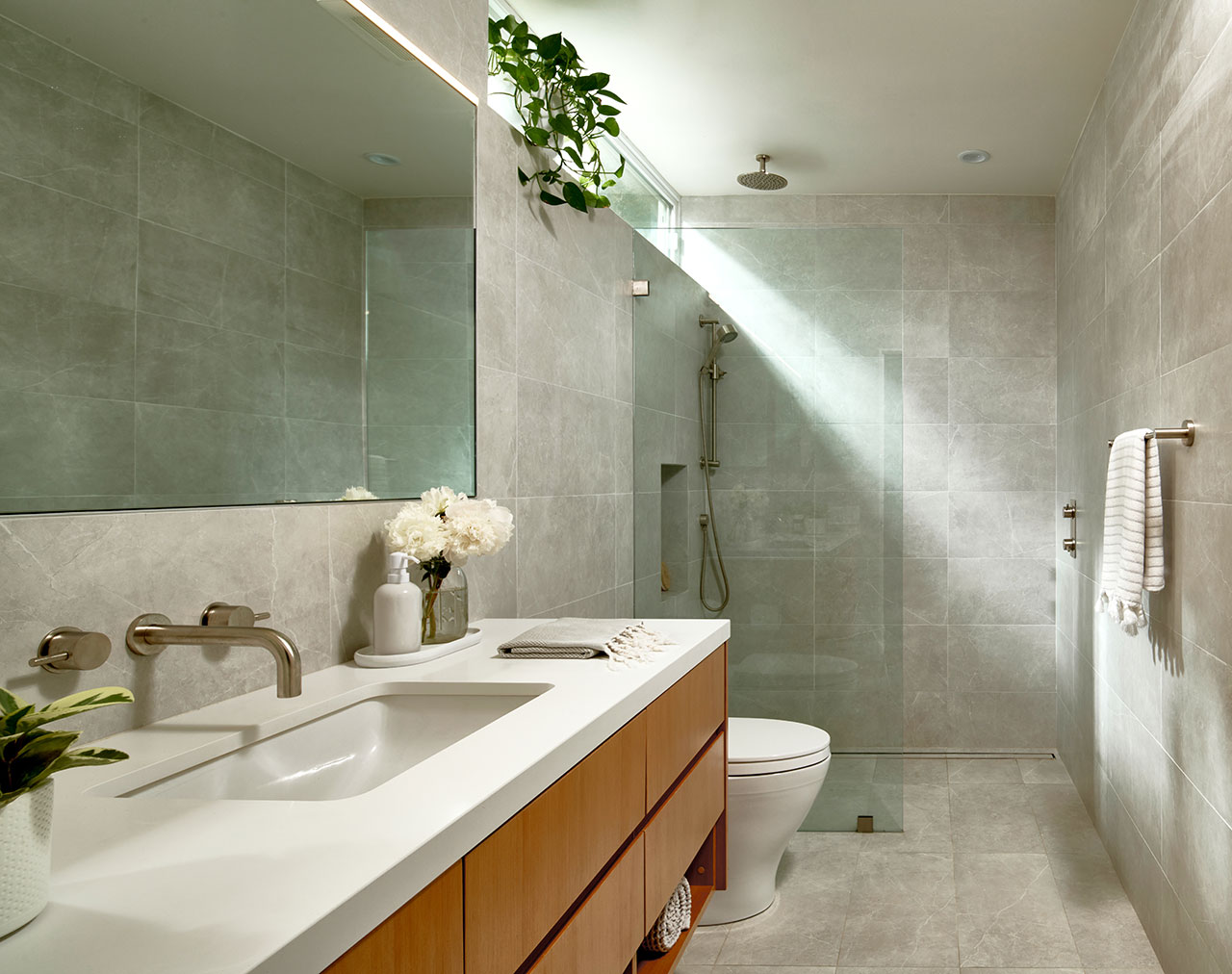
The bathroom continues the same logic. Pale tile lines the walls from floor to ceiling. A clerestory window brings in daylight while maintaining privacy. Fixtures are wall mounted, keeping the floor clear. The detailing is precise, but never showy. Each choice supports the overall clarity of the house.
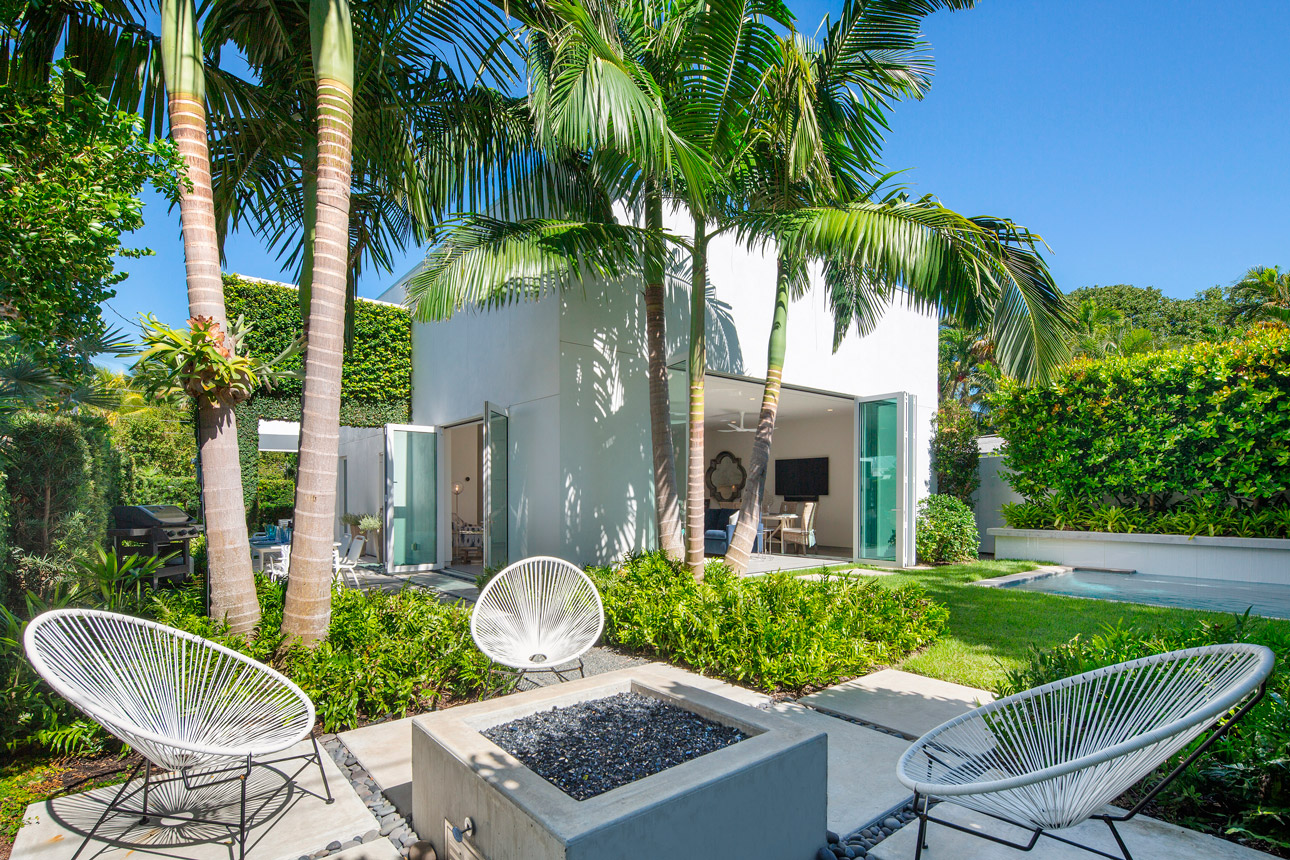
Landscape plays a central role in the transformation. Outdoor areas are shaped as rooms, with board formed concrete walls and planted edges defining space. A courtyard off the kitchen becomes an extension of the living area. At night, low lighting traces the perimeter, reinforcing the geometry of the plan.
What makes Wagoya House compelling is consistency. The renovation does not rely on nostalgia for mid-century design, nor does it copy Japanese architecture. Instead, it draws from both traditions to create a home that feels grounded in Los Angeles while informed by craft.