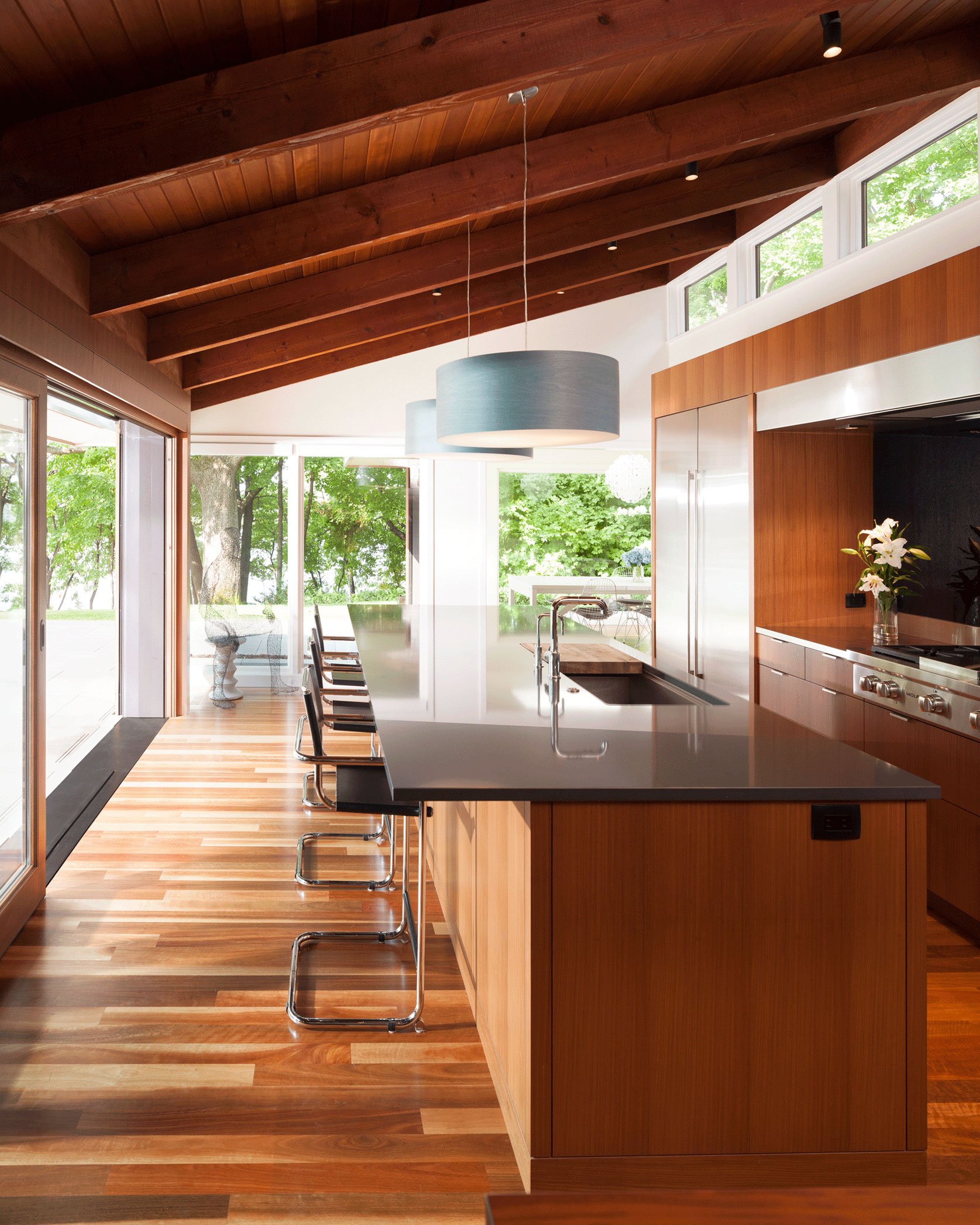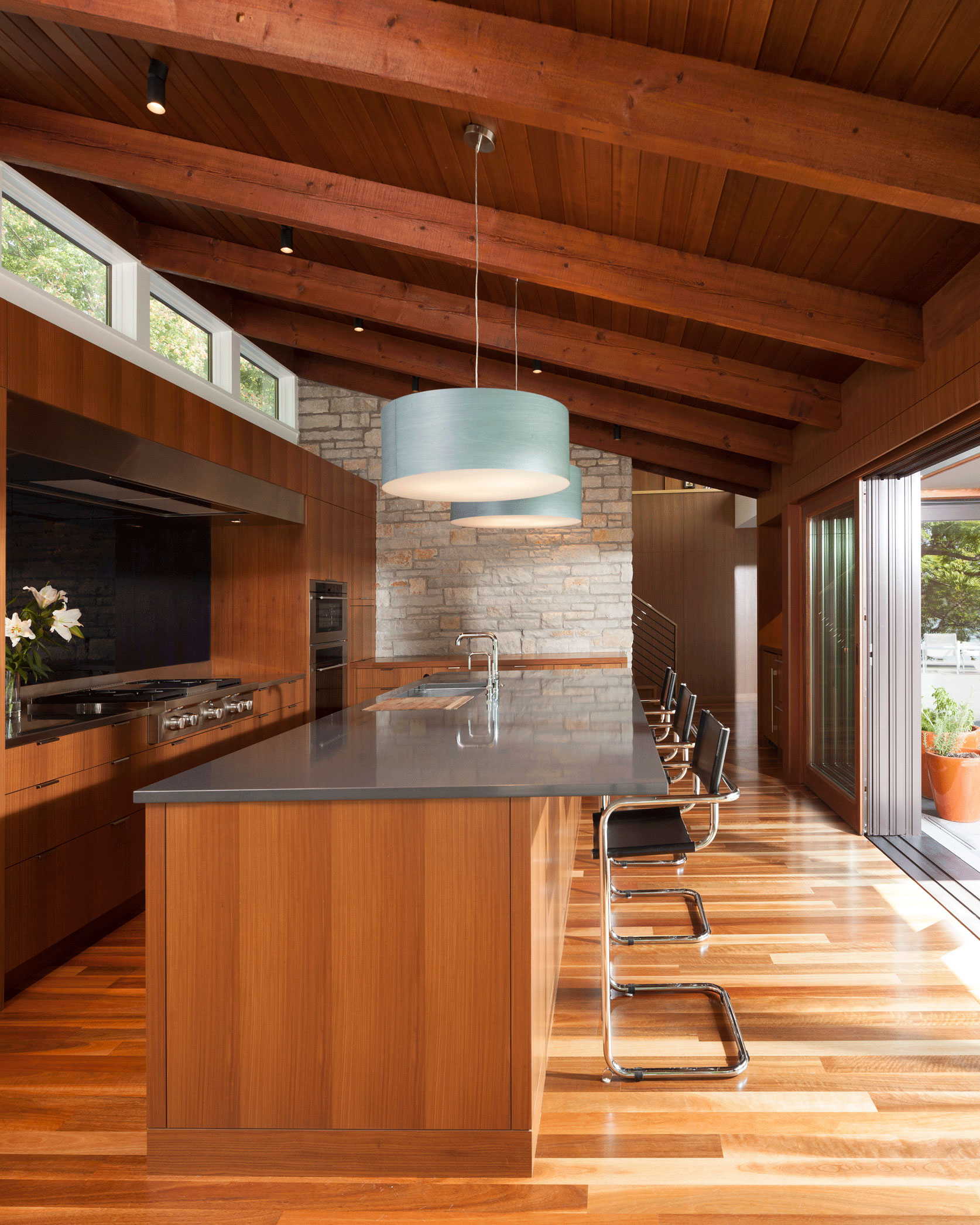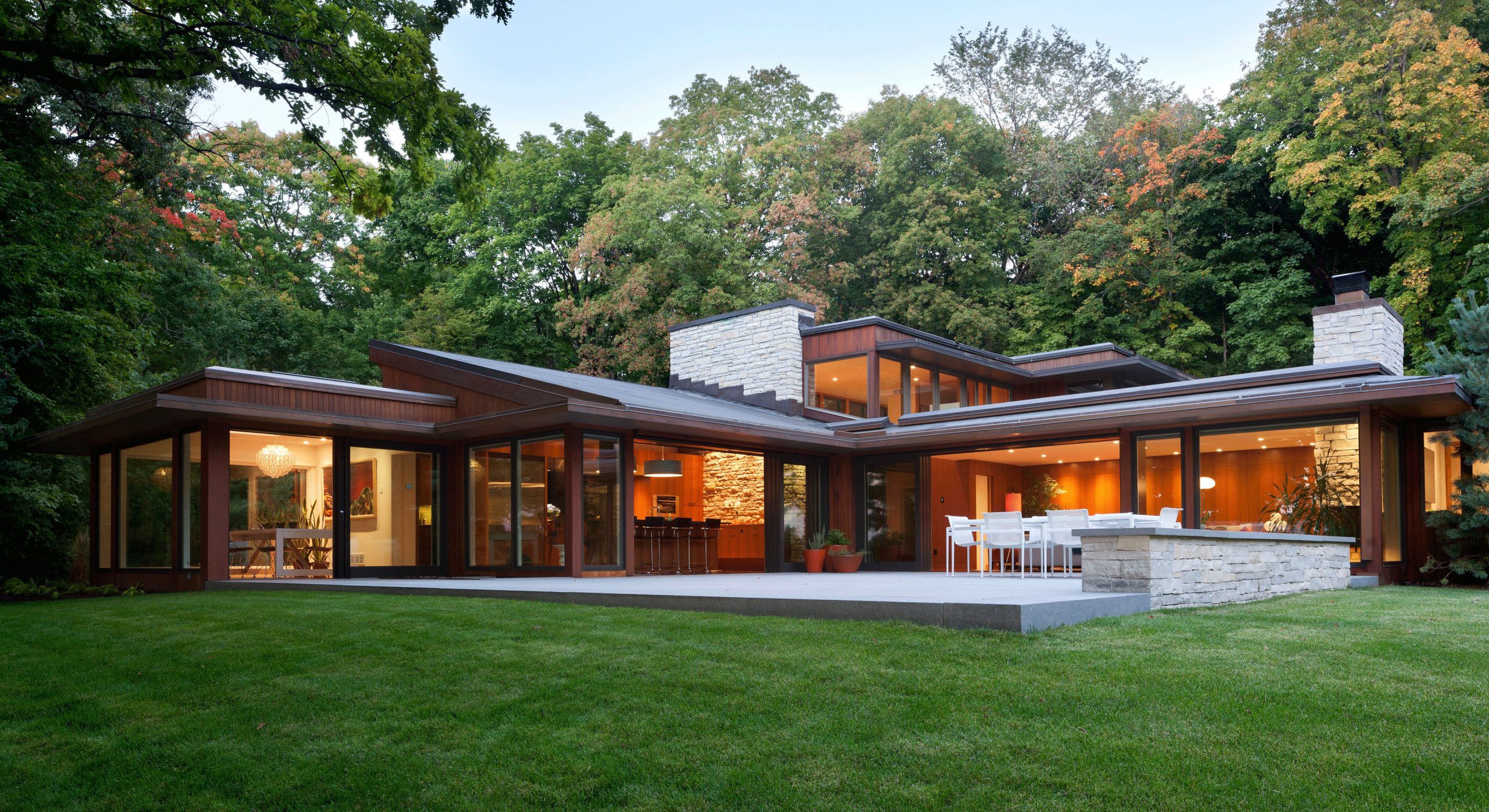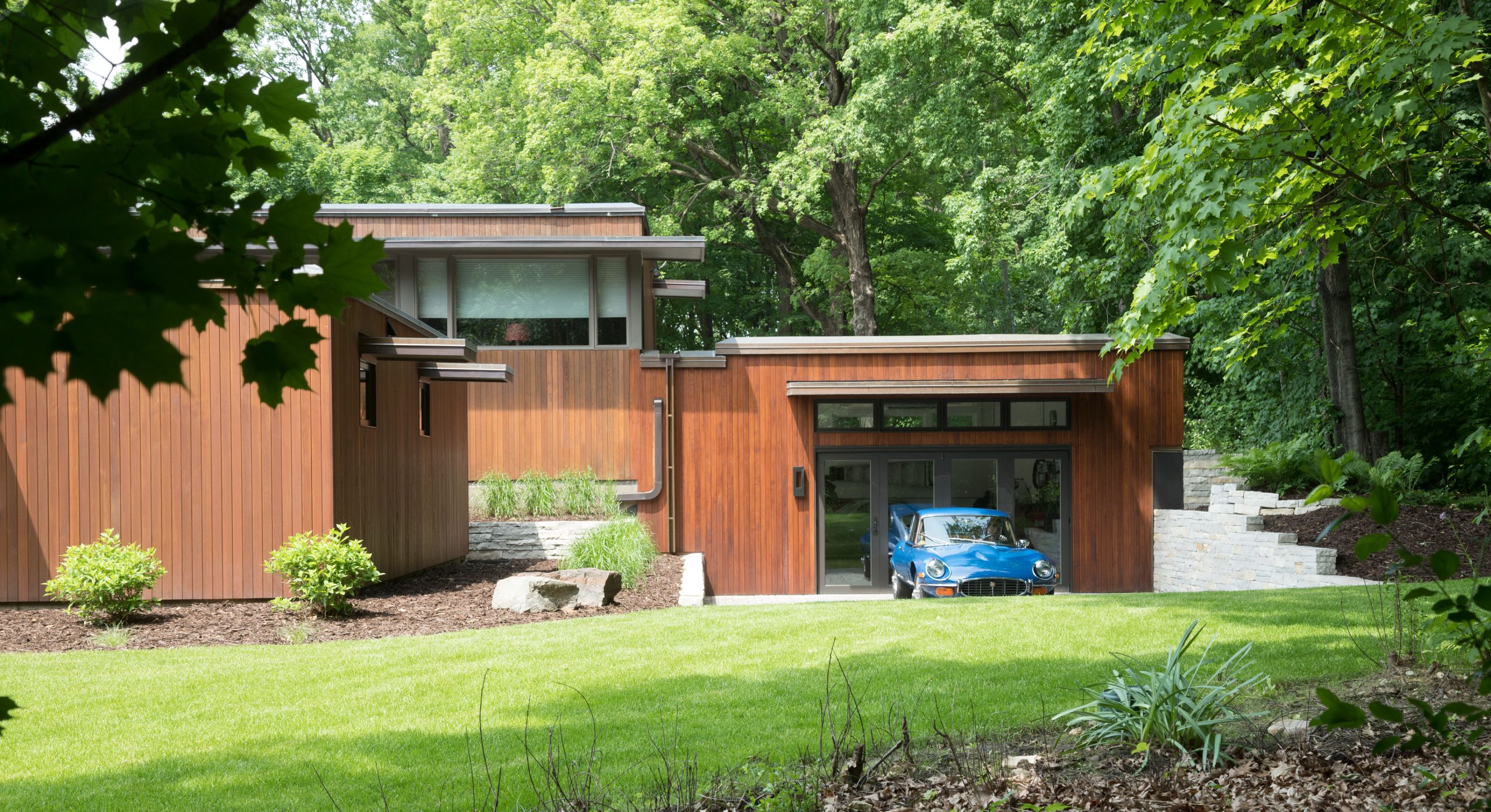

Set on a hill overlooking a quiet lake near Wayzata, a town in Minnesota, this 1948 house by Thorshov & Cerny reflects the early postwar shift toward open, site-responsive living. Known for their measured approach and clear planning, the architects gave the house a strong framework, even if its interior no longer matched the way it was used. The structure was well placed, the proportions intact, yet the layout limited both light and movement toward the water.
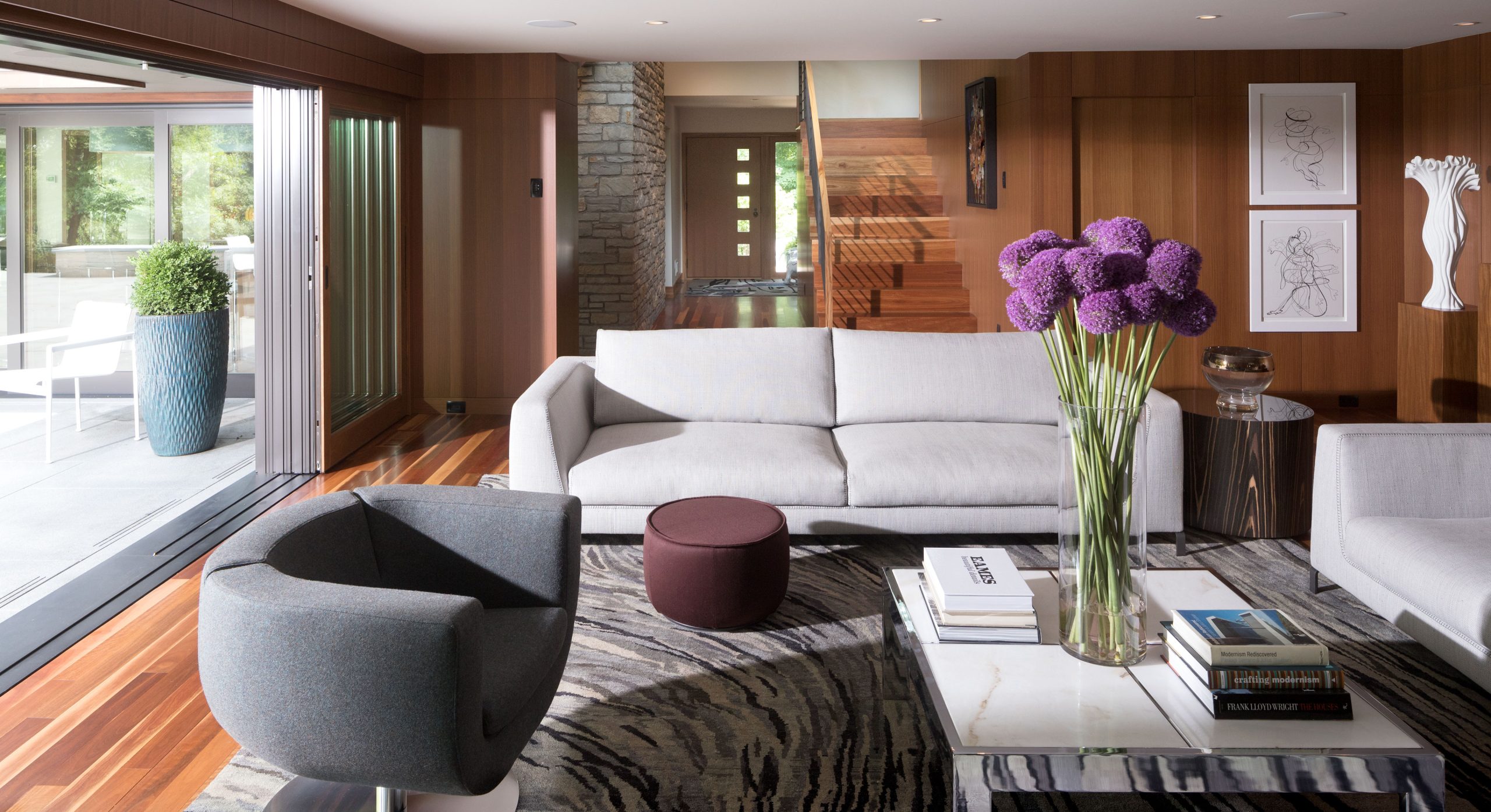
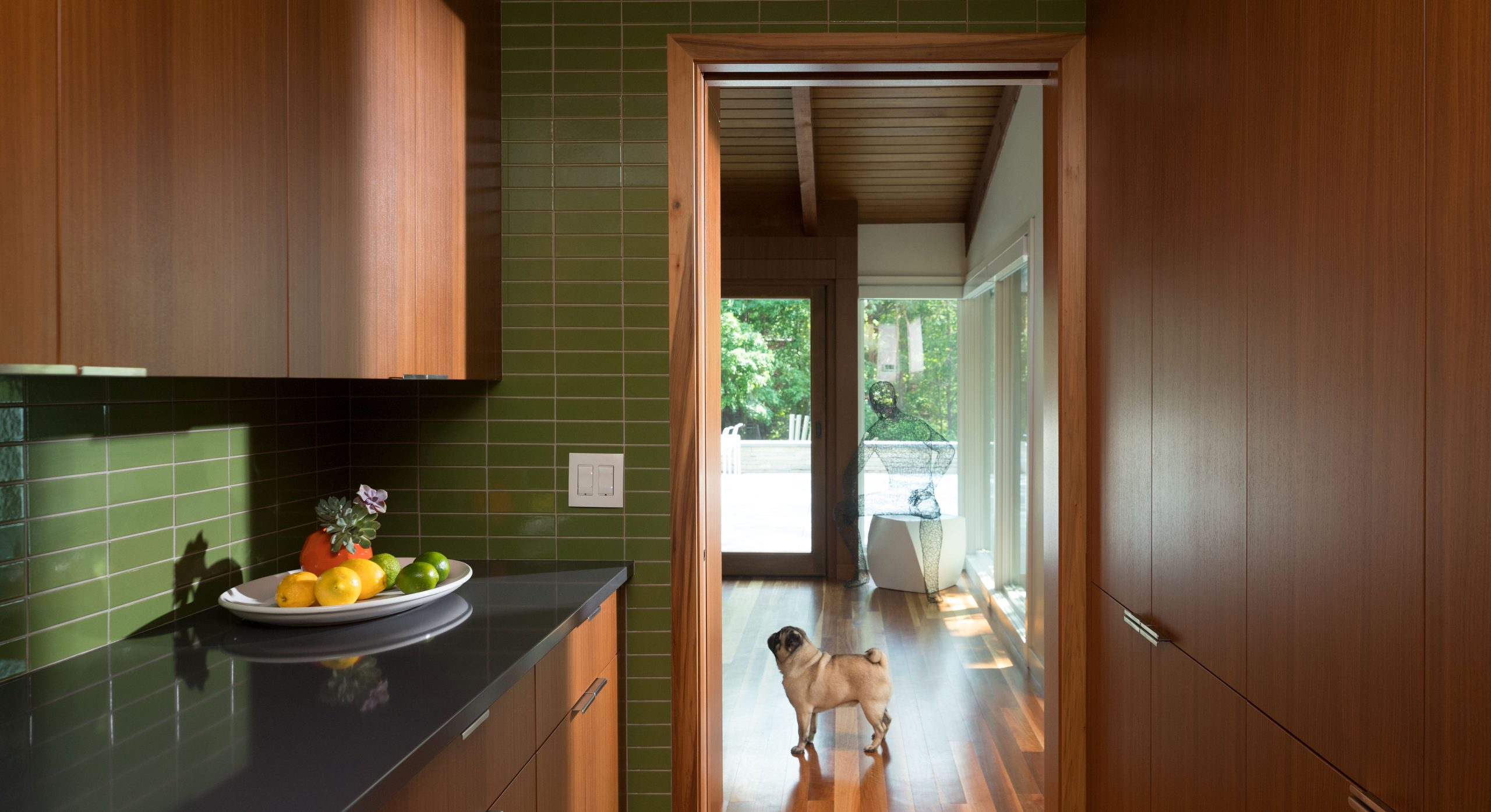
Peterssen/Keller Architecture approached the renovation by working with what was already there. Rather than reshaping the house, they focused on how it could better relate to the site. The key move was simple but effective: the kitchen and living room were reversed. This shift brought the main living spaces toward the lake, allowing daily life to unfold around the view.
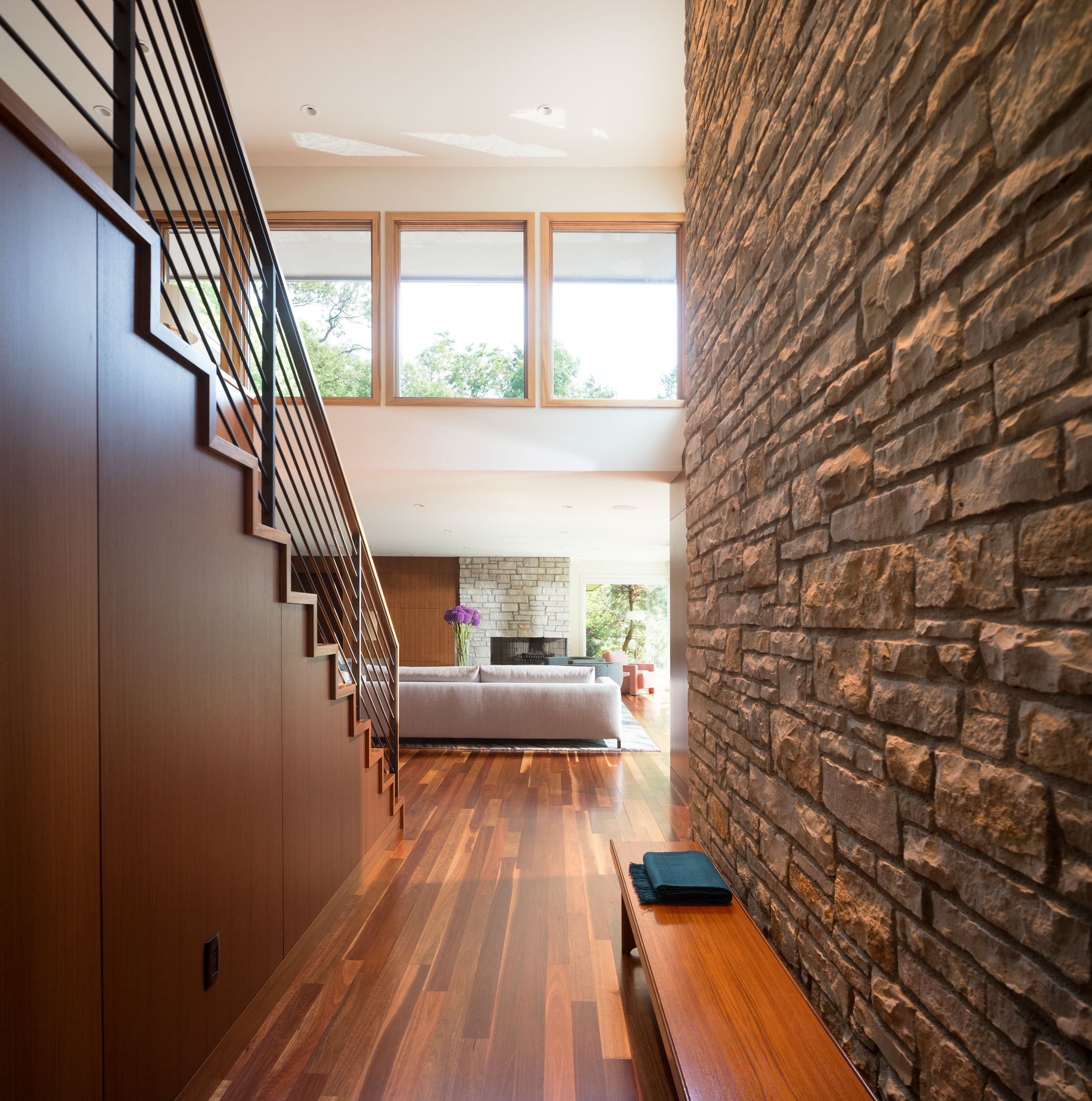
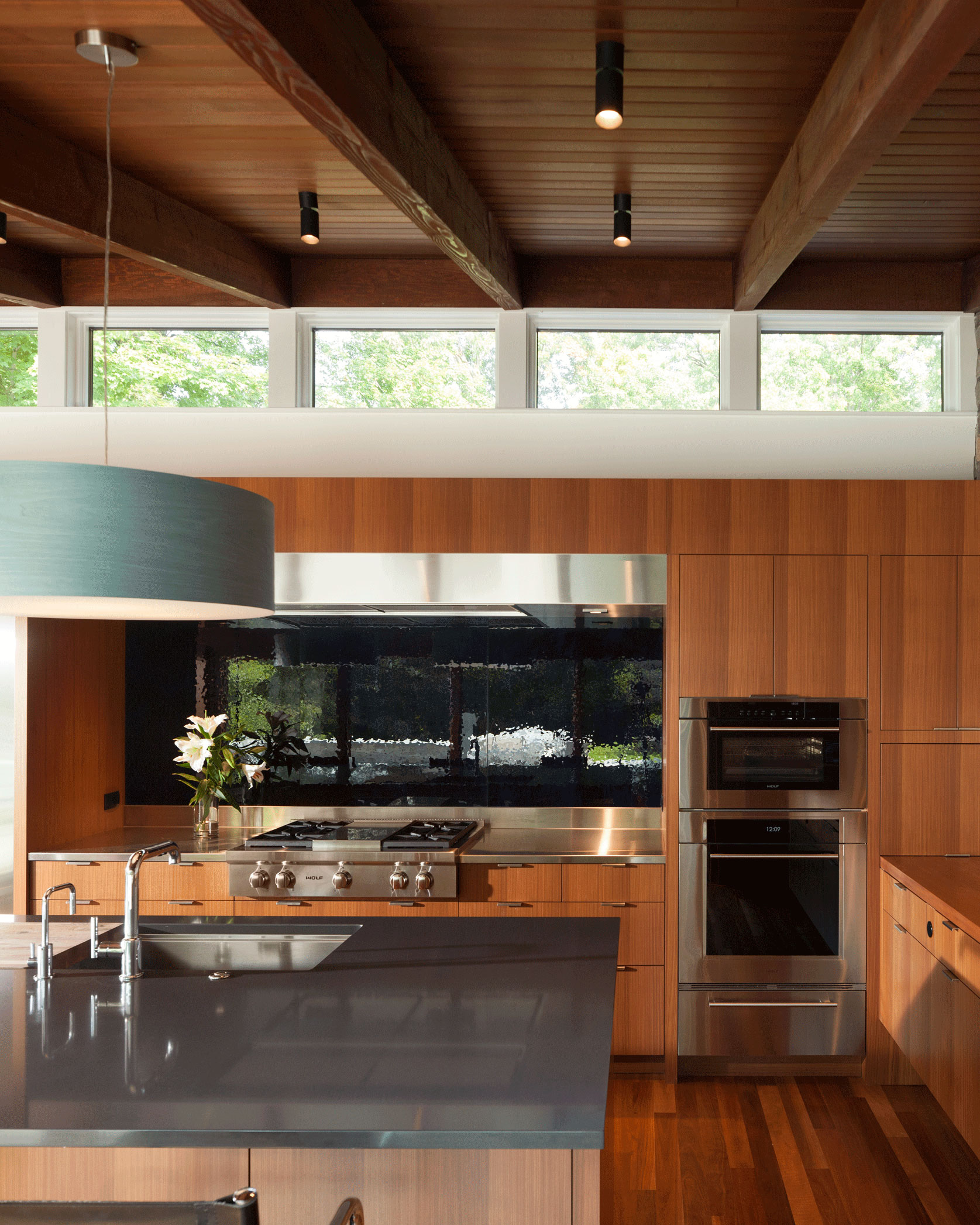
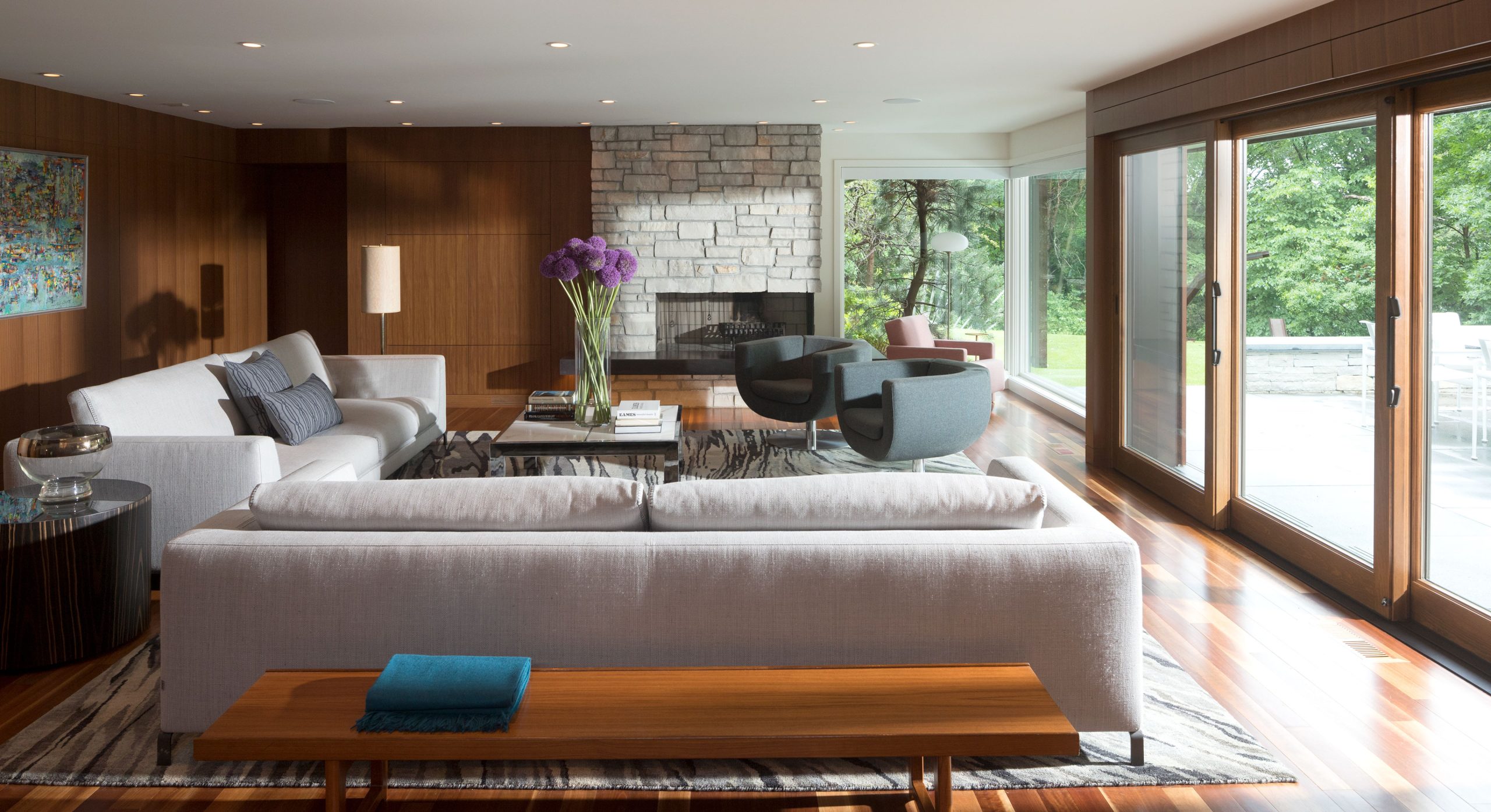
The plan now reads more clearly. Spaces connect with fewer interruptions, and movement through the house feels direct. The living area opens toward the landscape, while the kitchen sits at the center, supporting both everyday use and gatherings. This change alone redefines how the house is experienced, aligning the interior with its surroundings.
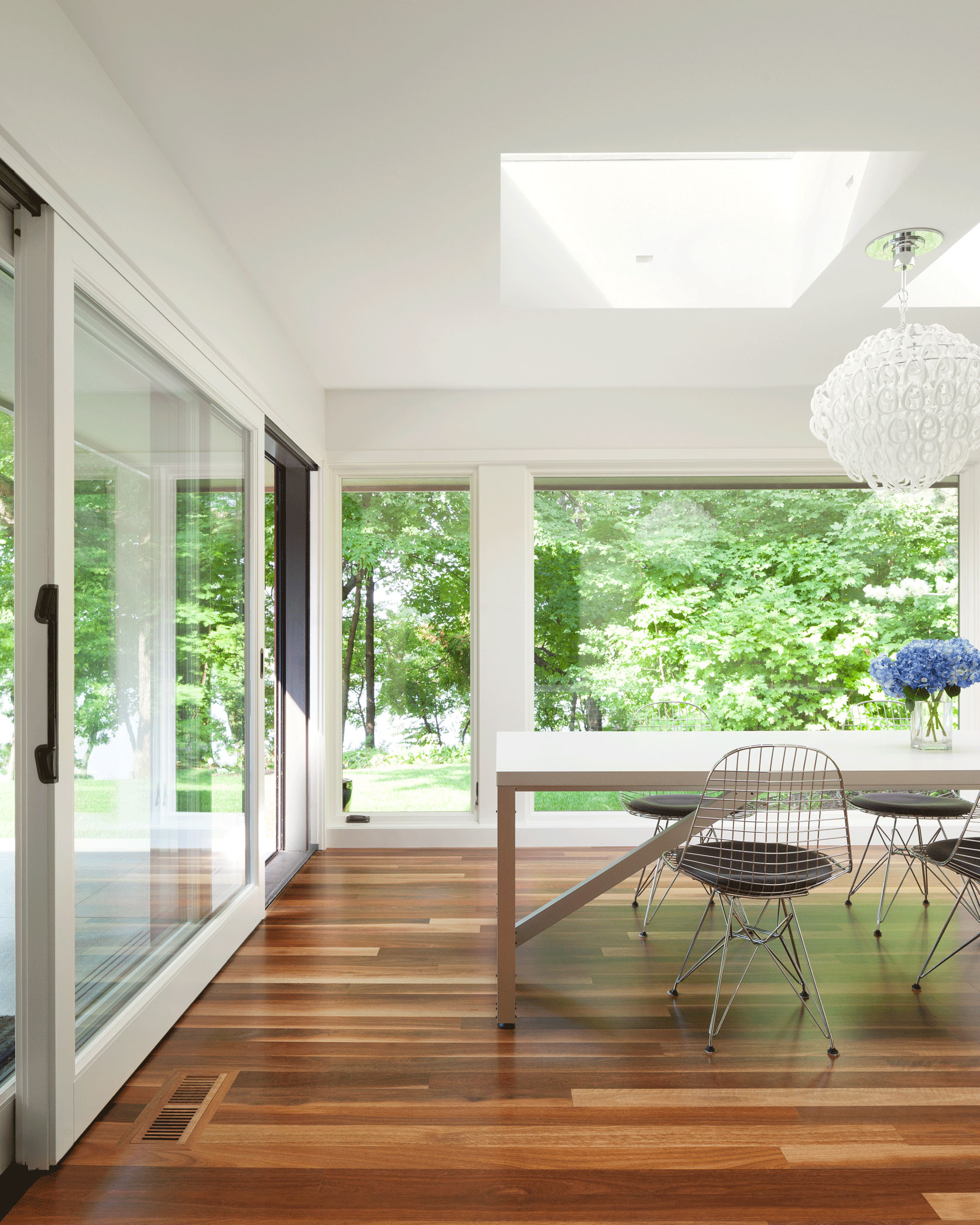
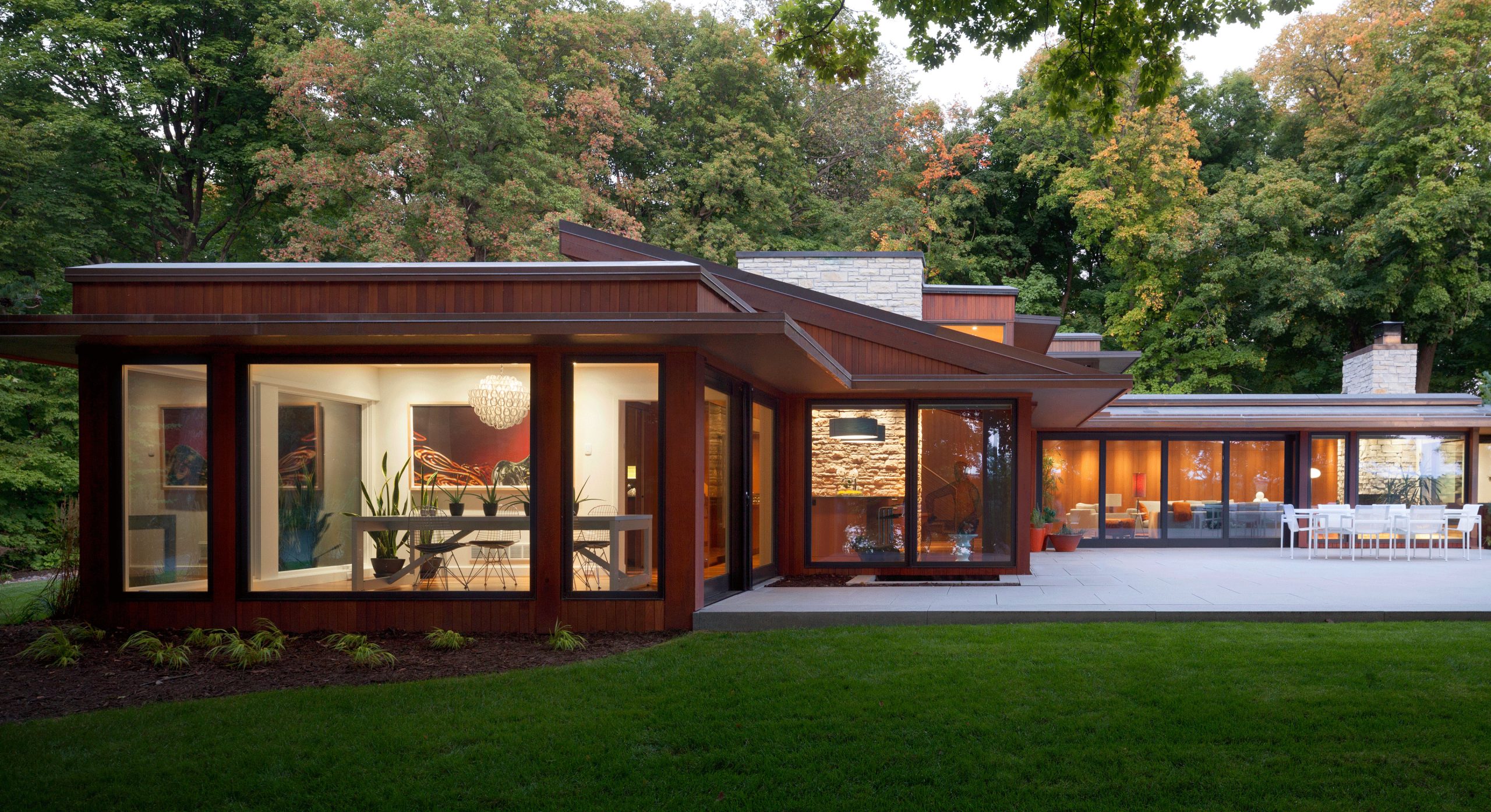
A new dining area extends this approach. Positioned to capture sunlight, it acts as a transition between inside and out, adding depth to the plan without increasing its complexity. The addition feels integrated, continuing the rhythm of the existing structure rather than standing apart from it.

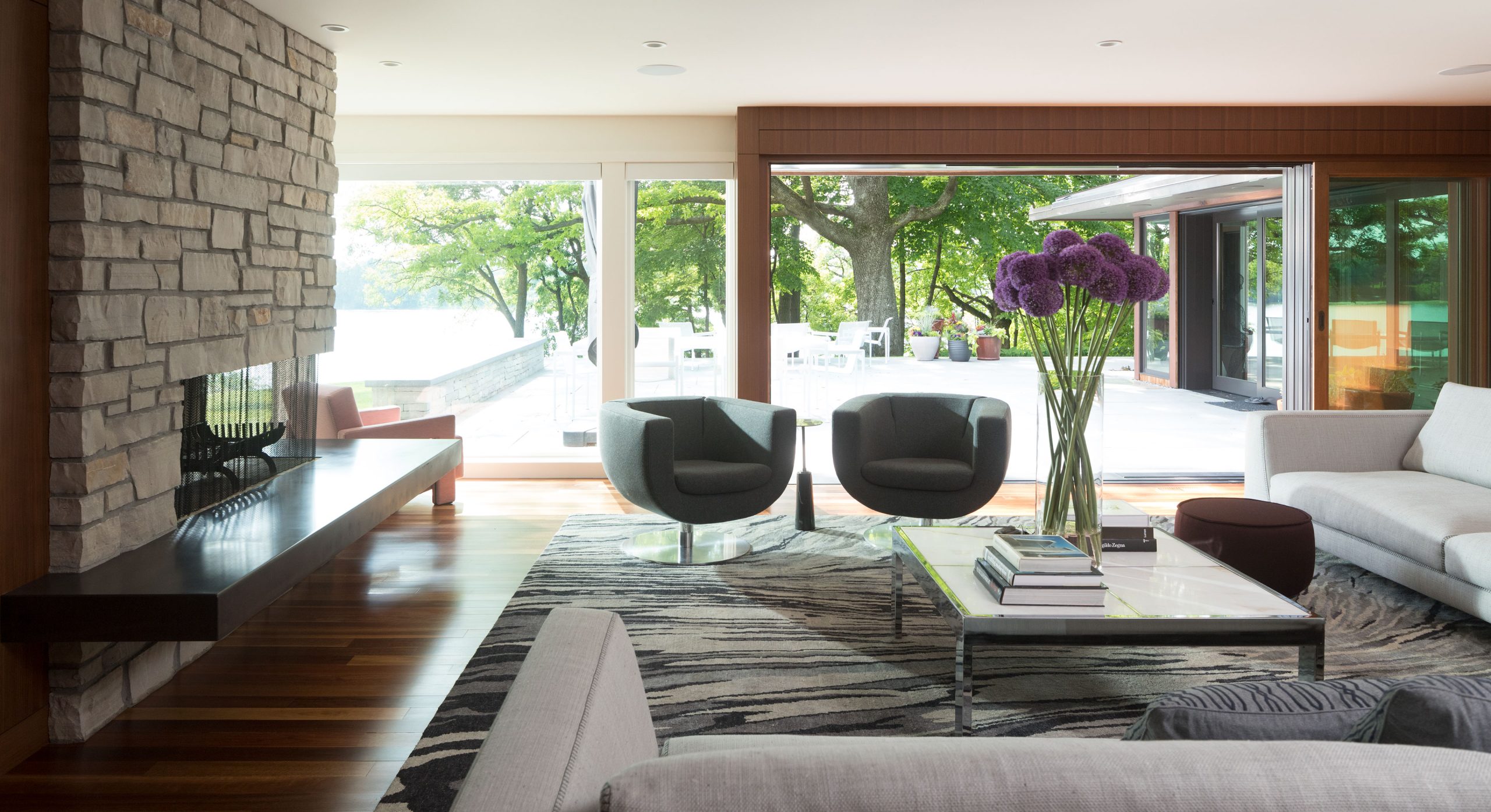
Along the lakeside façade, lift-and-slide doors replace smaller openings, allowing the house to open fully to the exterior. When open, the boundary between inside and outside becomes minimal. Views extend across the water, and light moves freely into the interior. Even when closed, the glazing maintains a strong visual connection to the landscape.
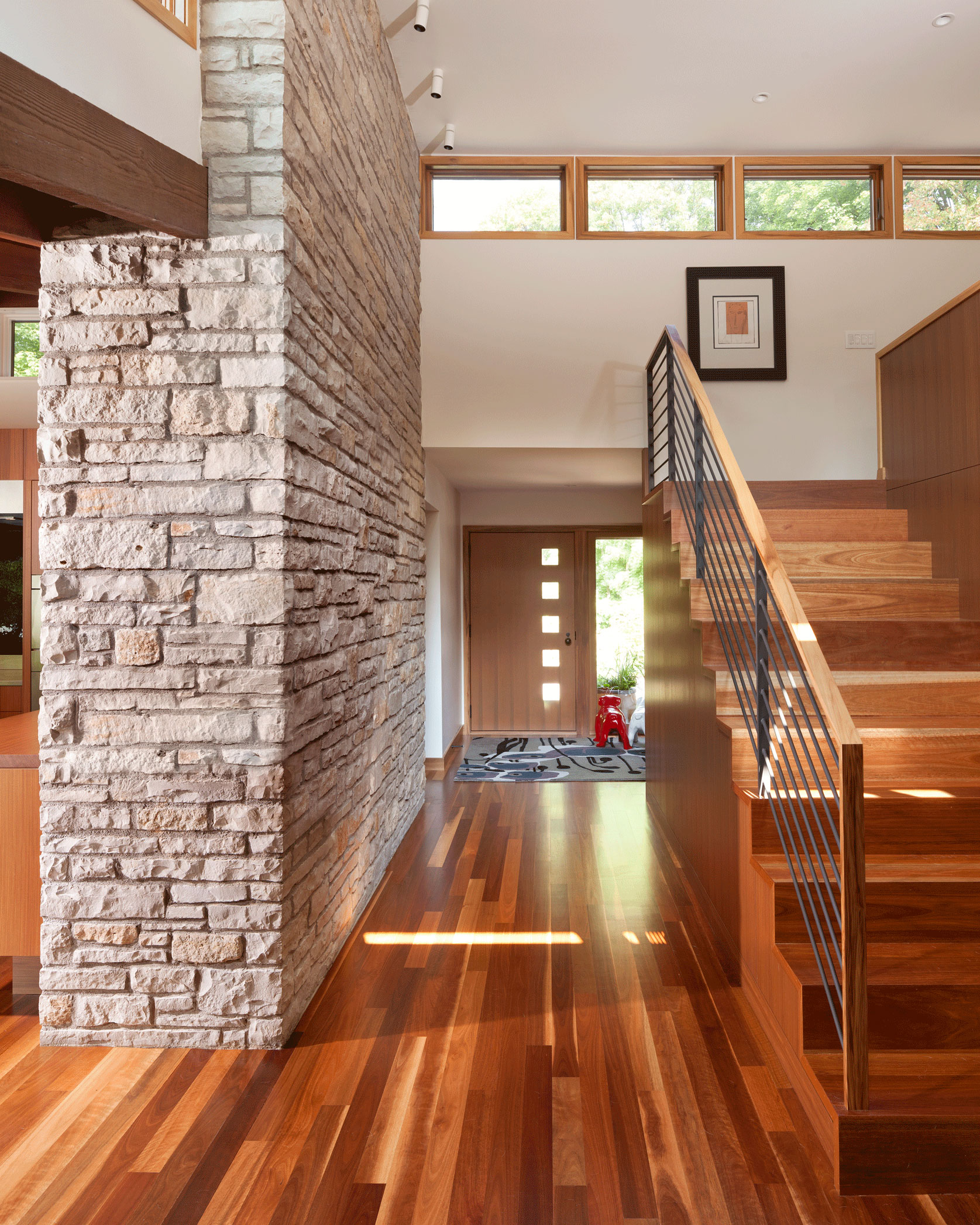
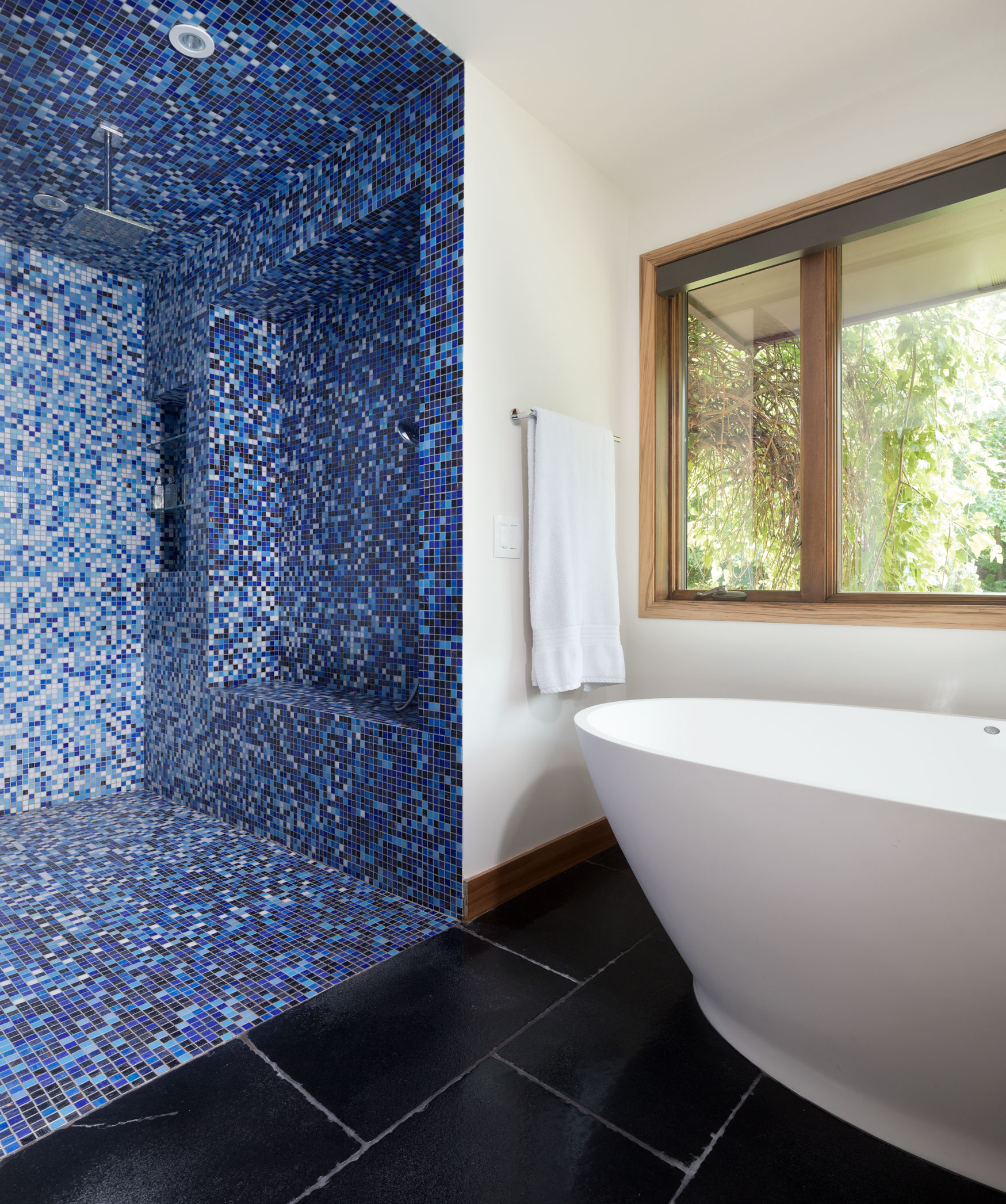
Material decisions support this clarity. The palette remains close to the original character of the house, with updates introduced in a controlled way. Nothing competes with the structure or the setting. Instead, each element reinforces the overall composition, allowing the architecture to remain legible.