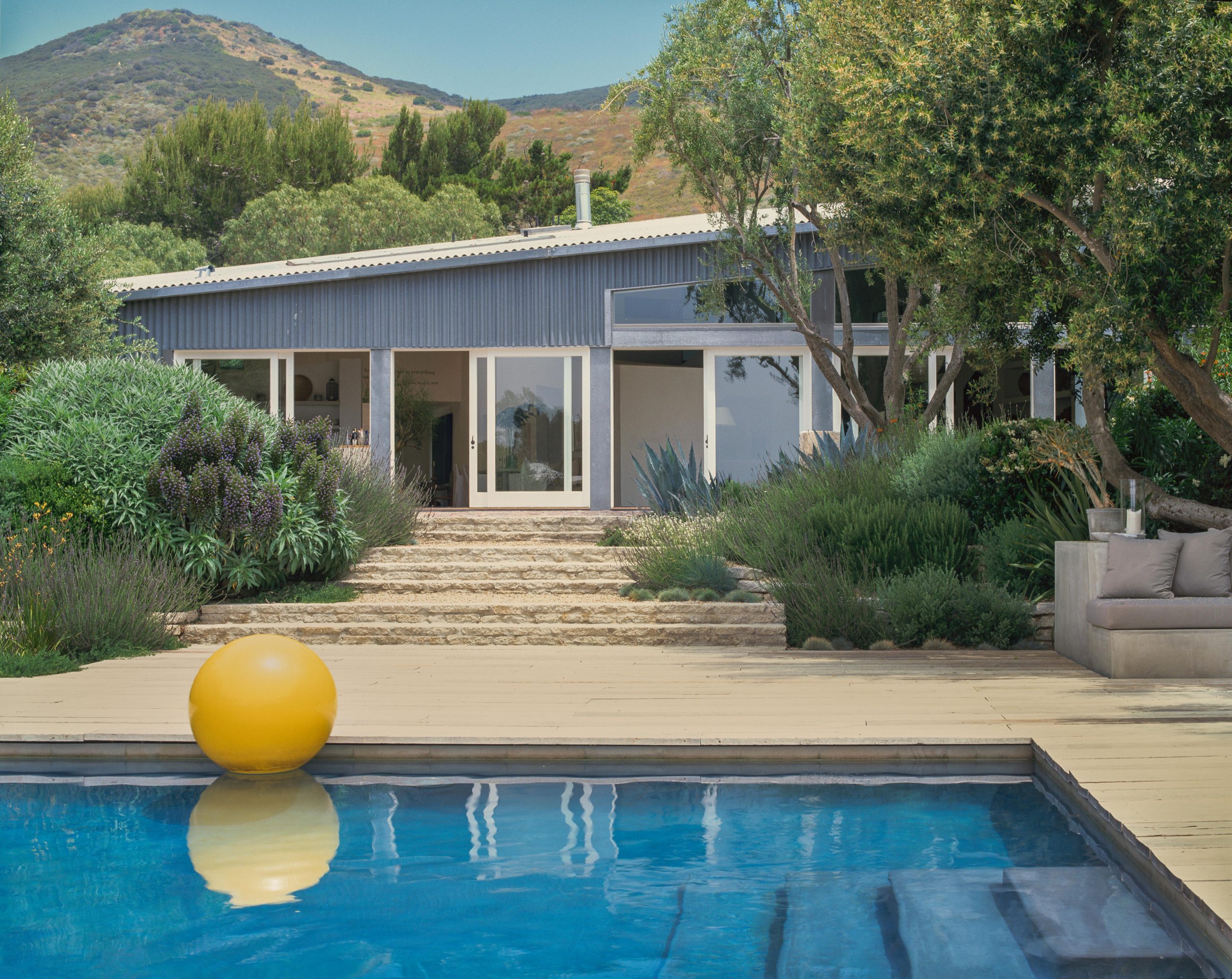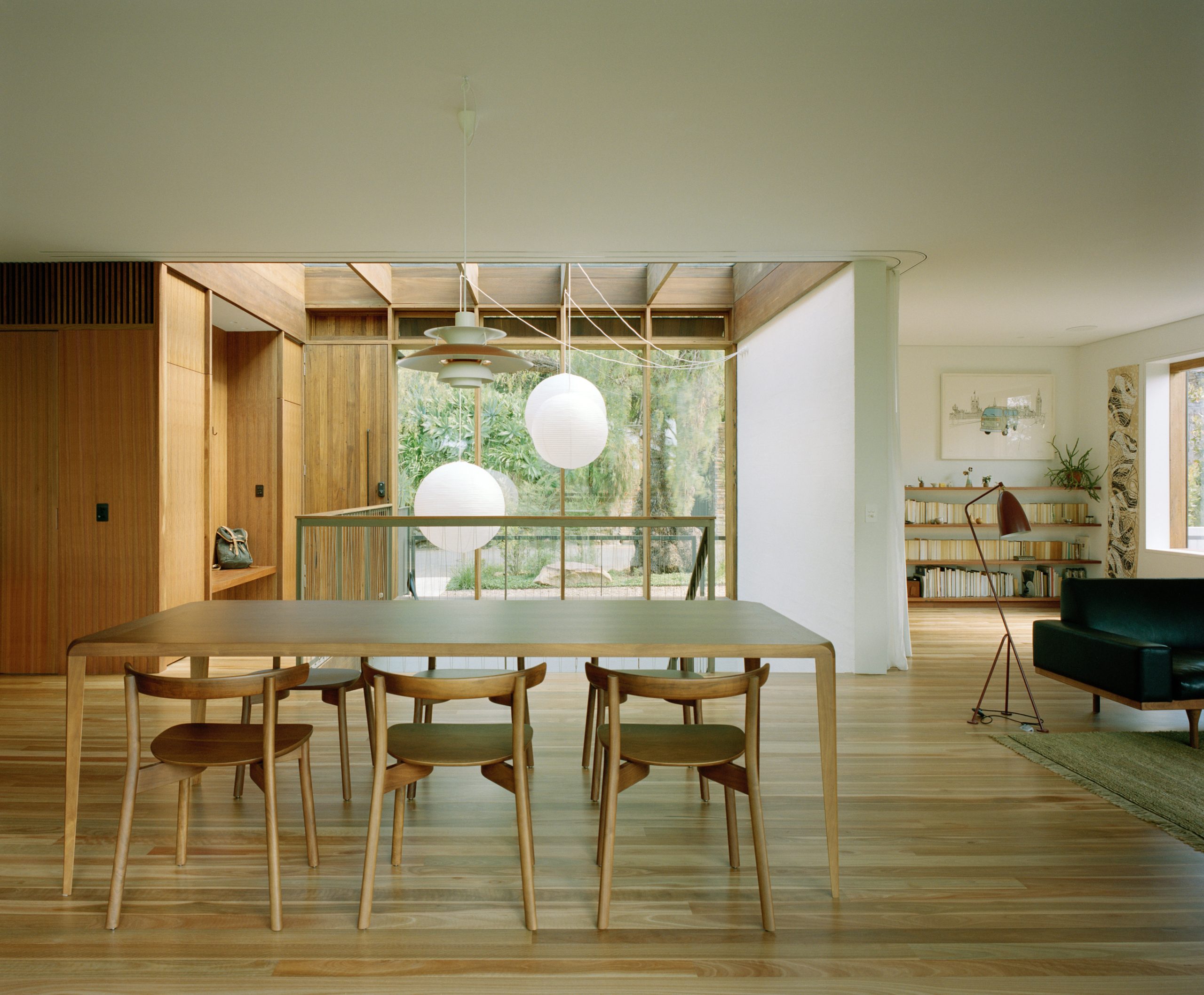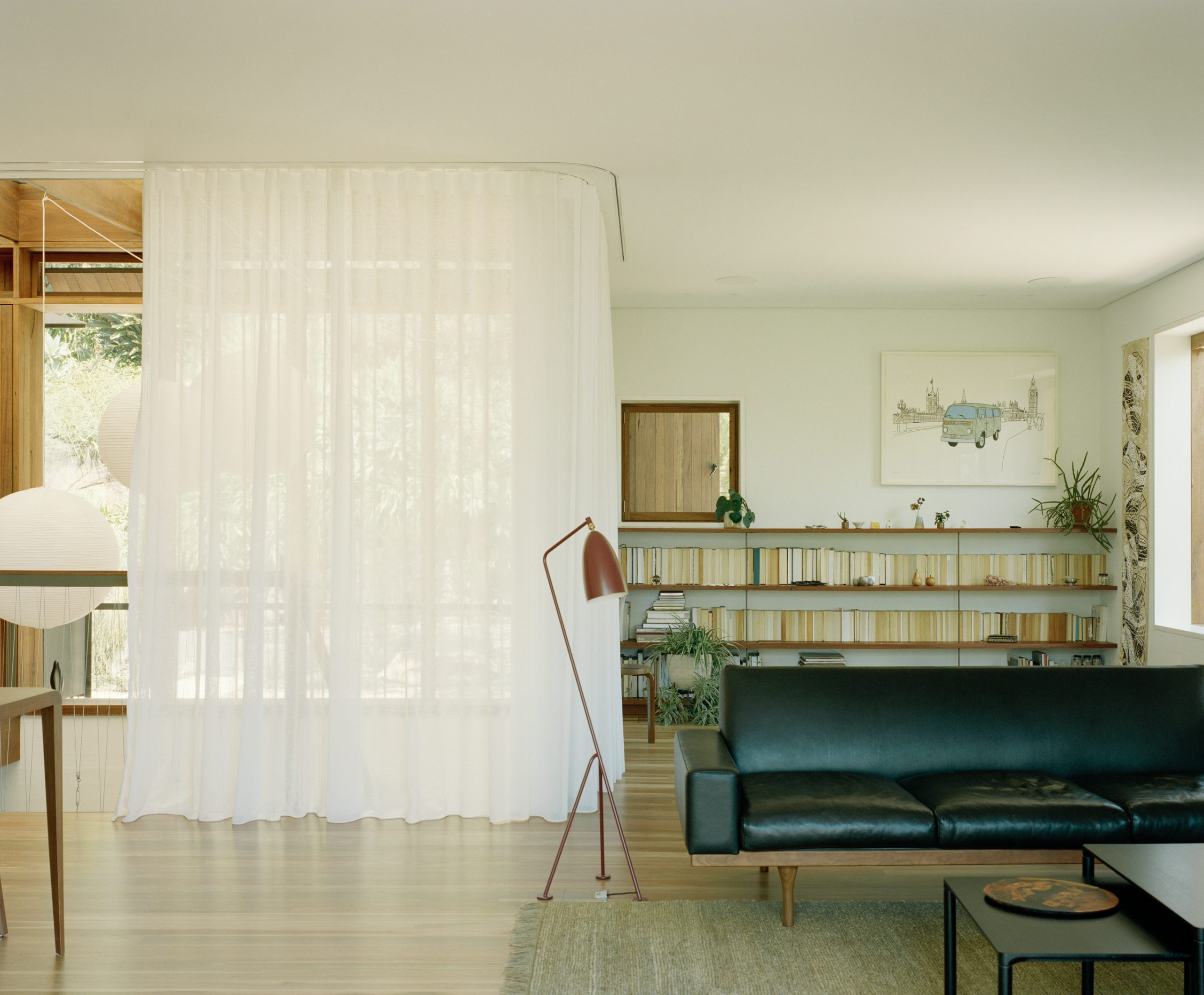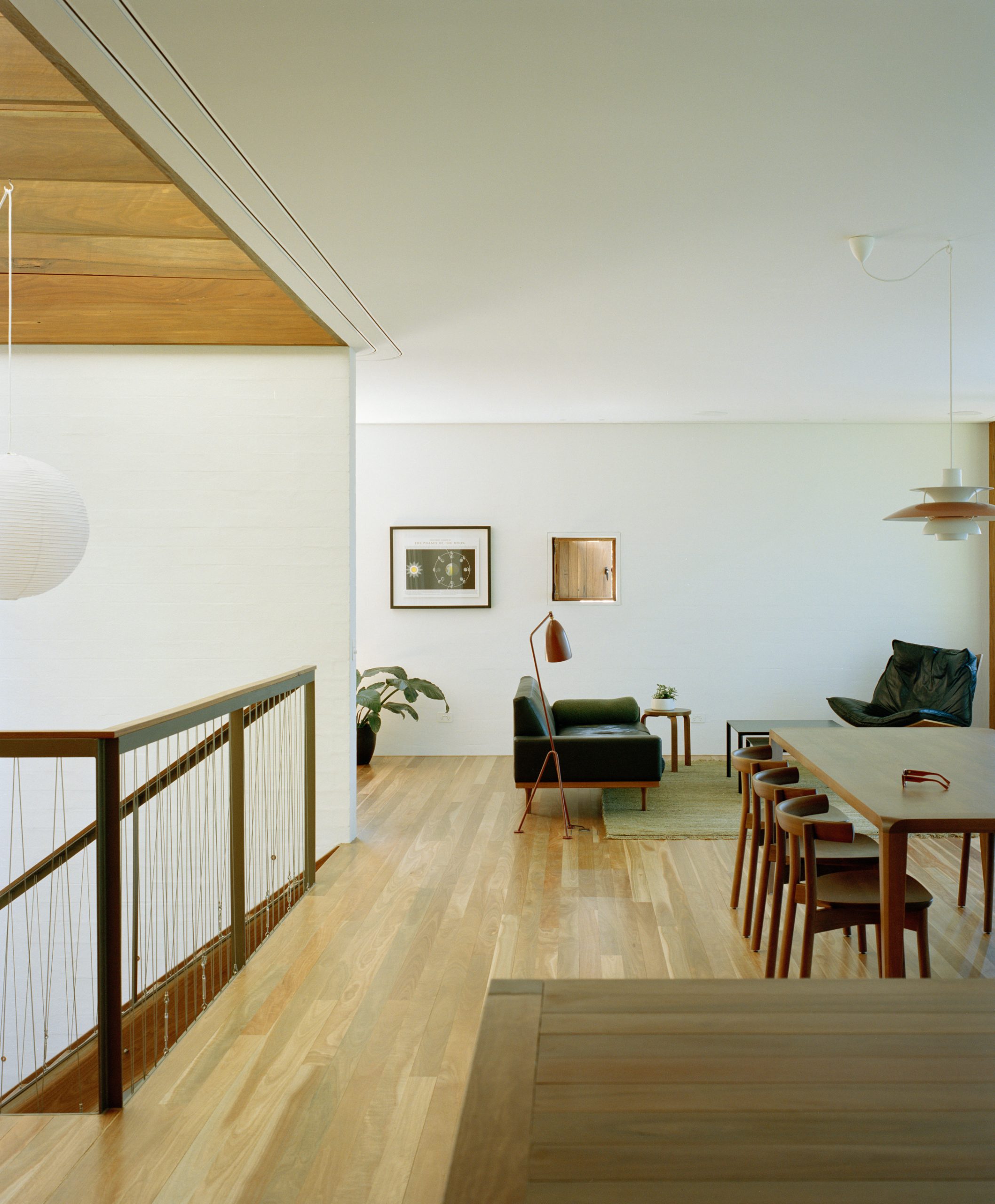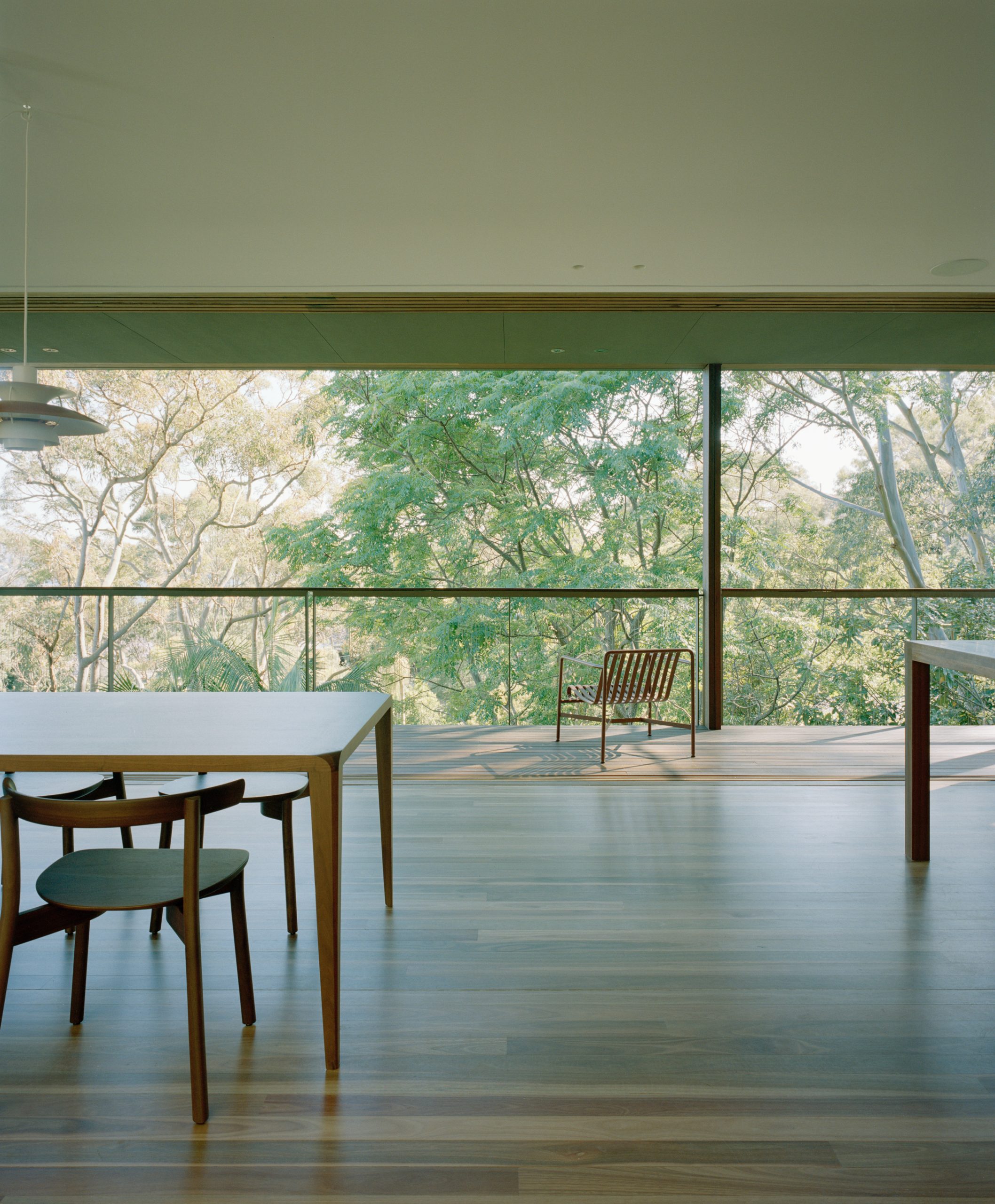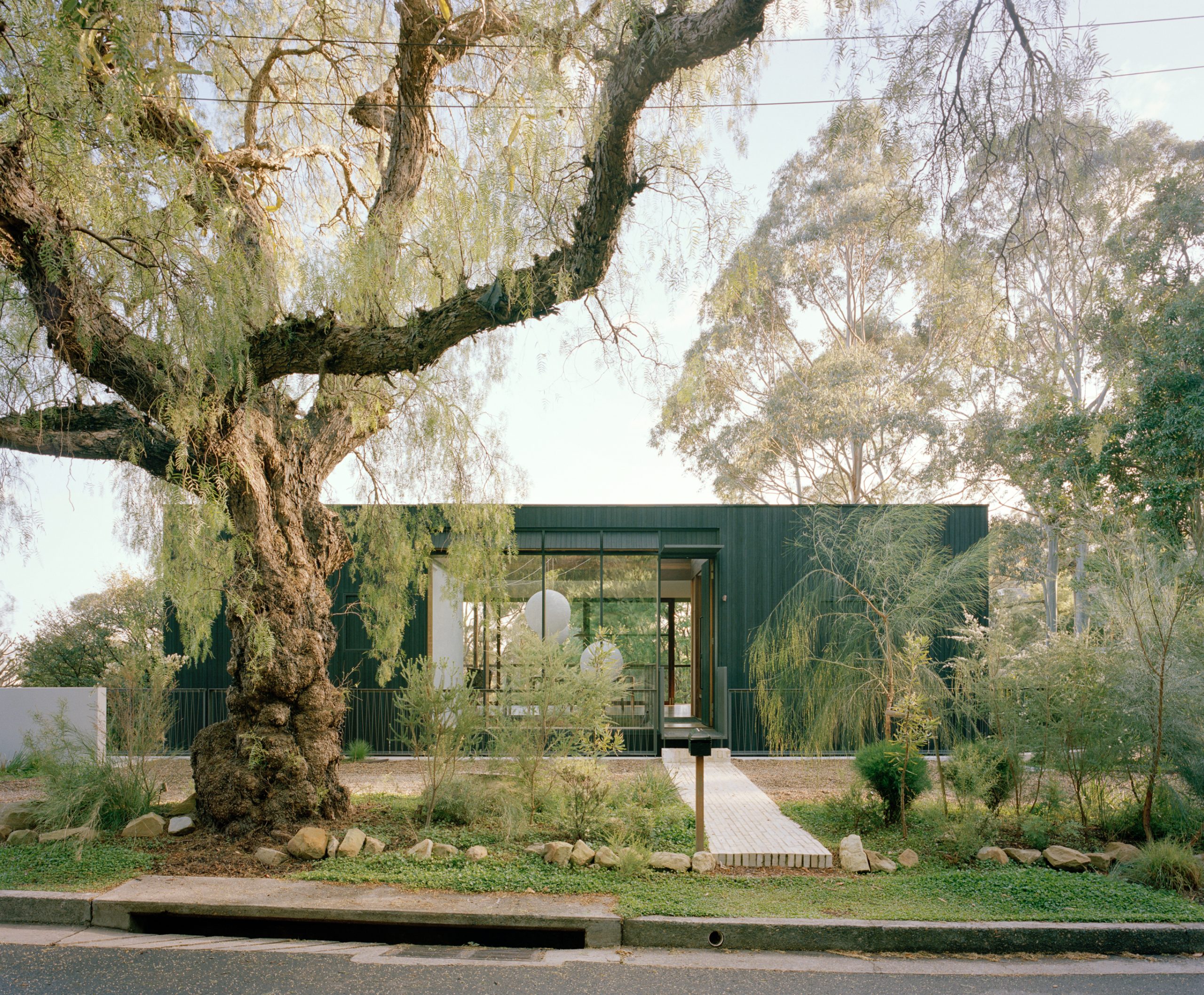
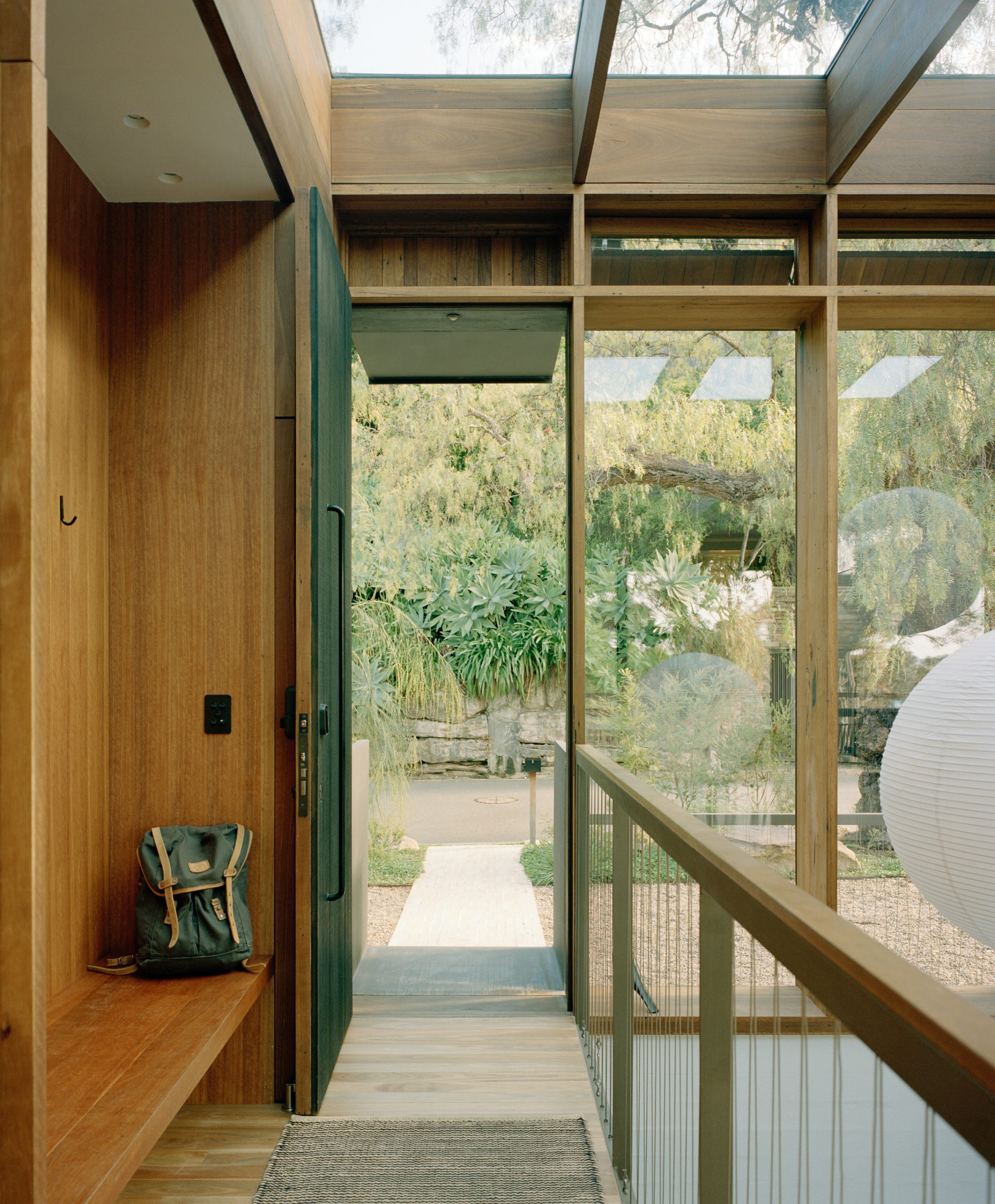

Cloaked House is a reinvention of a mid-century home, shaped by the belief that the best building is the one that remains. Rather than clearing the site for something new, TRIAS chose to work with what was already there, preserving the house’s original framework and giving it an entirely new life. The project sits lightly among the trees, offering a fresh chapter in a story that began decades ago.
From the outset, the renovation was guided by an awareness of embodied carbon. The architects understood that a home’s structure carries a significant environmental investment, and that keeping those elements can dramatically reduce impact.
Instead of rebuilding from scratch, the team retained the existing slabs, perimeter walls, and steel beams, transforming the project into an ambitious alteration and addition.
The clients, a family of four with two daughters and a lively dog, were drawn to the property for its quiet outlook and dense garden setting. The original house was charming but worn, and they wanted spaces that felt lighter, safer, and more open to the landscape.

Before design decisions were made, TRIAS took time to understand the building’s condition, confirming with engineers what could be saved. Archival images revealed its owner-built origins and connection to the Sydney School, adding a sense of cultural continuity to the work.
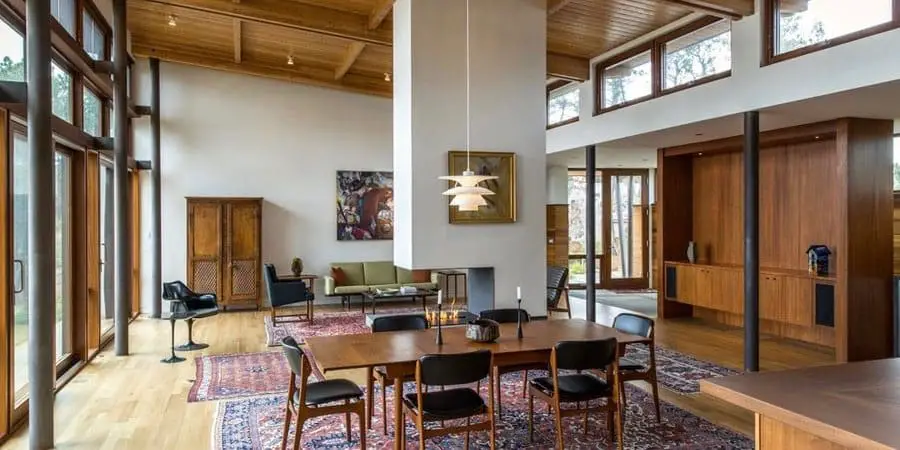
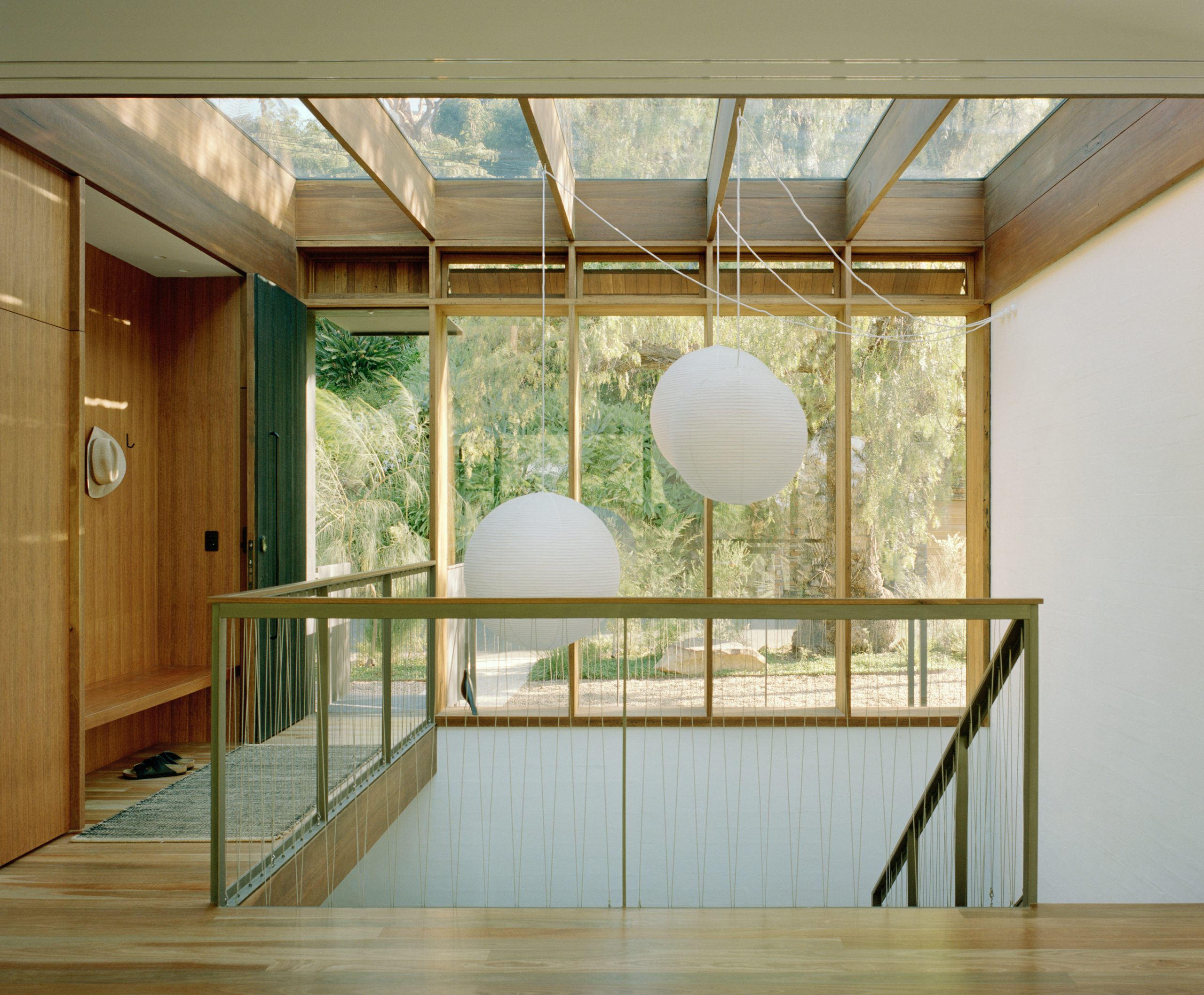
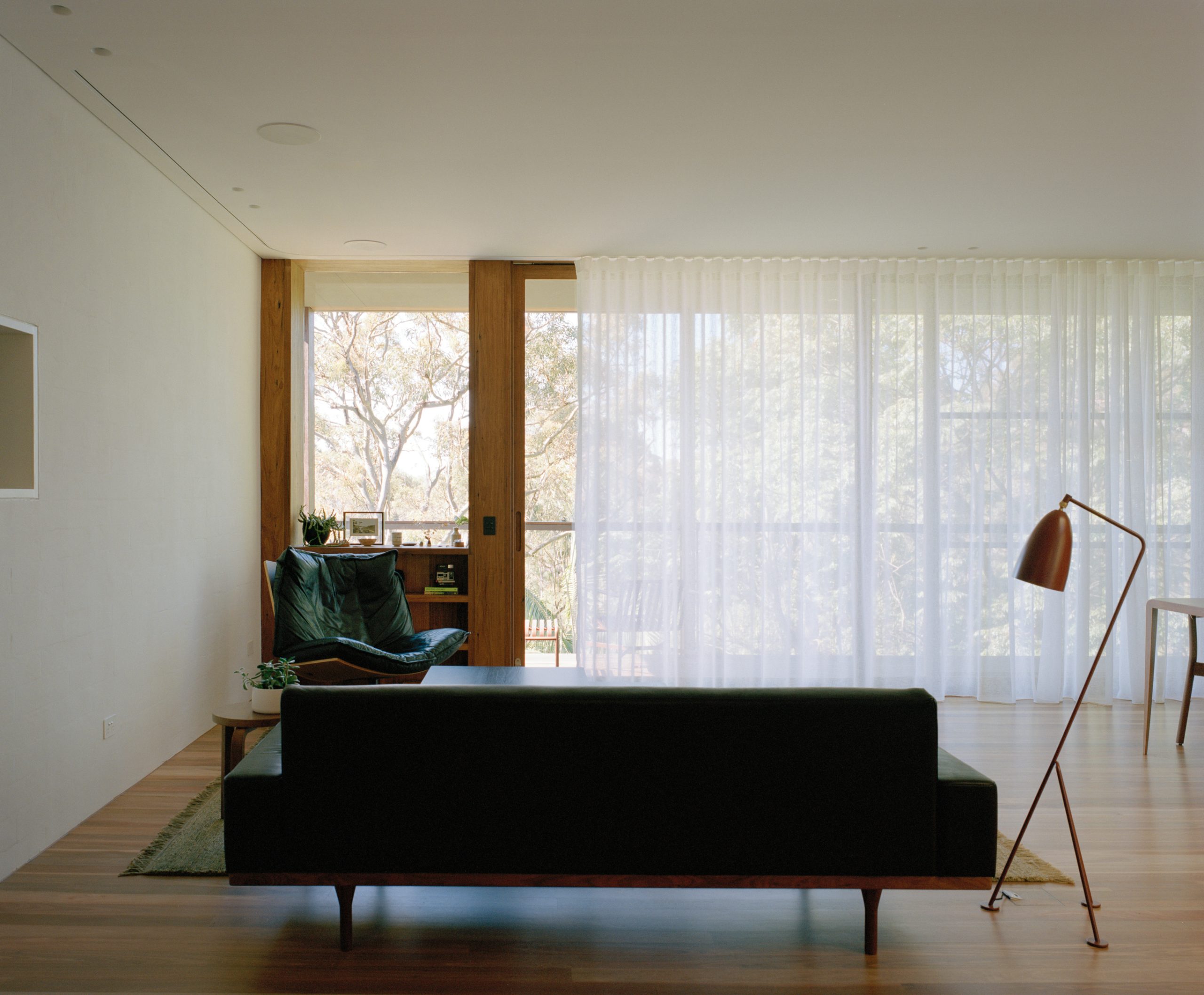
The house was pared back to its essential shell, allowing the interior to be reshaped around new patterns of living. Rooms were reorganised for better connection, and daylight was brought deeper into the plan.
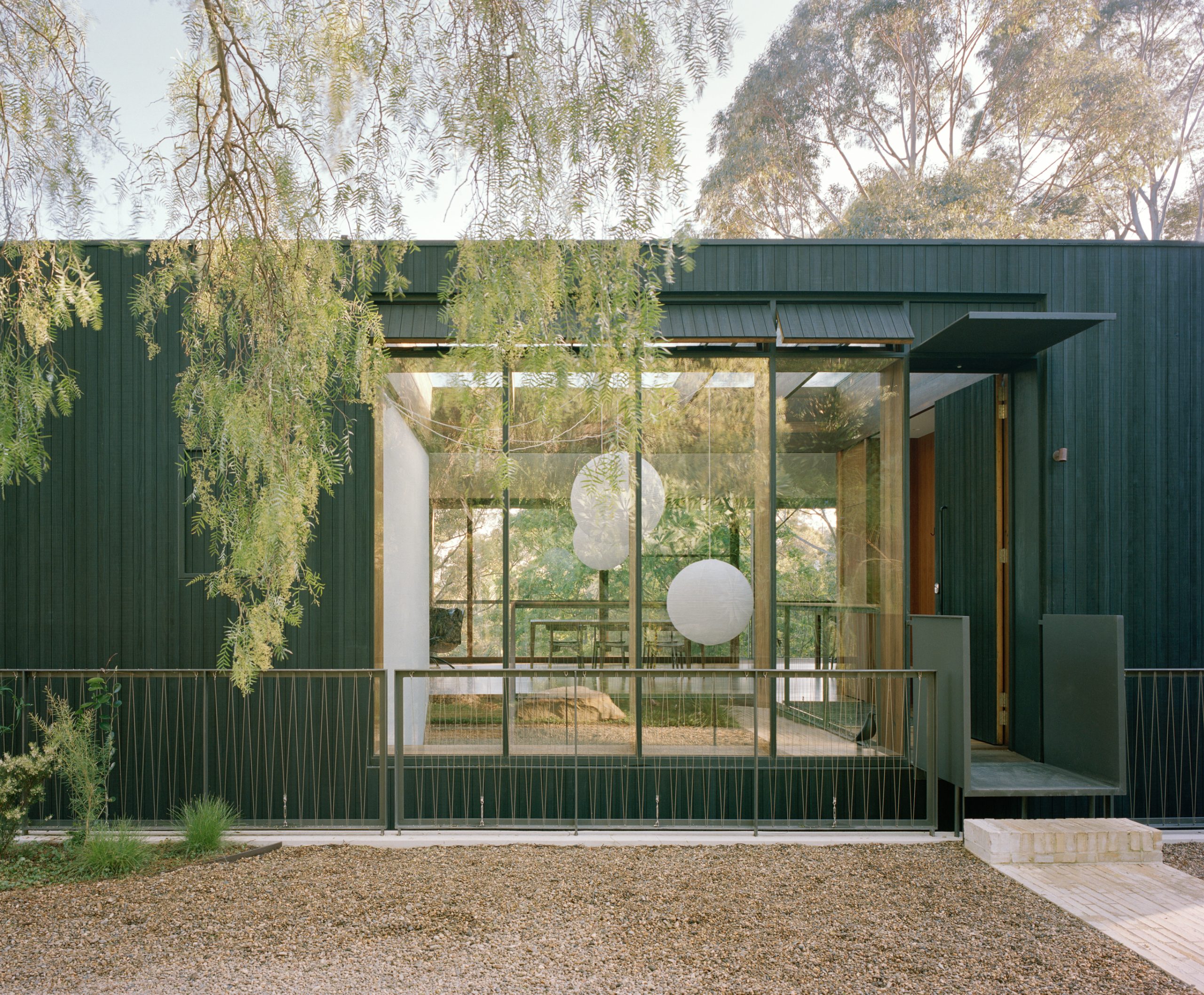
At the centre, an atrium courtyard was introduced, drawing greenery into the heart of the home and creating a sense of breathing space. Restored balconies extend outward, hovering above the canopy and catching shifting seasonal light. A reconstructed stair guides movement down through the levels, linking living areas, bedrooms, and garden.
Across its three levels, the home moves from openness to retreat. The upper floor engages with treetops and winter sun, sharing views outward. Below, the sleeping spaces feel more sheltered, framed by close garden glimpses. The lowest level reimagines the undercroft as a cool, shaded extension of the landscape, offering a protective, almost cave-like atmosphere.
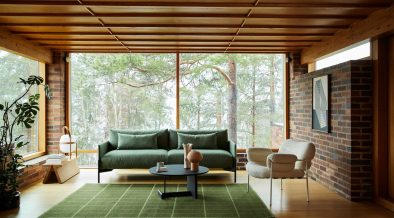
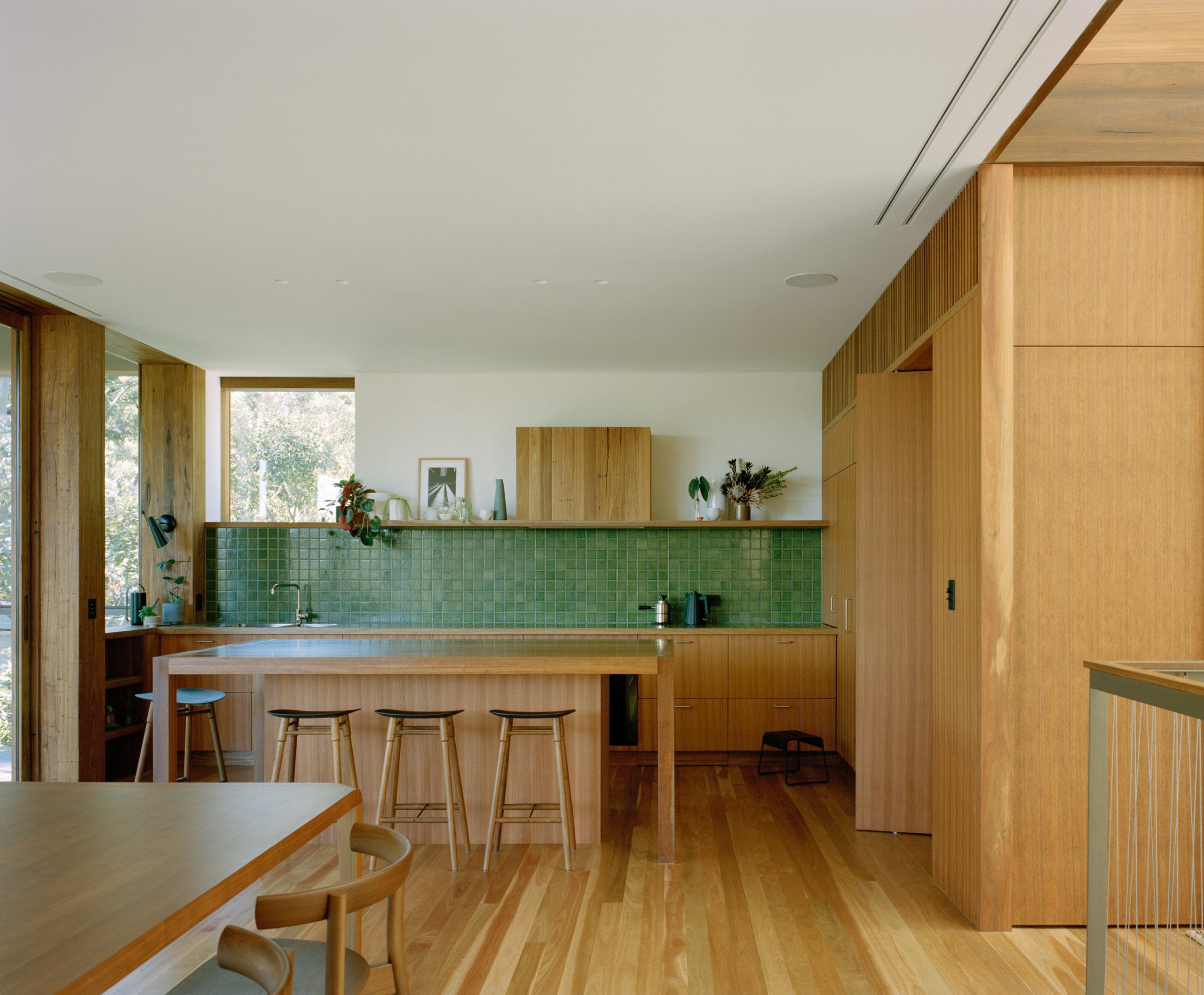
Material choices reinforce this balance of renewal and memory. The facades are composed as a patchwork of retained and new openings, rebuilt with recycled timber and carefully repaired masonry.
Salvaged elements, including sandstone boulders, old rafters, and a hand-painted splashback, have been reintroduced with care. Throughout, textures and details quietly reference the home’s mid-century origins.
The “cloak” of timber that gives the project its name wraps the exterior in a new protective skin, improving performance while preserving the house’s character.
Passive strategies such as cross ventilation, shading, thermal mass, upgraded insulation, and double glazing support year-round comfort. Rainwater is collected for reuse, and the home runs entirely on electricity, supported by a substantial solar array.
By keeping its structural bones, the renovation saved more than 20,000kg of CO2e, showing how mid-century houses still offer one of the strongest frameworks for sustainable architecture today.