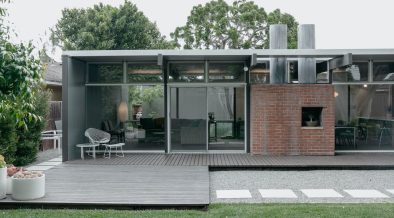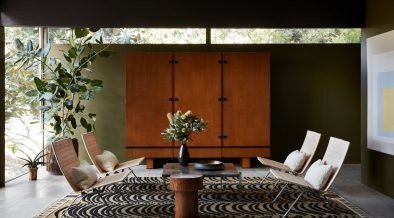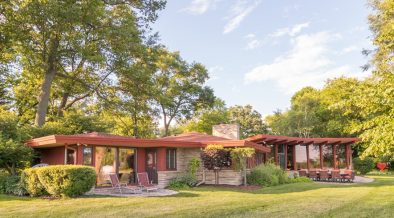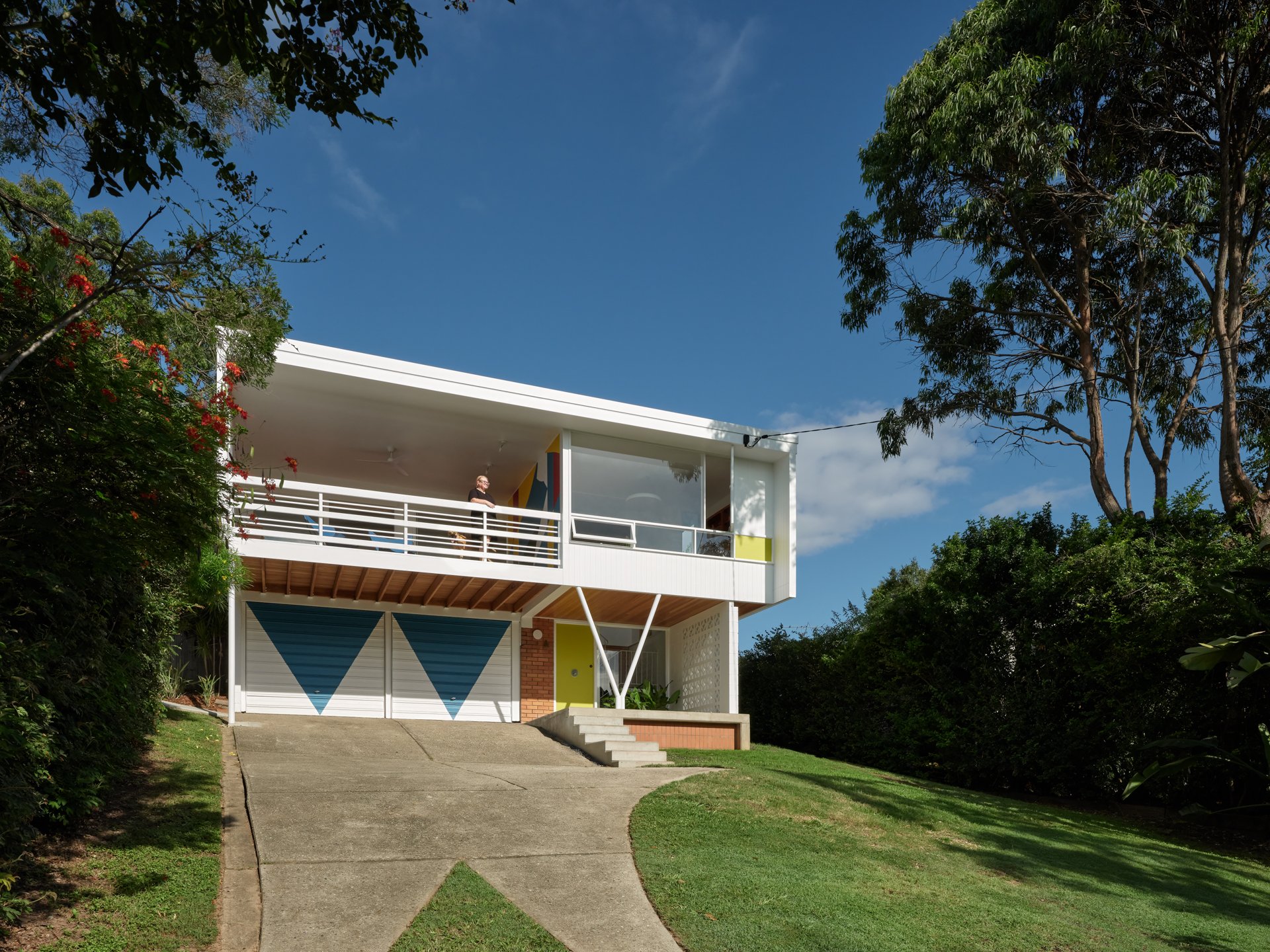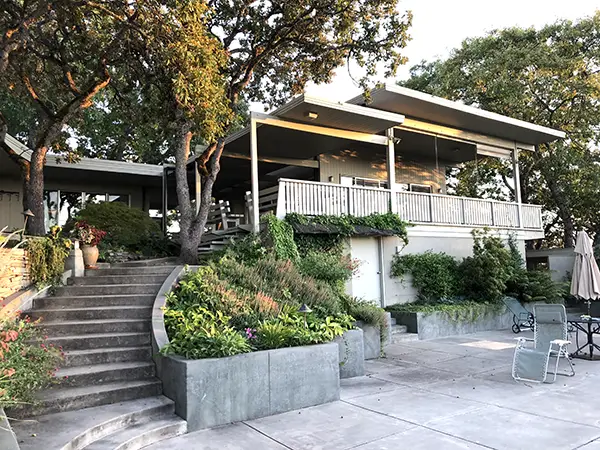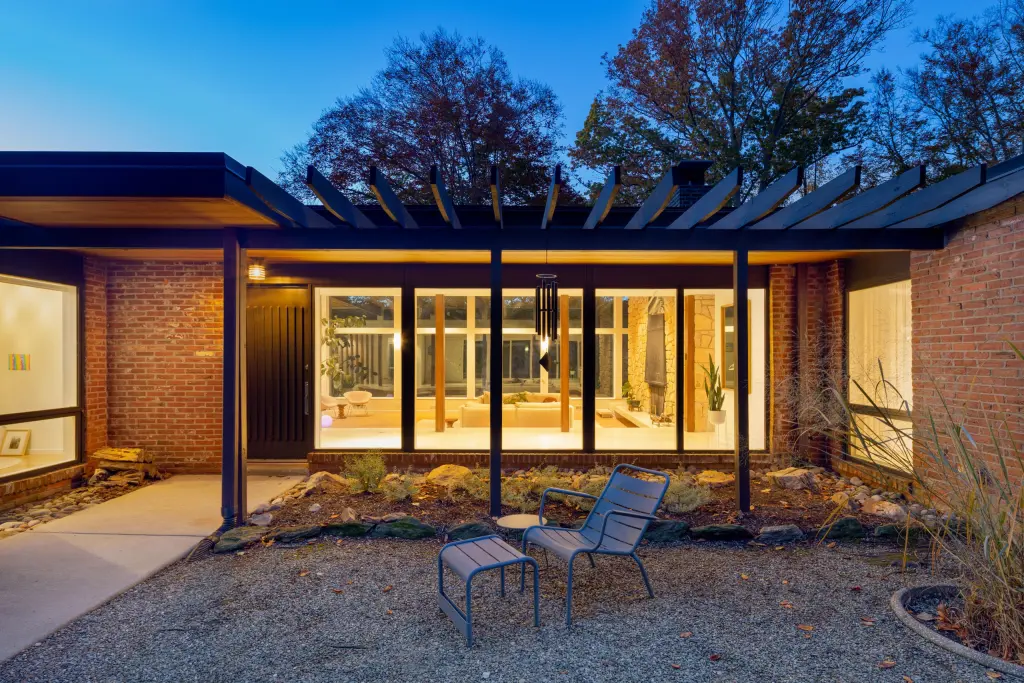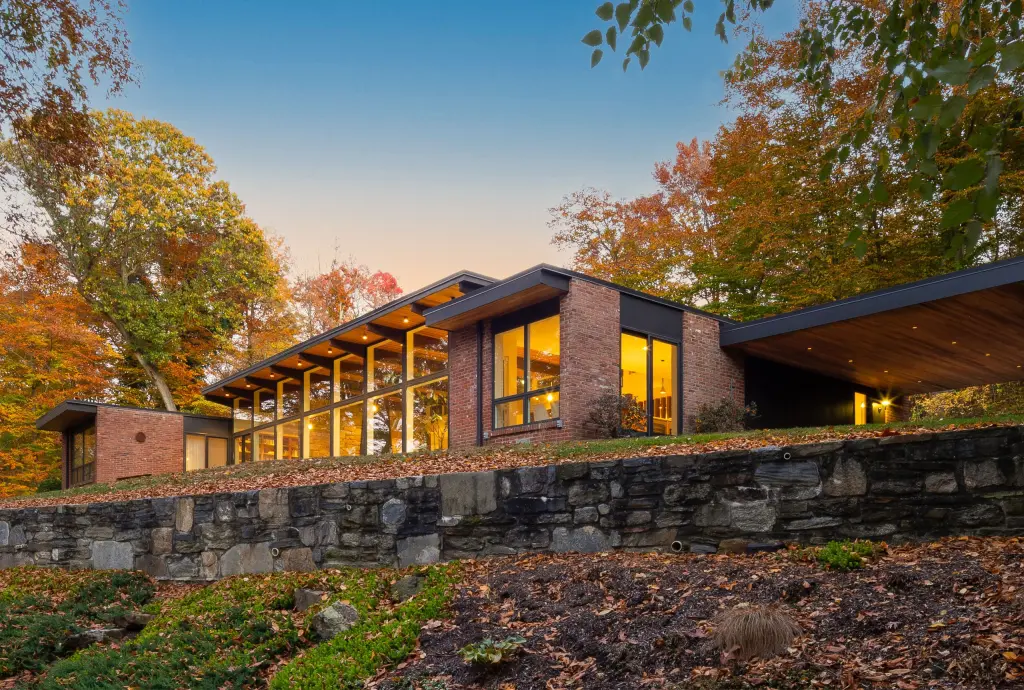

On a hillside in Penn Valley, Pennsylvania, a mid-century house reveals itself slowly. Set deep within a wooded site overlooking a 100-acre park, the home is designed to be experienced from the inside out.
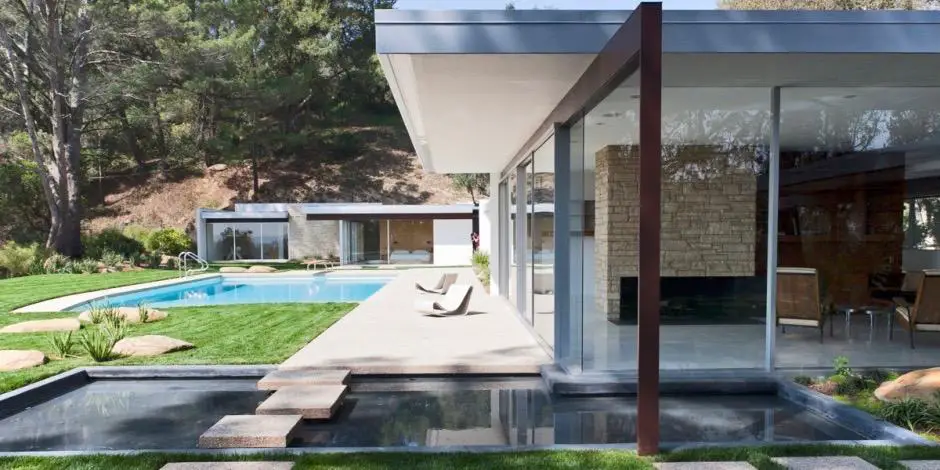
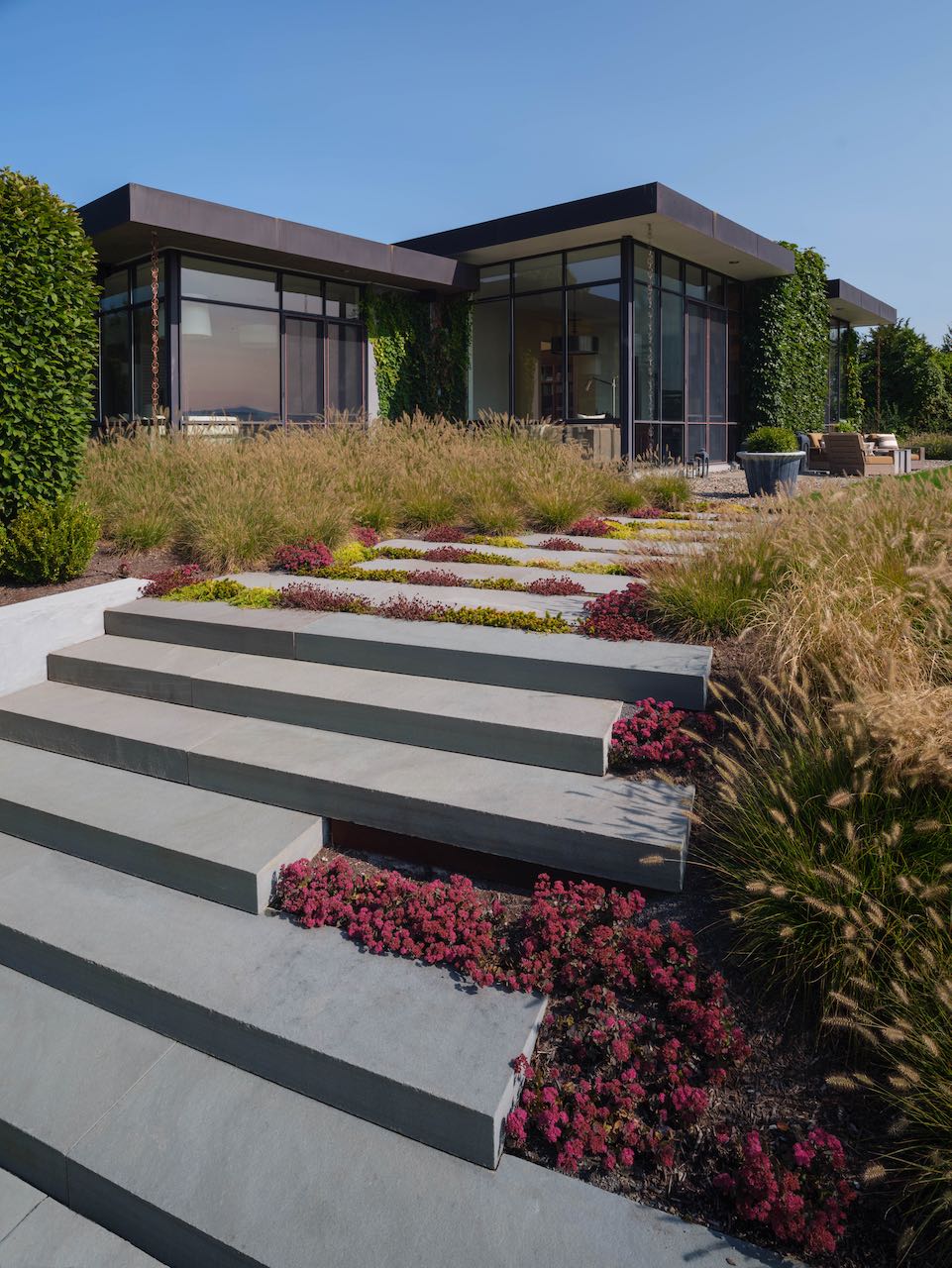
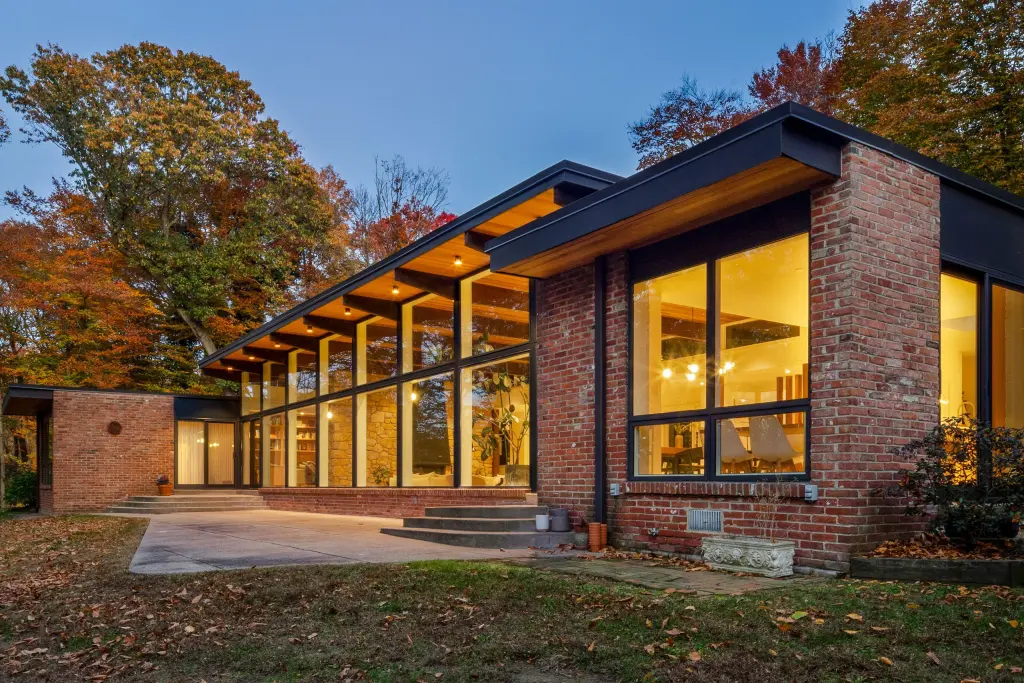
Glass stretches across the façade, framing trees, stone, and sky, while the interior shifts with the seasons. It is a house defined by calm proportions and material restraint, and one that has recently been renewed with equal sensitivity.
The home was originally designed in 1959 by Philadelphia architect Charles Frederick Wise, a figure known for his measured, site-responsive modernism. Arranged on a single level with a small finished basement below, the house includes four bedrooms and four bathrooms.
Its plan is direct and legible, allowing structure, light, and landscape to do most of the work. Privacy afforded by the hillside setting made expansive glazing possible, reinforcing a close relationship between interior life and the surrounding forest.

The renovation was led by architect and homeowner Lauren Thomsen of Lauren Thomsen Design. Her approach centered on improving the home’s energy performance while preserving the clarity of Wise’s original design. Much of the work focused on the building envelope.
The roof was insulated and the exterior updated. Each new element was carefully modeled after the original details, ensuring continuity rather than contrast.
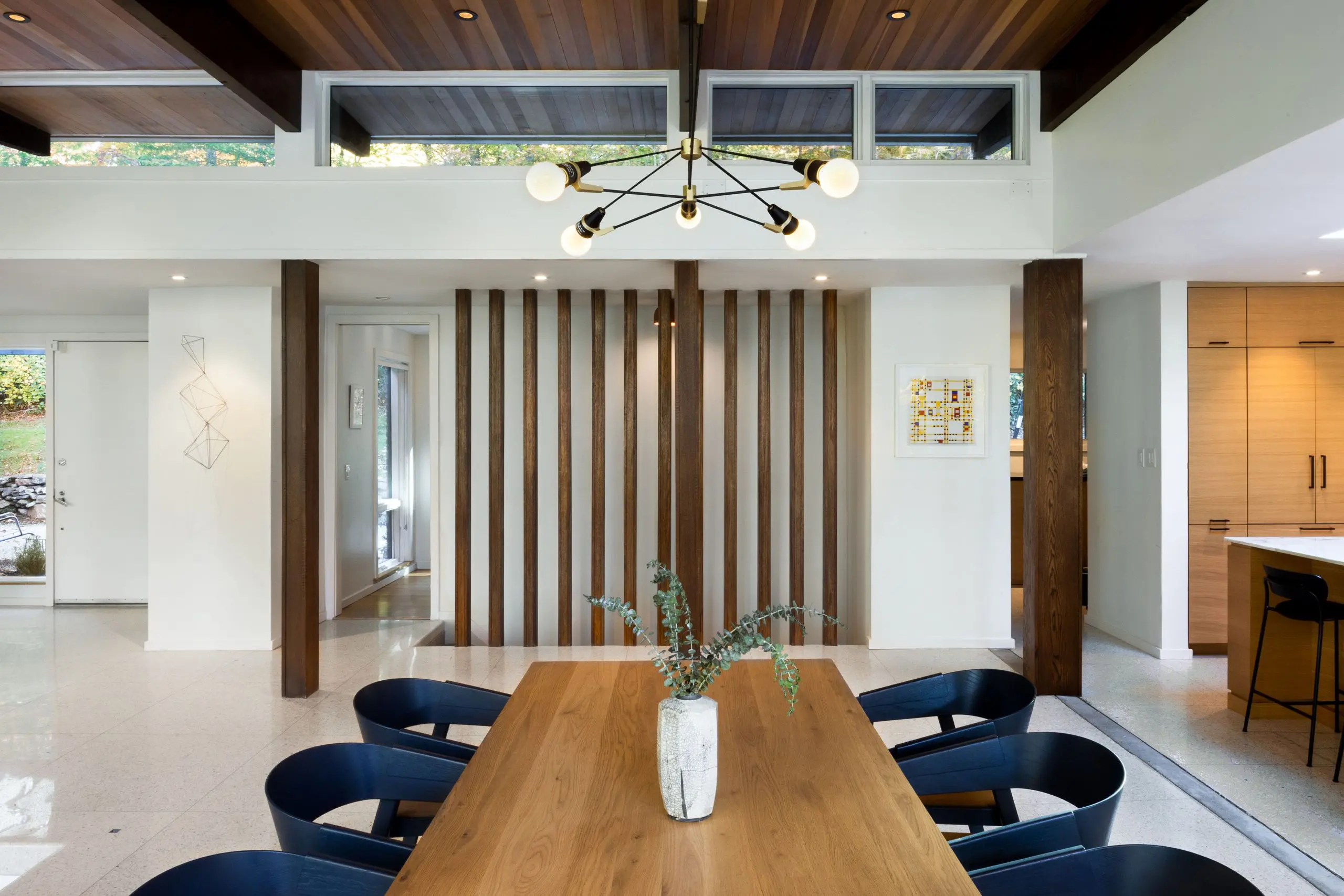
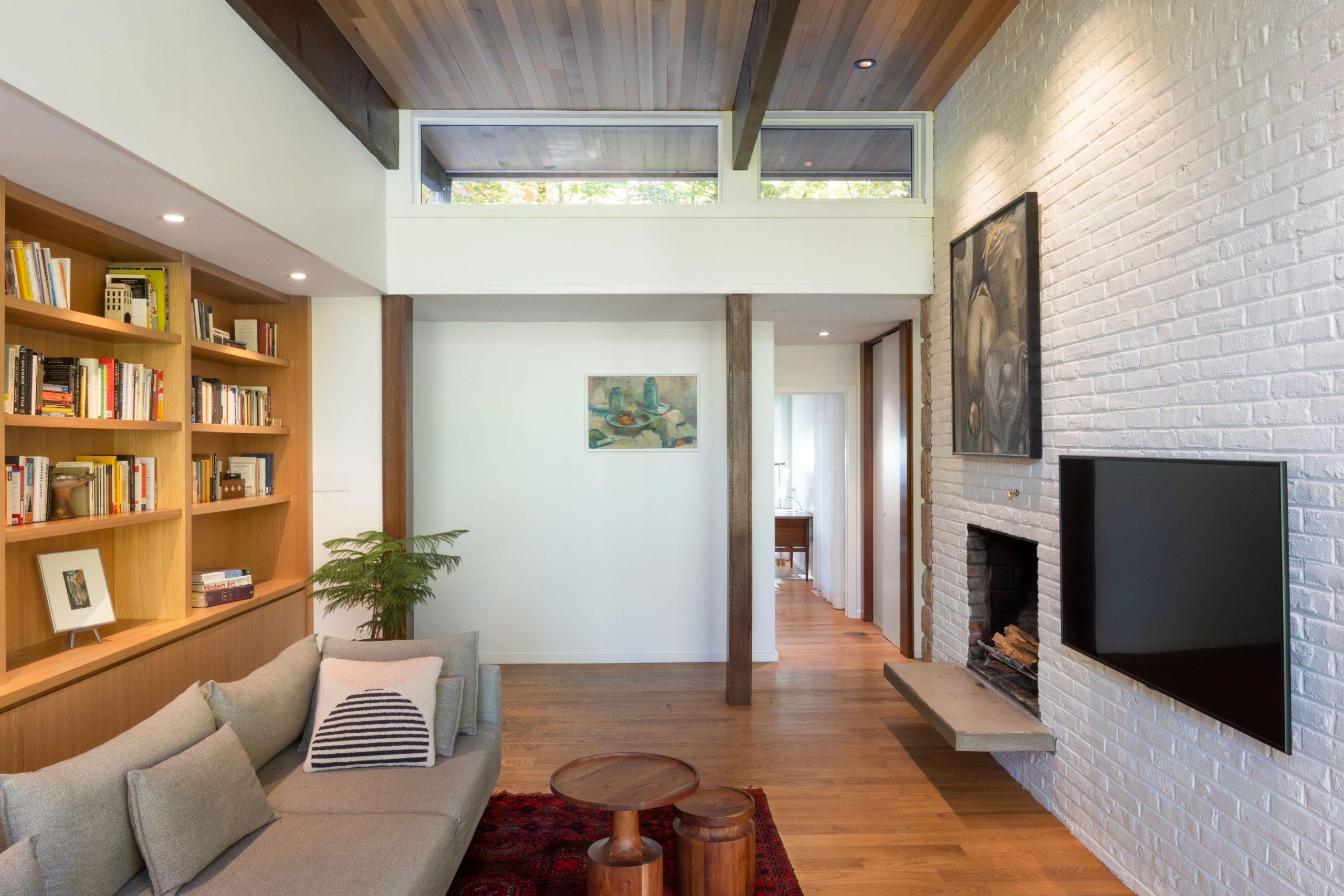
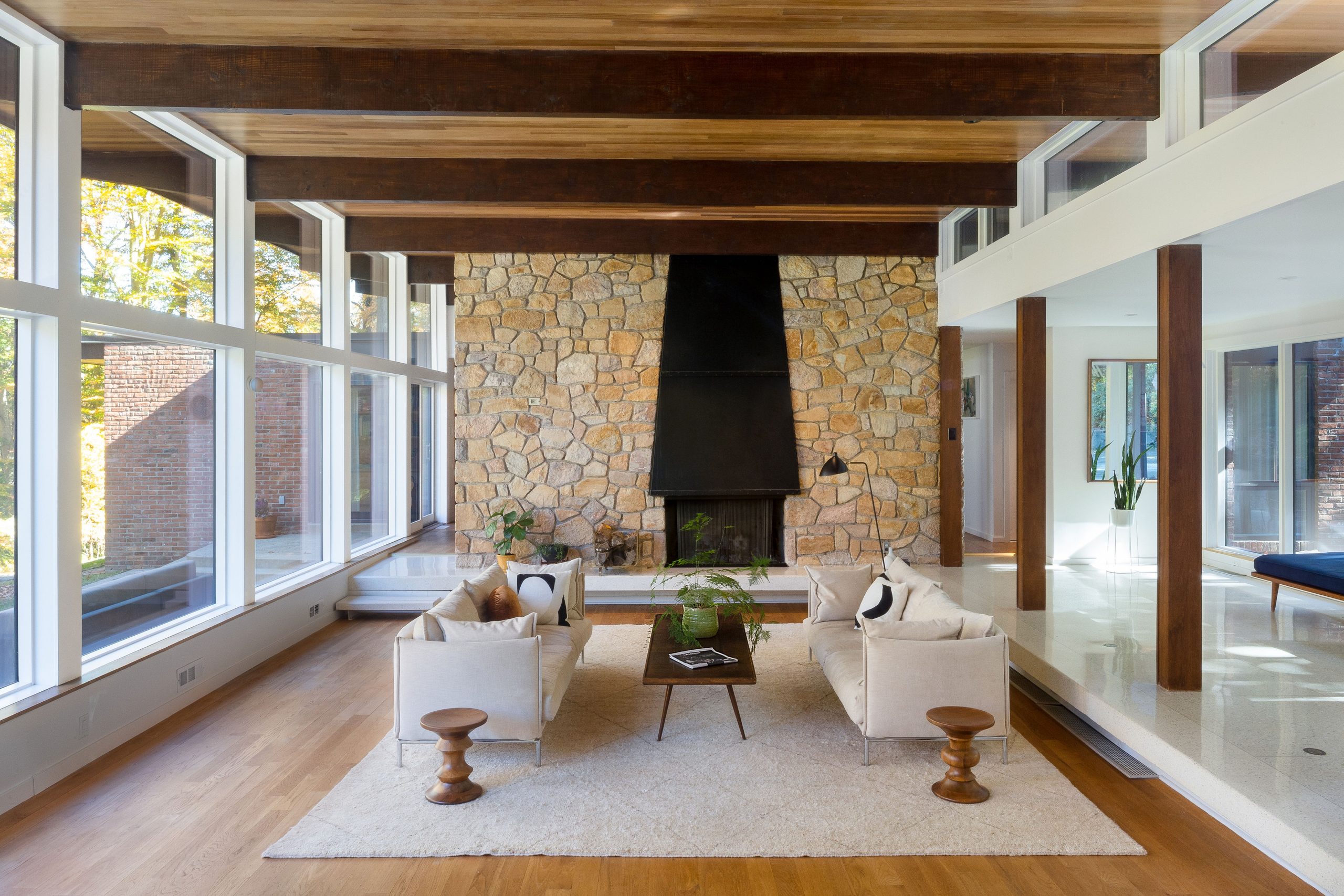
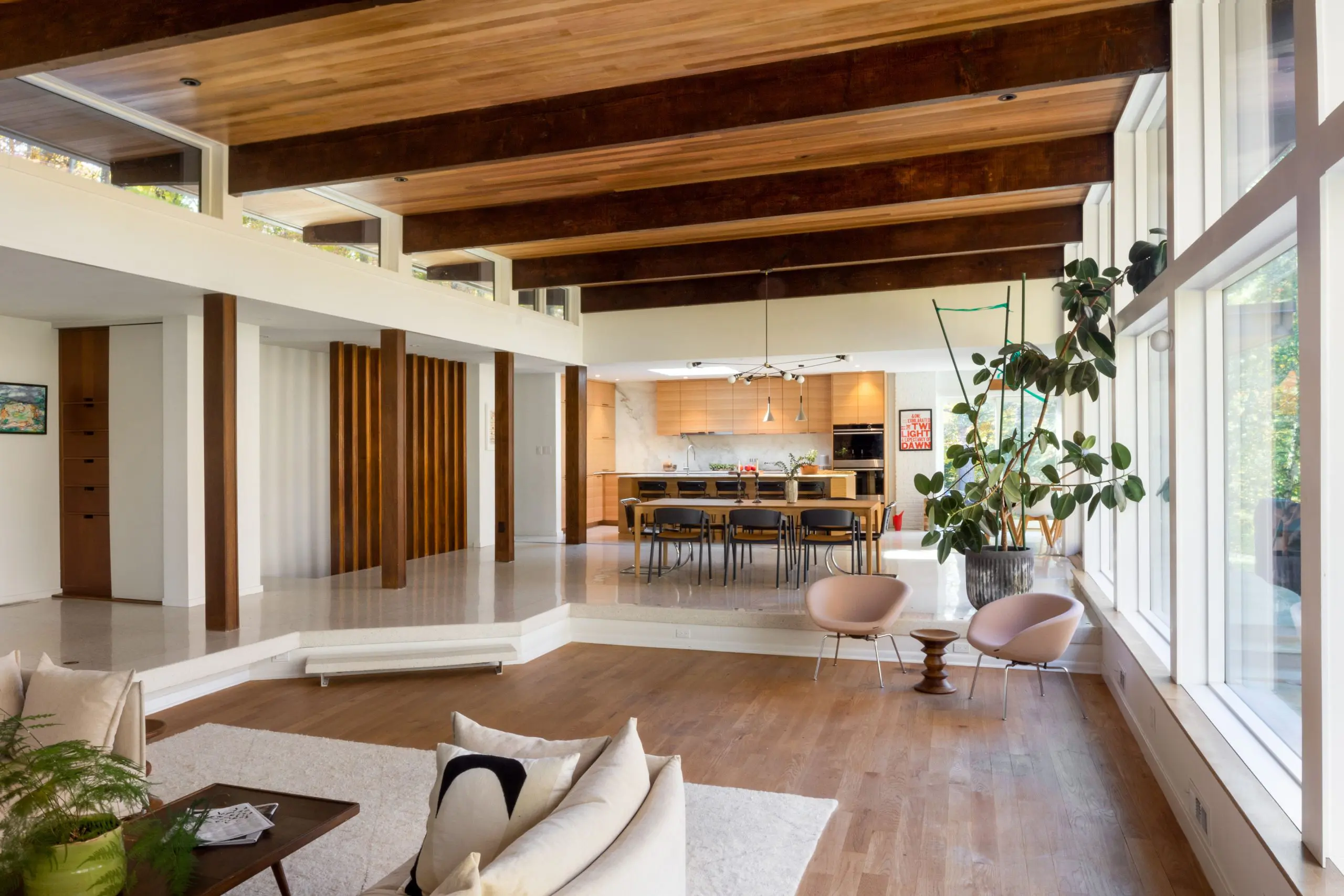
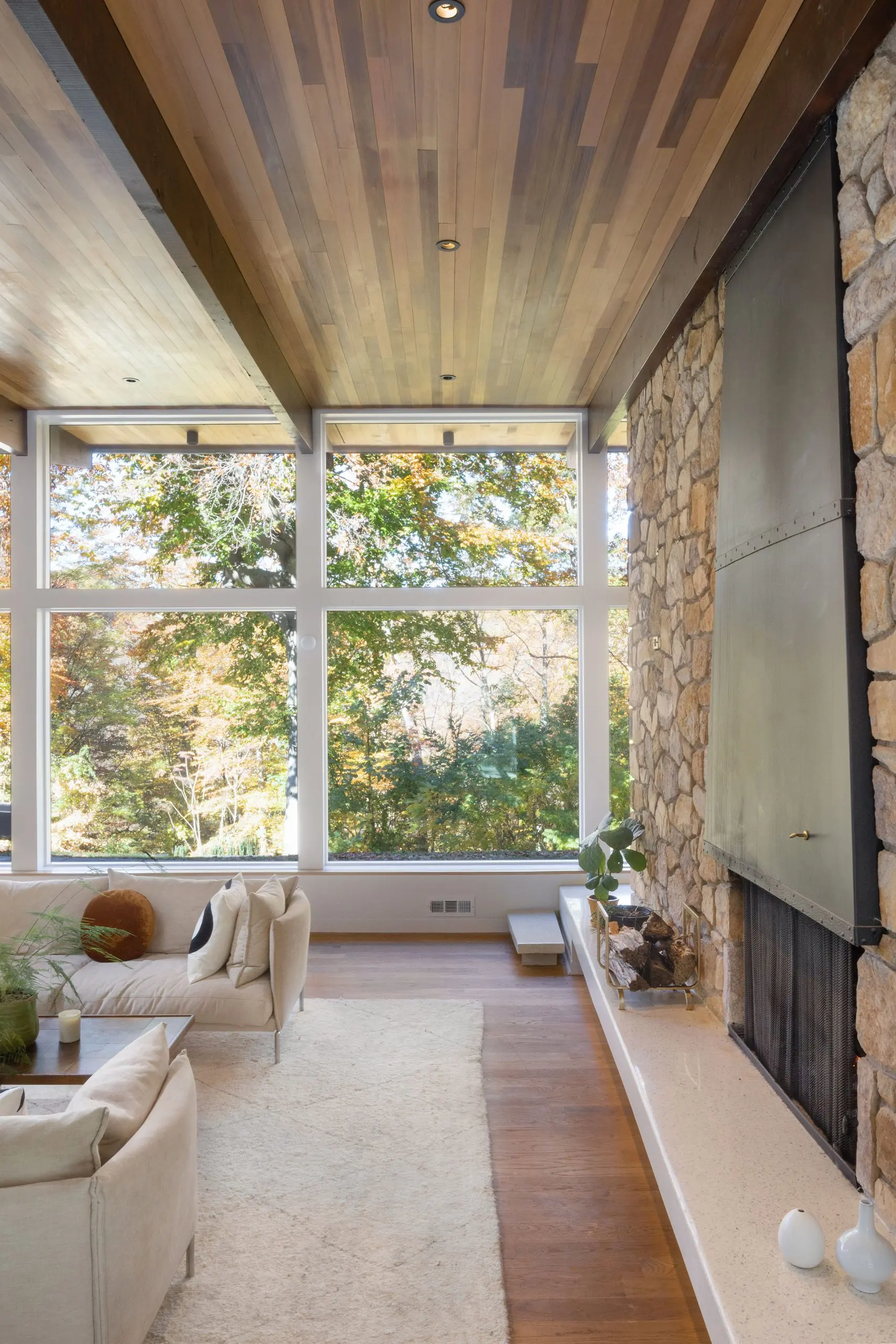
A defining gesture of the renovation is the use of clear cedar. The ceiling of the main living space, along with all exterior soffits, is clad in the same material, visually extending the interior into the landscape. The cedar introduces warmth and rhythm, catching light throughout the day and connecting with the wooded site beyond the glass.
Inside, the plan was selectively opened to better support contemporary living. A structural wall between the kitchen and dining room was removed, allowing light to travel deeper into the house and improving circulation for daily life and entertaining.
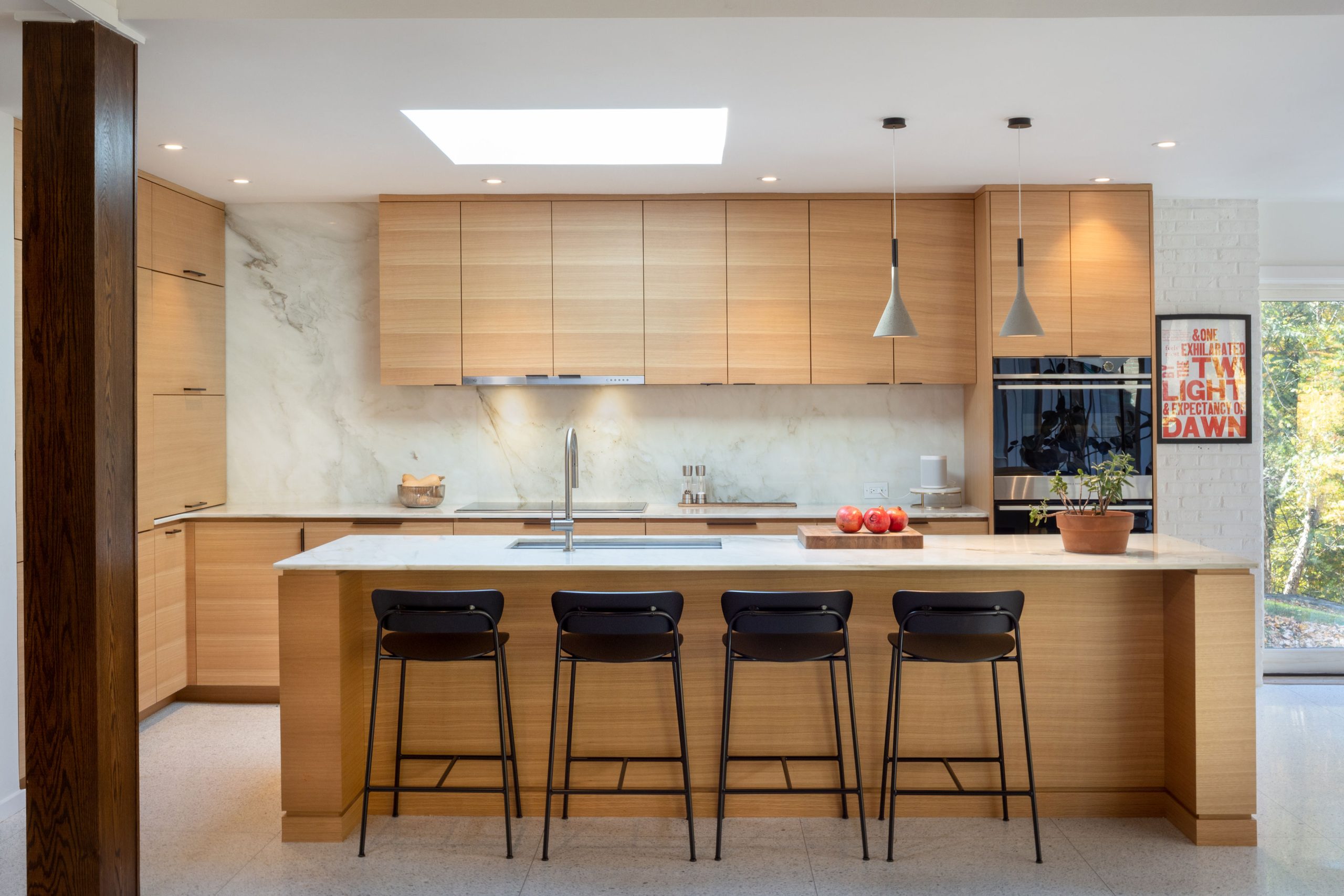
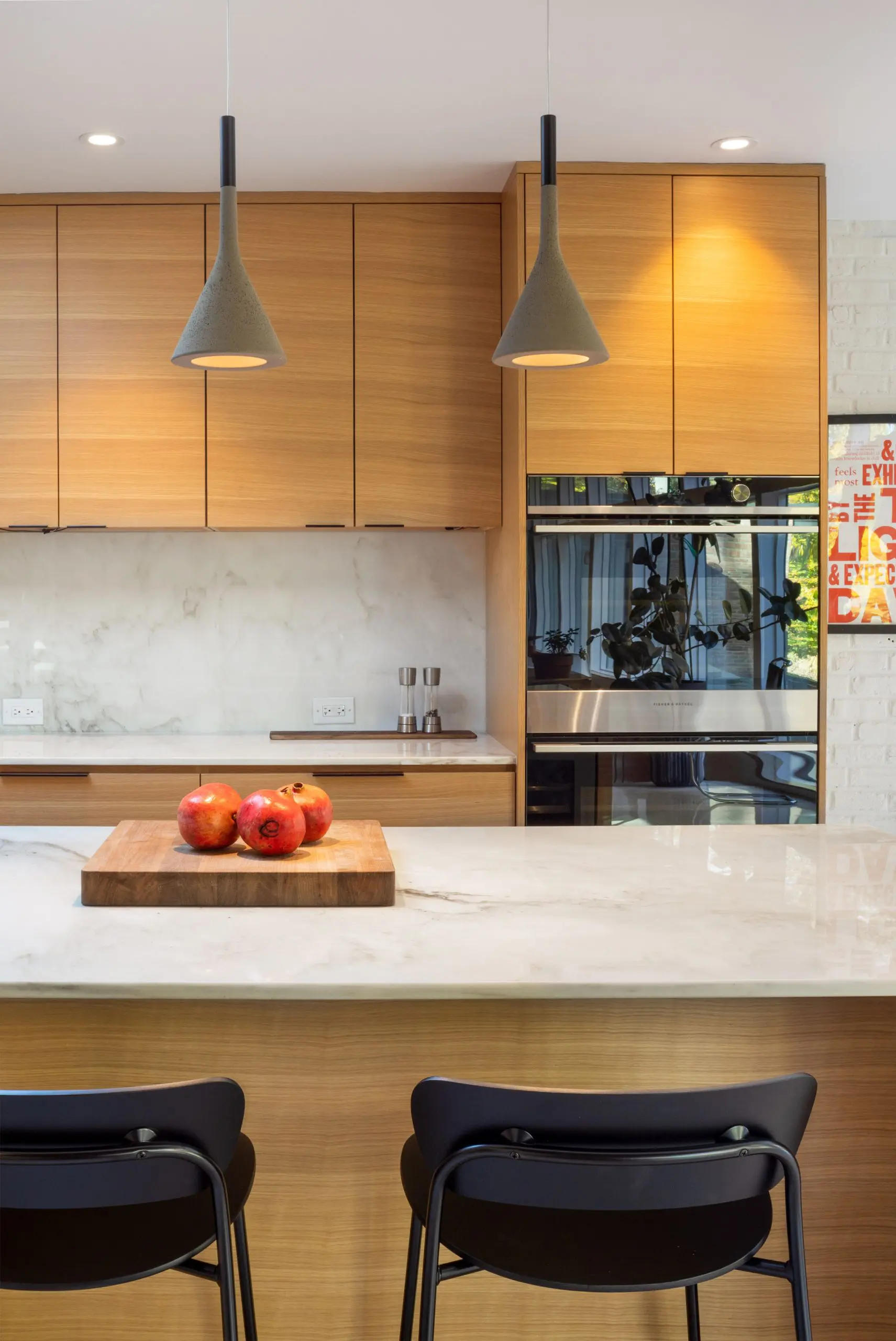
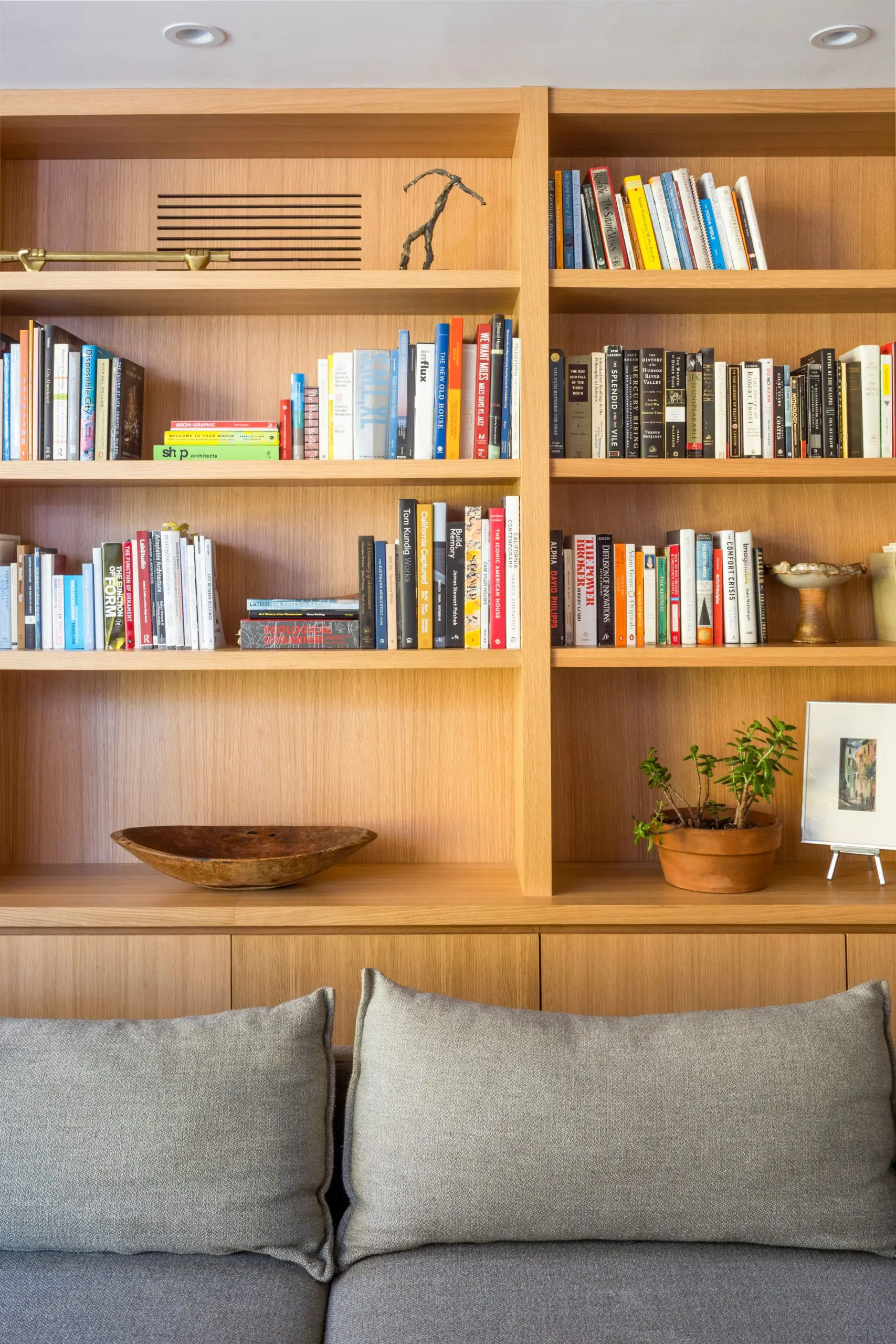
The kitchen is restrained and tactile, with white oak millwork and marble countertops. It reads as furniture rather than a separate room, firmly integrated into the architecture.
Original features were preserved and carefully complemented. Exposed beams, terrazzo floors, and the Pennsylvania fieldstone fireplace remain central to the home’s character.
The private spaces maintain the same quiet discipline. In the primary bedroom, white walls, a brick fireplace, and expansive windows create a serene retreat oriented toward the hillside.
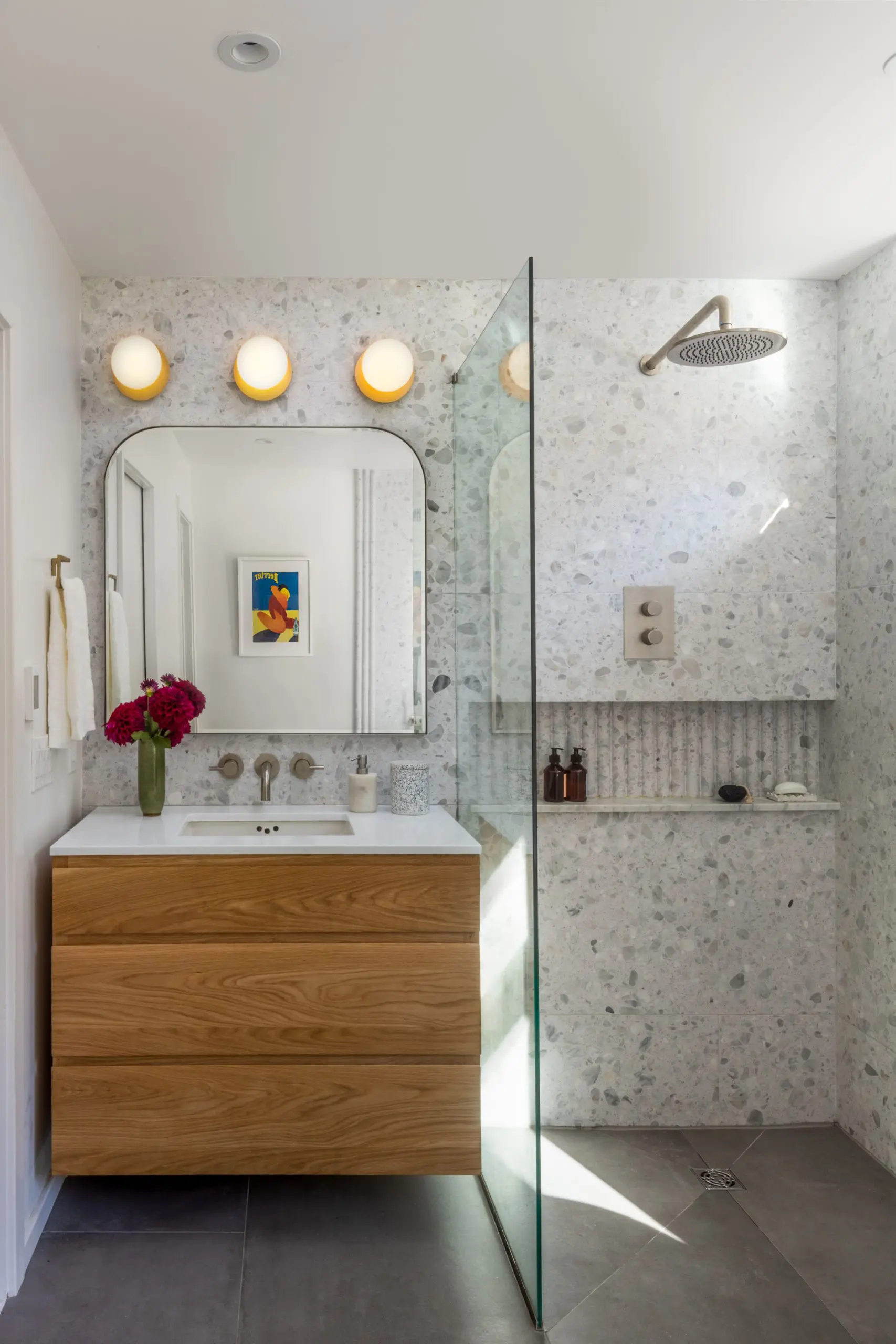
The bathroom was reworked with terrazzo tile, a soaking tub, and a separate toilet room. The children’s bathroom introduces contrast through black cement tile and patterned wallpaper, a subtle nod to midcentury graphic motifs.
Throughout the renovation, the goal was a transformation with continuity. The house remains grounded in its landscape, renewed for contemporary life without losing the clarity that has defined it for more than six decades.