
Lauren Engel
The mid-century movement has always shared common ground with Japanese architecture. Both traditions value simplicity, natural materials, connection to the outdoors, and clarity in spatial planning. Where Mid-Century homes often celebrate open plans and organic shapes, Japanese design brings refinement through quiet detailing, modularity, and an intuitive response to nature. When combined, they create homes that feel grounded, functional, and timeless.
Three projects we featured reveal how Japanese elements are being thoughtfully integrated into modern renovations and restorations of Mid-Century homes. While each takes a unique path, they all show how subtle moves—rather than sweeping statements—can bring balance, light, and flow into domestic spaces.
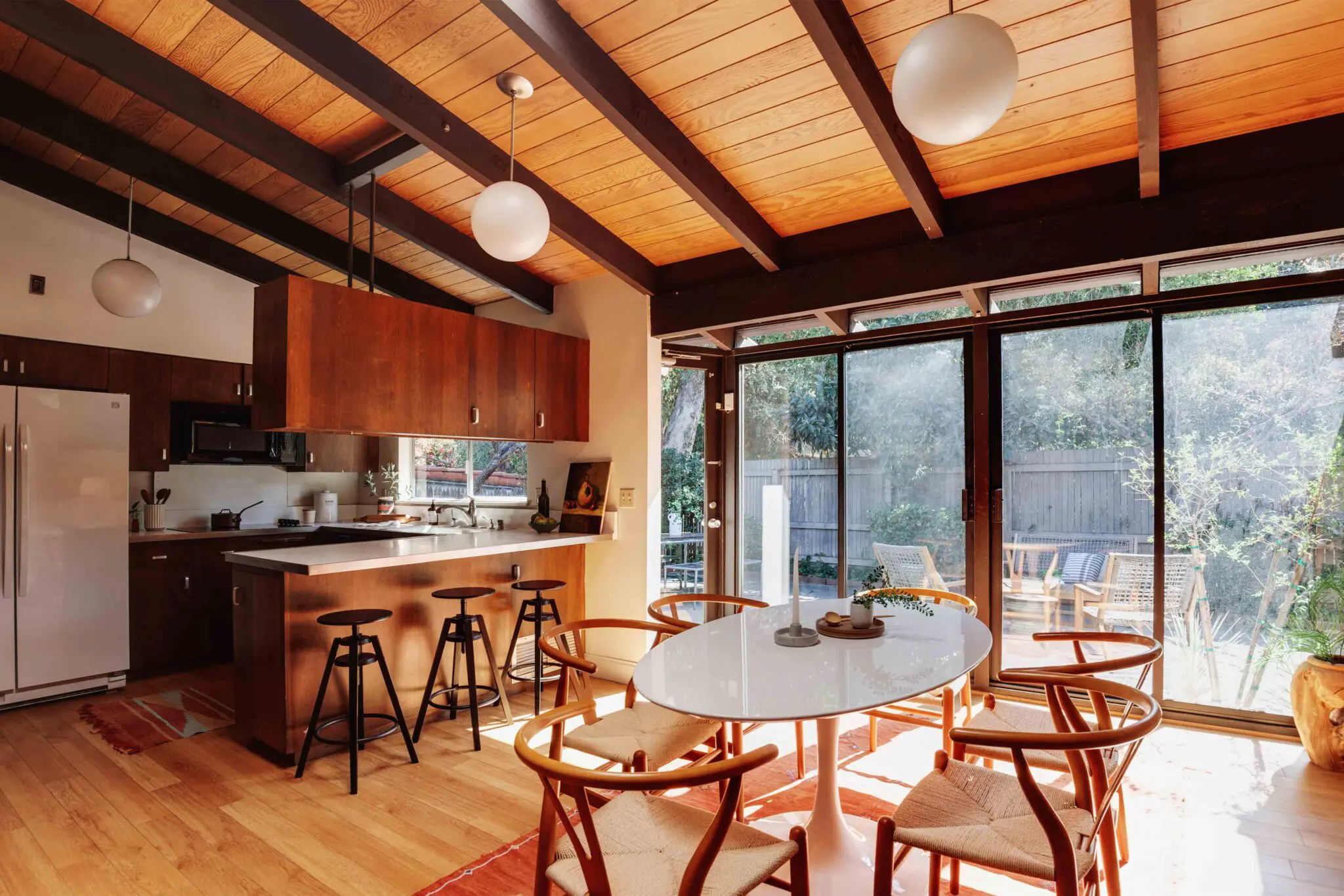
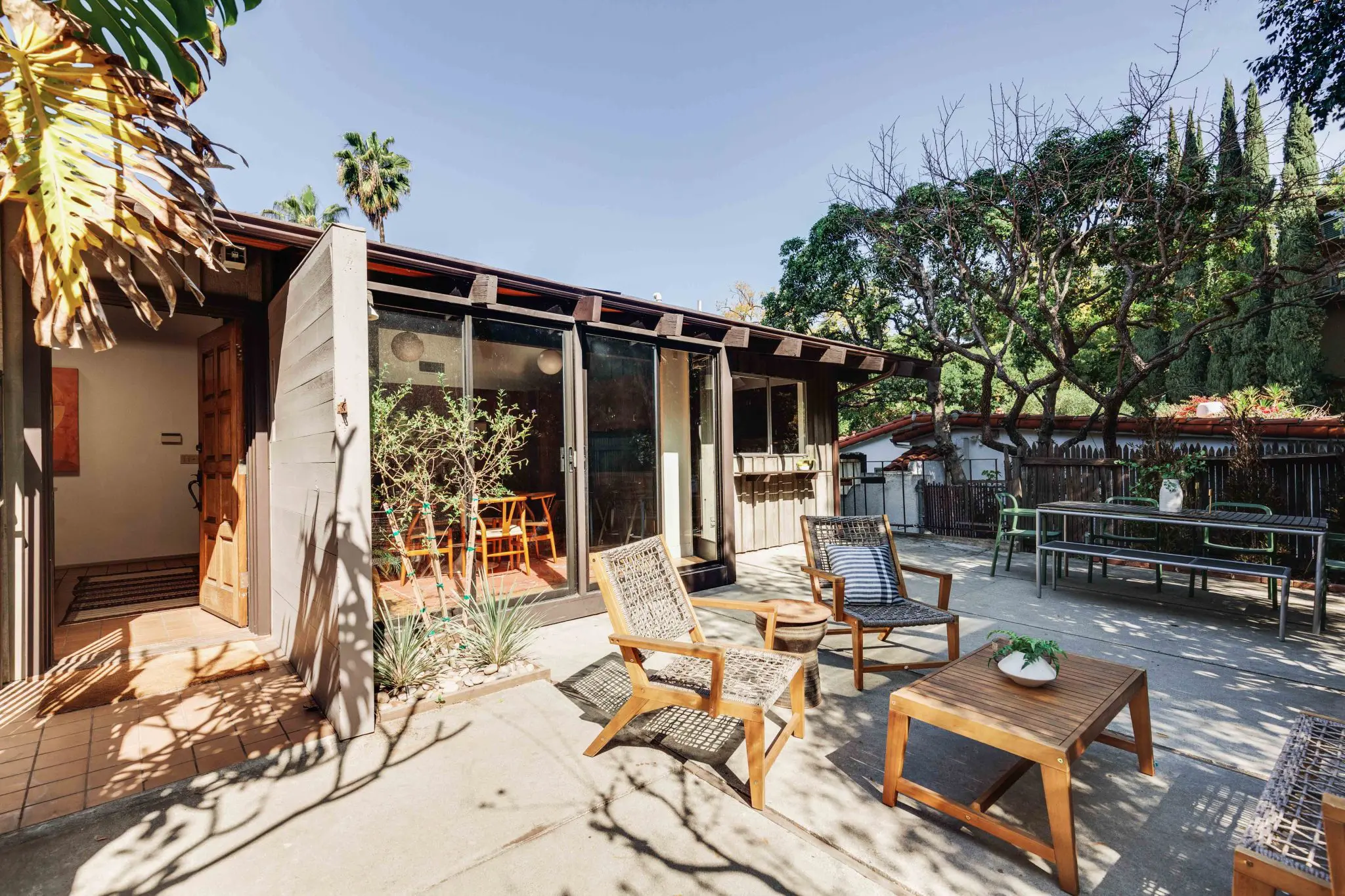
In California, a renovation of the Matsunaga House honors both its original mid-century bones and the heritage of its Japanese-American family. The house unfolds through clean-lined spaces framed in timber, with sliding glass walls that dissolve the boundaries between interior and garden.
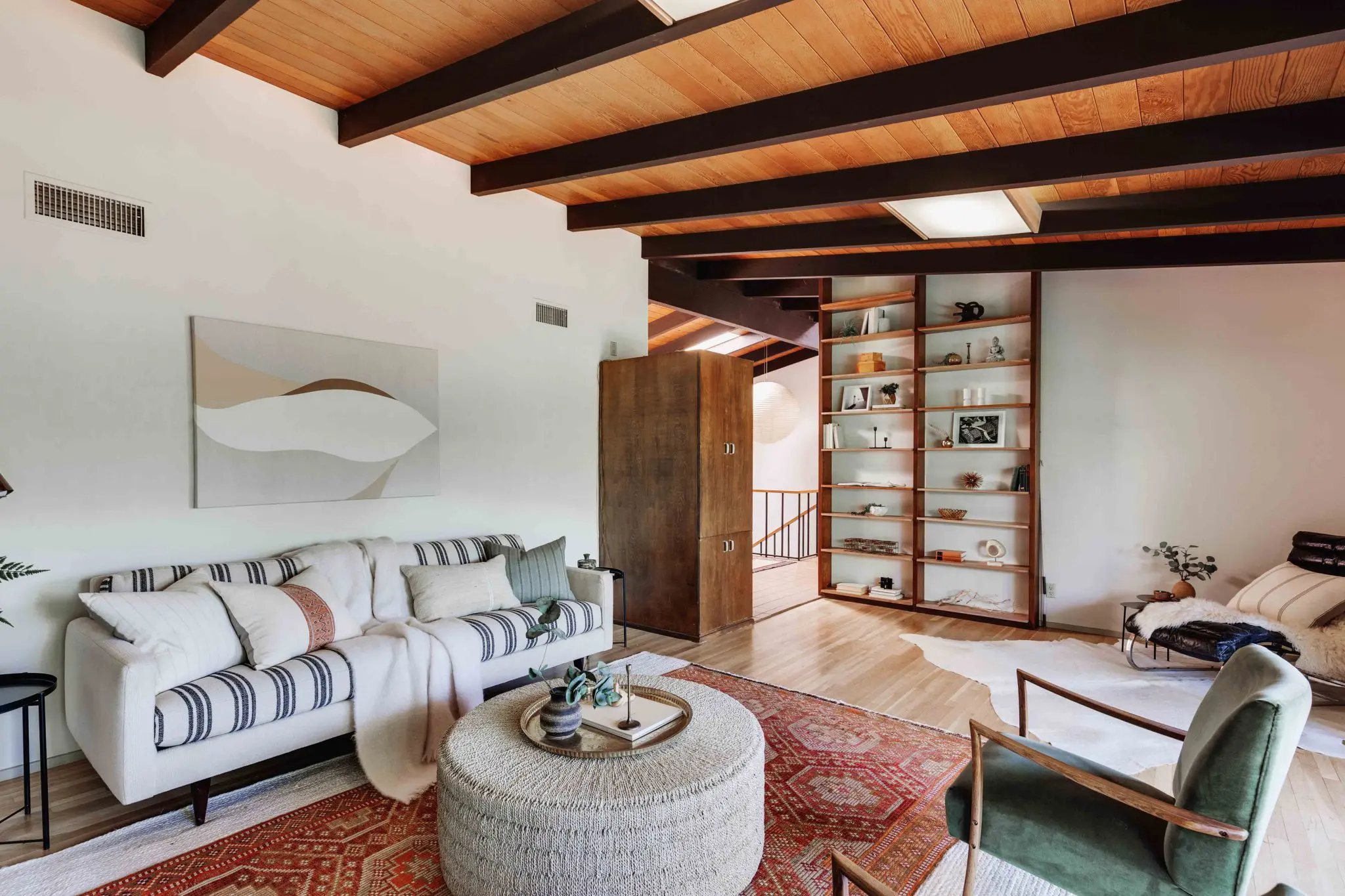
Skylights channel daylight deep into the plan, while a restrained palette—white walls offset by natural wood—keeps the visual language quiet. The influence of Japanese architecture appears not as pastiche but in principles: transparency, material honesty, and openness to nature.

Lauren Engel
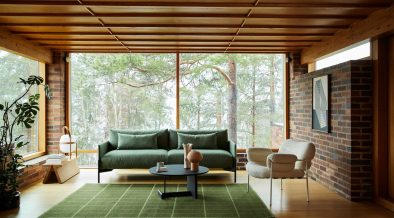
In another project, a pavilion addition to a Neutral Bay home draws from Japanese garden houses to create a space that adapts across the day and seasons. Here, the garden isn’t just an outlook—it becomes a central element in the home’s layout. Reclaimed brick and native timber offer tactile contrast, while large operable windows and a light shelf respond to the climate. Spatially, the layout favors diagonals and framed views, echoing the layering often found in Japanese interiors. It’s a place of movement and stillness, flexible and enduring.
A third home, located on Long Island, explores the blend of Japanese living with Mid-Century formality. Here, original architecture is preserved but softened through minimalist interventions: sliding partitions inspired by shōji screens, warm wood tones, and fewer solid walls. The result is a calm, almost meditative environment where space is defined by light and flow rather than enclosure. There’s a quiet rhythm to the way this house works—open yet controlled, spacious but intimate.
What ties these homes together is a shared philosophy. Japanese architecture brings intentionality to Mid-Century spaces—helping to mediate light, guide movement, and frame nature in ways that feel both modern and timeless. Materials are often left exposed. Boundaries are soft. Gardens are not an afterthought, but an extension of the home’s interior logic.
For anyone looking to integrate Japanese elements into a Mid-Century house, the lesson is clear: start small. Introduce sliding partitions or translucent screens to define space without cutting light. Choose materials that age well—timber, stone, reclaimed brick. Extend eaves or introduce light shelves to manage seasonal sunlight. Create moments that frame views of trees, sky, or garden. Think in transitions—between indoors and outdoors, between light and shadow.
For anyone wanting to dive deeper into Japanese design, the book “Japanese Interiors” author Mihoko Iida offers an insider’s glimpse into Japan’s diverse interior design.
When Mid-Century homes and Japanese architecture meet, they don’t compete. They support one another. Both draw strength from restraint. Both find beauty in how a space makes you feel—not just how it looks. And when designed with care, they create homes that don’t age.

Lauren Engel

Lauren Engel