
Modernist Los Angeles unfolds in layers, through streetscapes, elevations, and the light that touches them. Its architecture appears not only in curated spaces, but within the living fabric of the city. Houses, civic buildings, and even service stations reflect an enduring design language that continues to shape how the city is experienced.
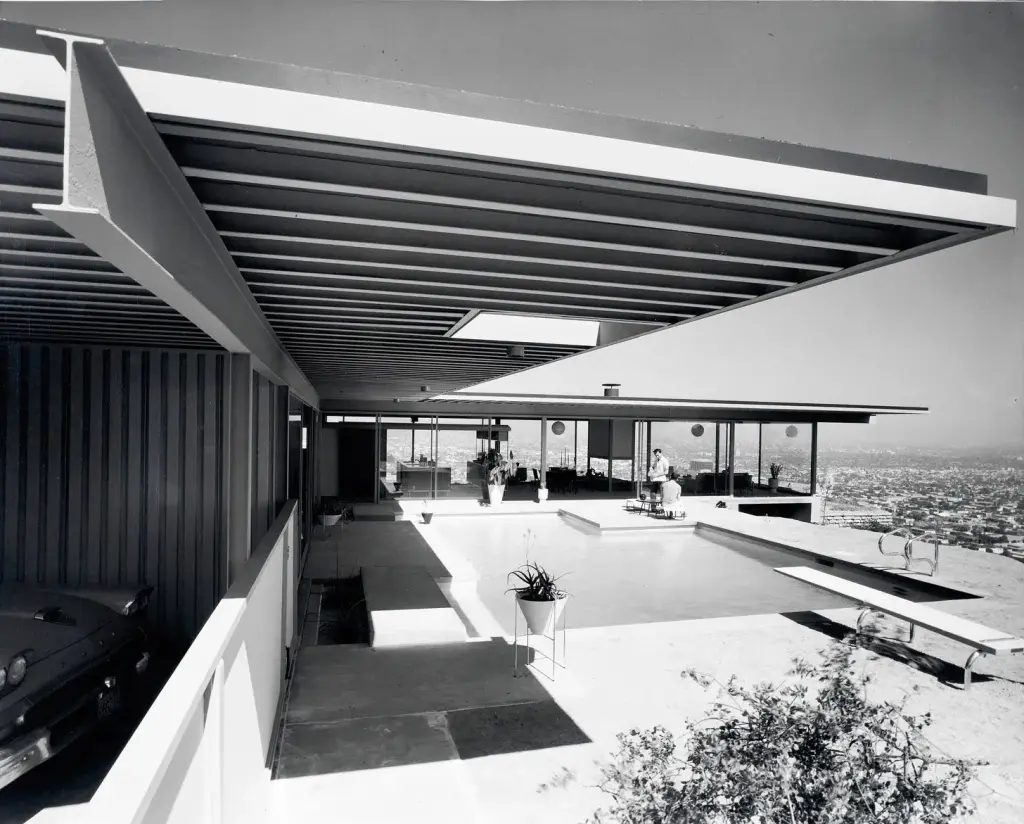
The Hollywood Hills offer a revealing introduction. Long before the skyline filled with glass towers, these hills became a site for experimentation. One of the most striking results still rests above Sunset Boulevard: Pierre Koenig’s Stahl House, Case Study House No. 22. Designed in 1960 with steel and glass, the home presents a radical sense of openness, both physically and philosophically. Its cantilevered structure and sweeping views capture a moment of deep optimism in architectural thinking, a belief that transparency and structure could coexist in perfect clarity.
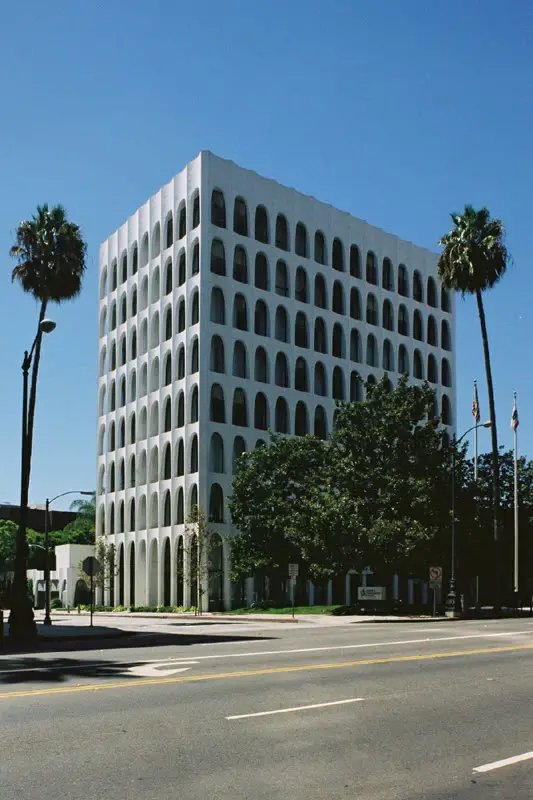
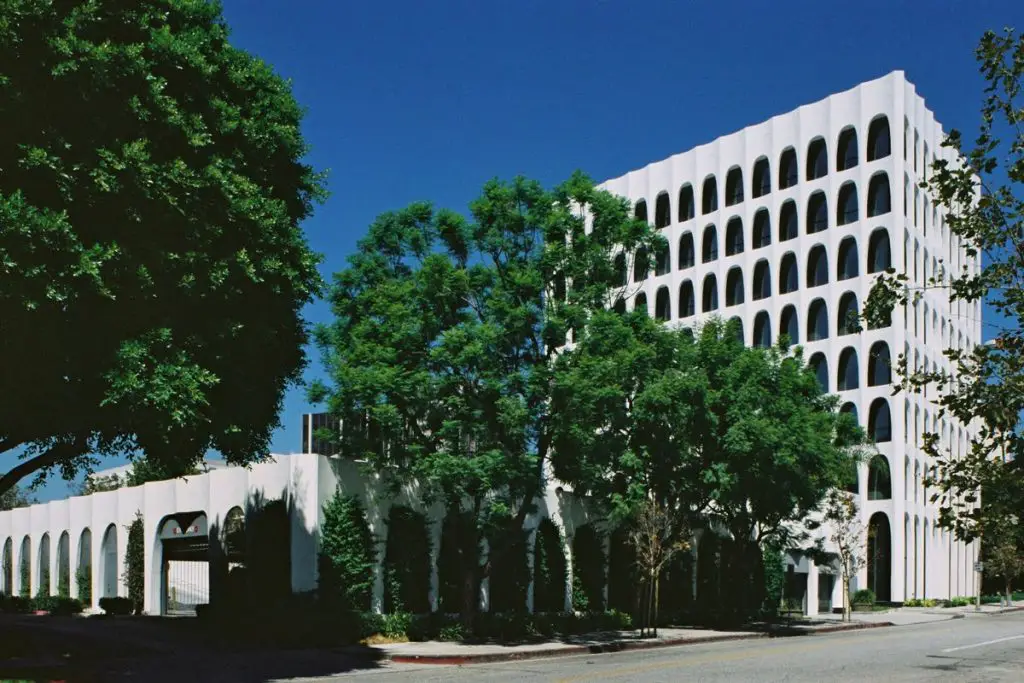
Further south, along Wilshire Boulevard, public design takes on a different scale. Edward Durell Stone’s Perpetual Savings and Loan building, now the Los Angeles County Department of Mental Health, stands as an emblem of mid-century civic ambition. Completed in 1960, its delicate concrete lattice and precisely balanced volumes demonstrate how modernist principles found expression in even the most practical of structures. The building remains a visual anchor in the cityscape, a reminder of the era’s attention to both function and form.
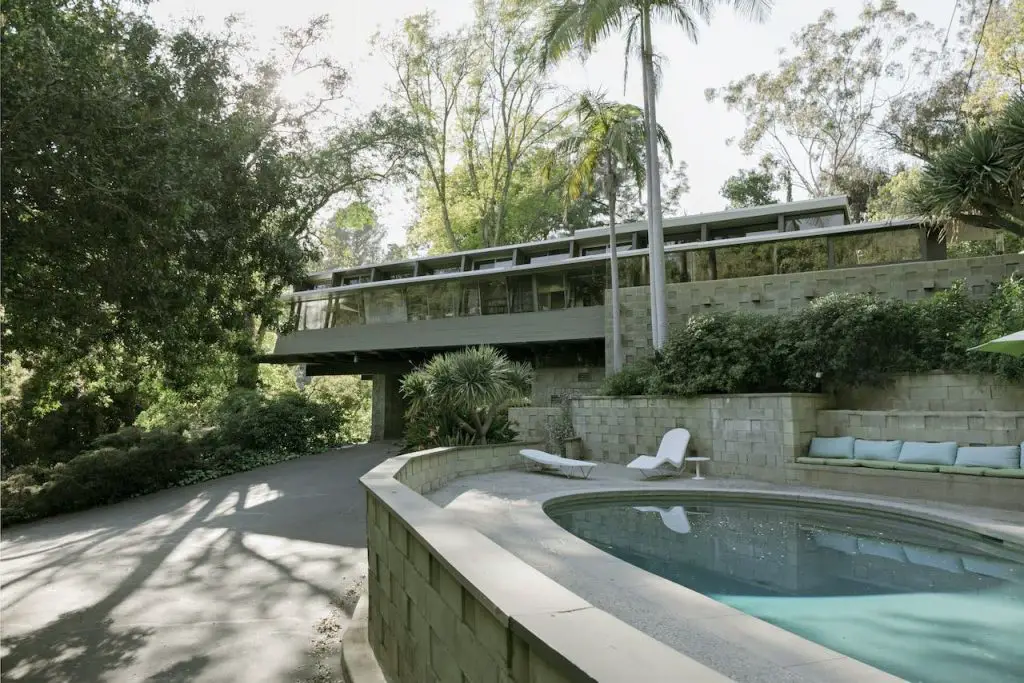
As Los Angeles expanded, architecture responded not only to aesthetic ideals but also to infrastructure and movement. The city’s growth, powered by car culture and flexible zoning, created conditions where modernist designs could spread outward. In Brentwood’s Crestwood Hills, a unique cooperative housing effort in the late 1940s led to a remarkable concentration of modern homes by A. Quincy Jones, Whitney Smith, and their peers. Built on shared principles, the neighborhood offered elegant solutions to the question of community living, balancing affordability with spatial innovation and continuity.

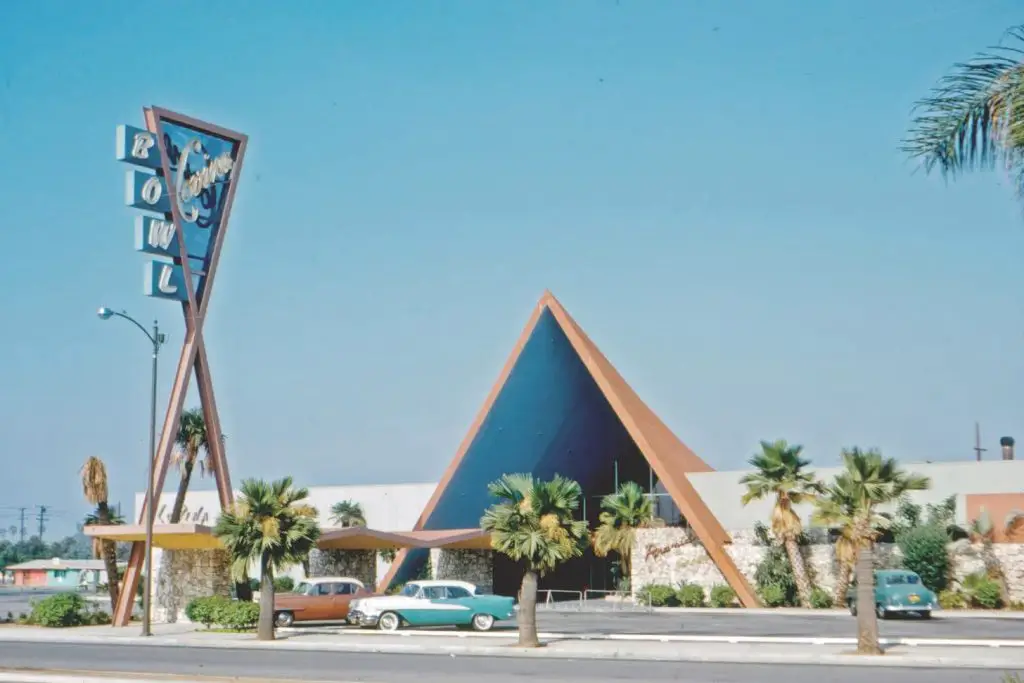
Mid-century modernism also made its mark on leisure spaces, none more distinctively than Los Angeles’ bowling alleys. These venues fused social gathering with architectural flair, featuring bold signage, streamlined forms, and interior details that captured the exuberance of the era. Structures like the Hollywood Star Lanes or Covina Bowl were more than recreation centers, they were immersive modernist environments.
To understand how such expressive, socially oriented spaces emerged, it helps to return to the early roots of Los Angeles modernism. One of its most influential foundations still stands on Kings Road: the Schindler House. Now home to the MAK Center for Art and Architecture, this 1922 structure by Rudolph Schindler introduced a new way of shaping domestic space in Los Angeles. Using raw concrete, sliding panels, and fluid spatial arrangements, Schindler proposed not only a different kind of home, but a different kind of life. The house functioned as both residence and creative studio, setting the tone for generations of architectural experimentation to come.
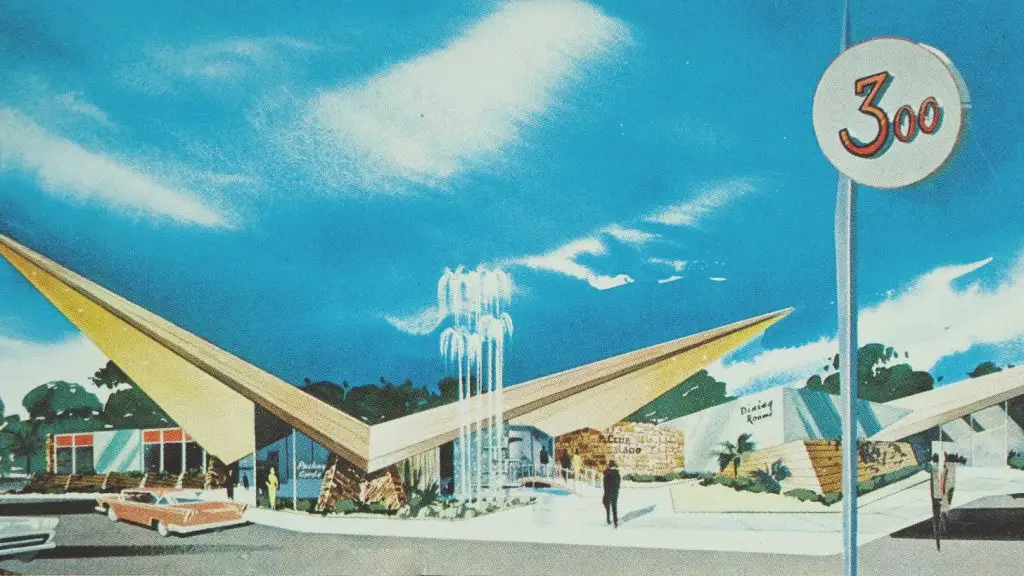
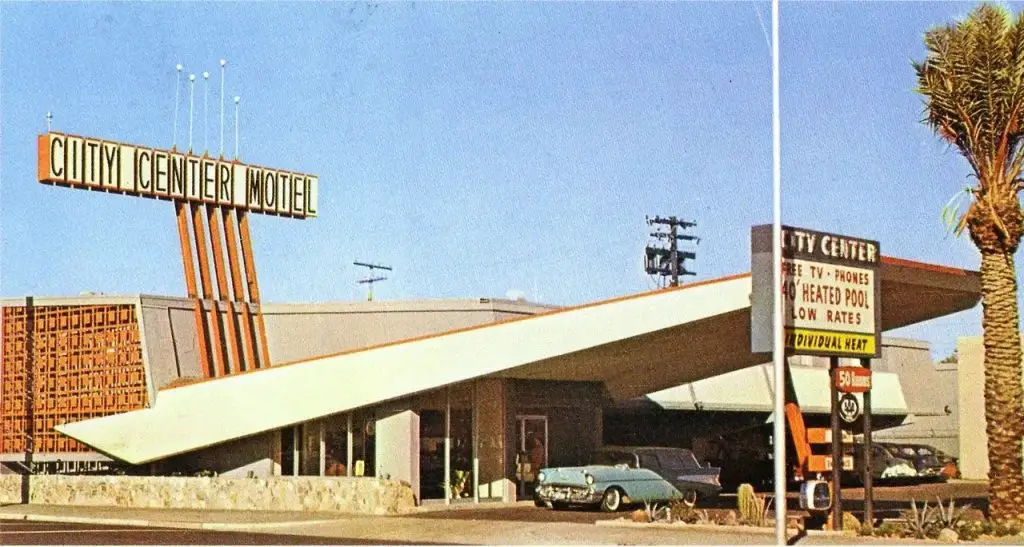
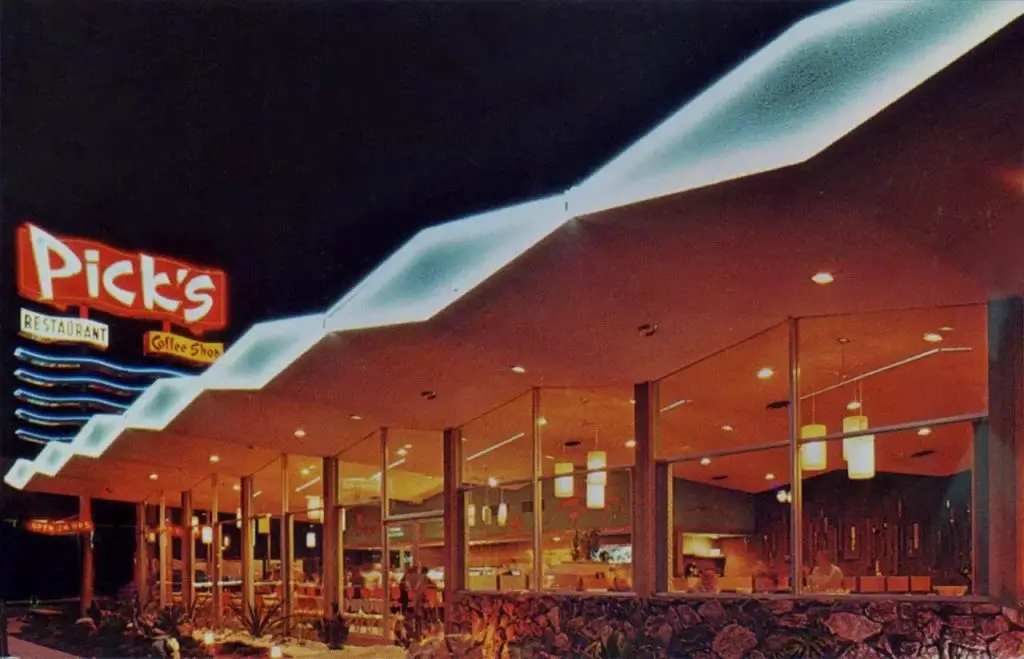
This spirit of architectural experimentation was not confined to public buildings and homes. Along the city’s boulevards, modernism embraced popular culture in the form of Googie architecture, a distinct expression of futurism built for diners, coffee shops, and drive-ins.
With upswept roofs, neon signage, and exuberant shapes, these buildings turned everyday roadside stops into space-age landmarks. Places like Johnie’s Coffee Shop and Pann’s remain vivid reminders of a time when architecture reached out to the street, inviting passersby into a vision of the future, one milkshake or slice of pie at a time.
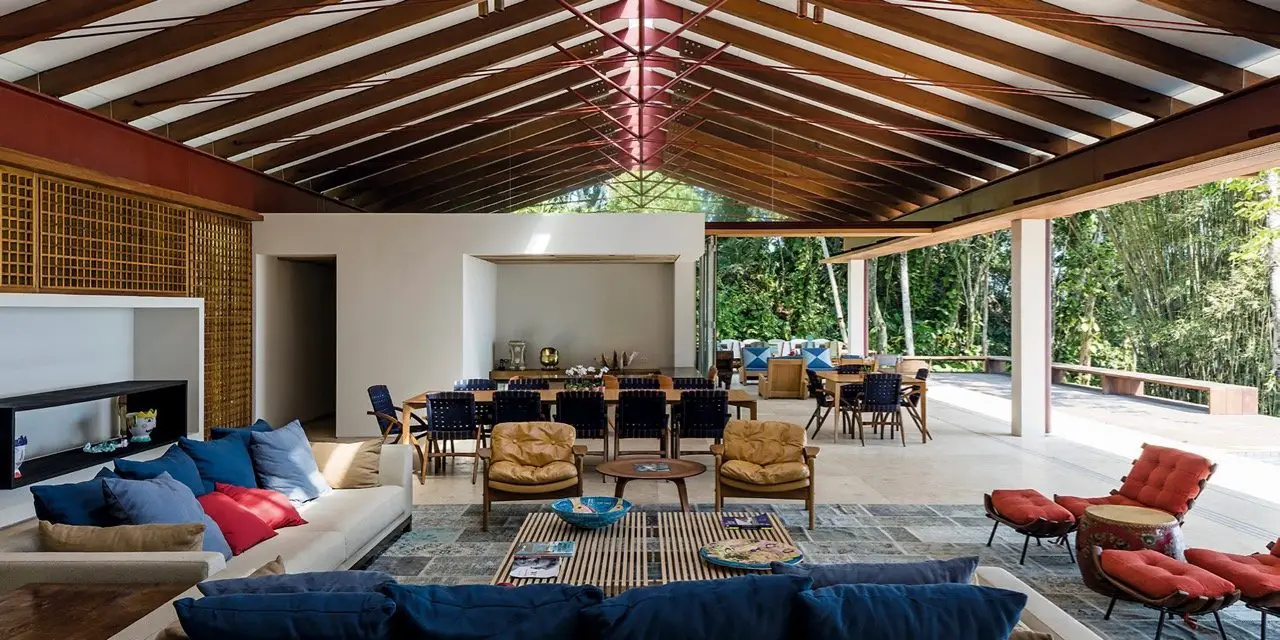
To experience Los Angeles through this lens is to see architecture not as backdrop but as presence, visible in the interplay between structure and sunlight, in the curve of a hillside street, or in the quiet rhythm of a post-and-beam ceiling.