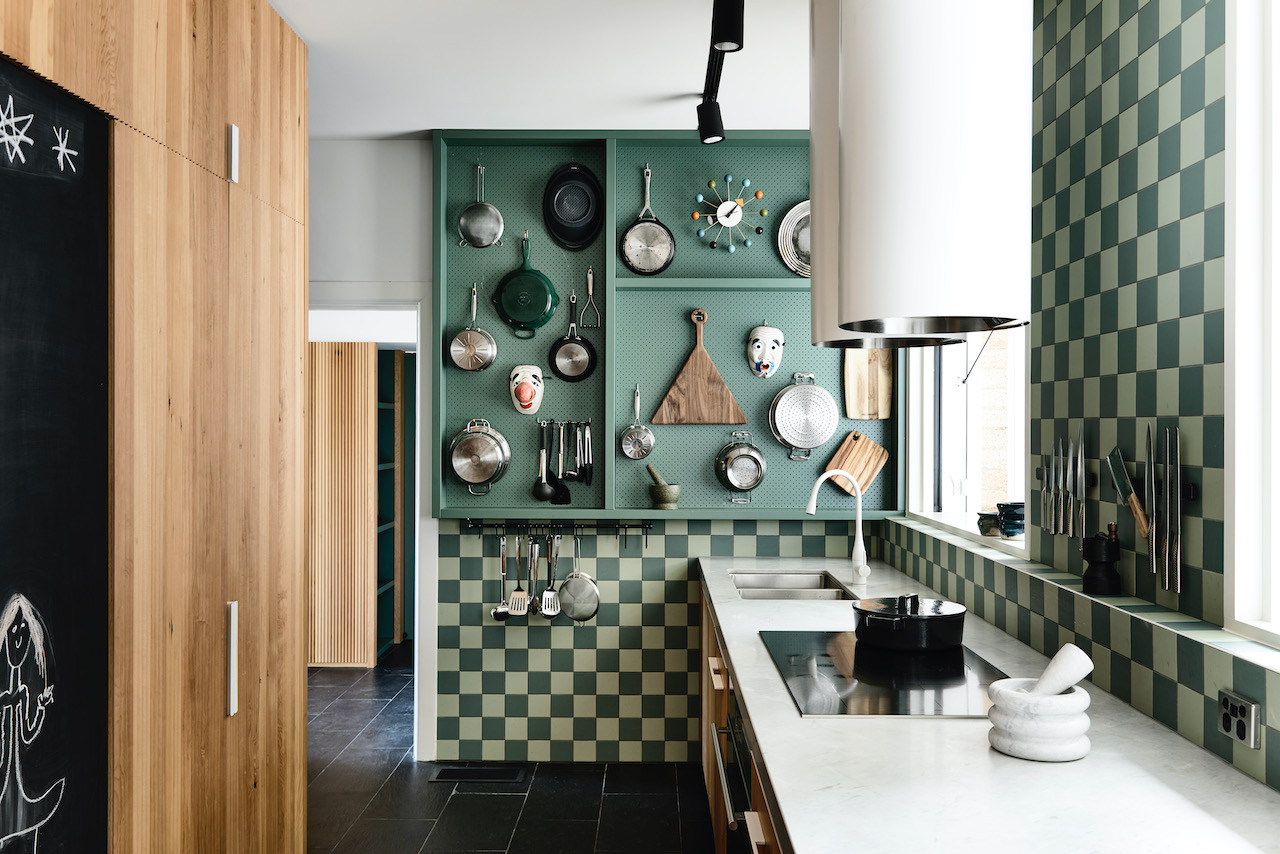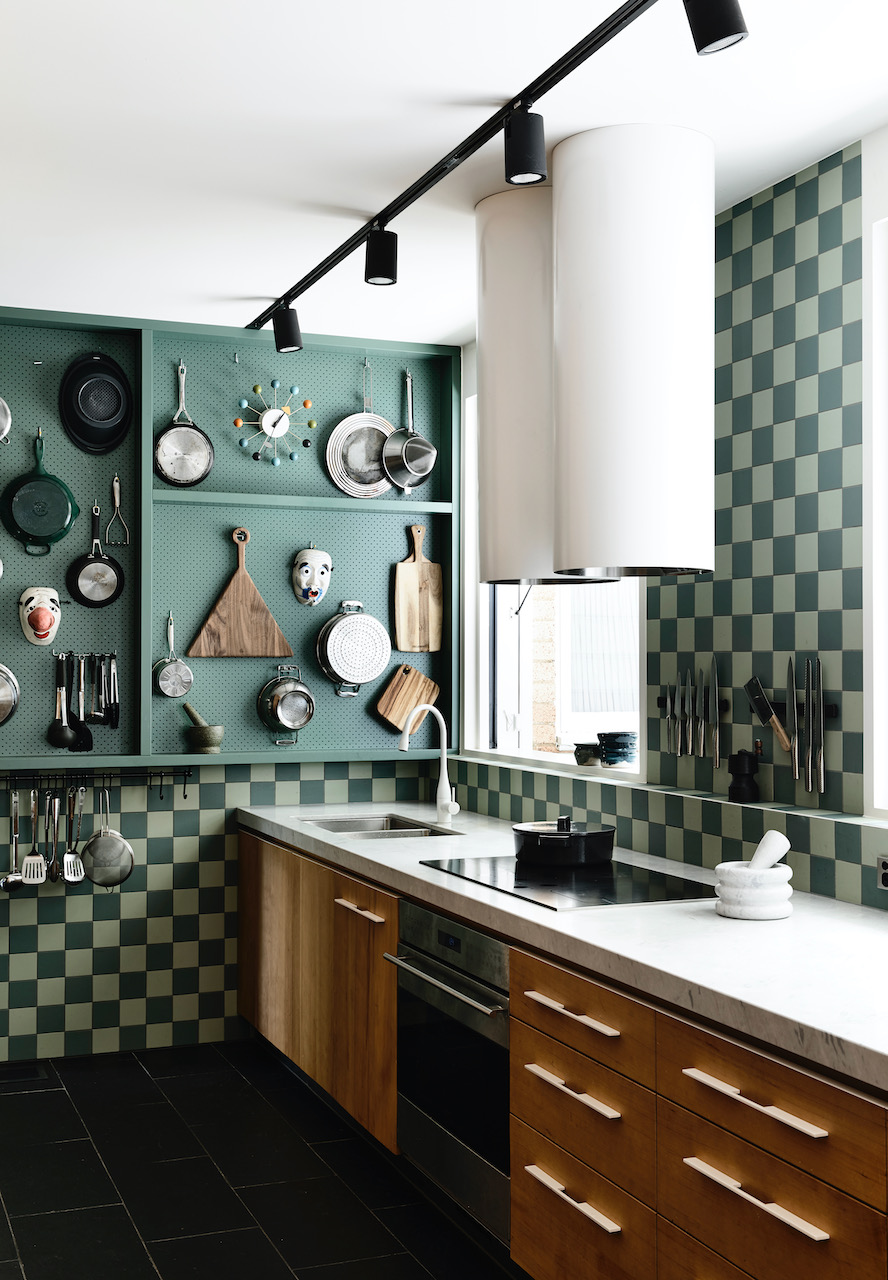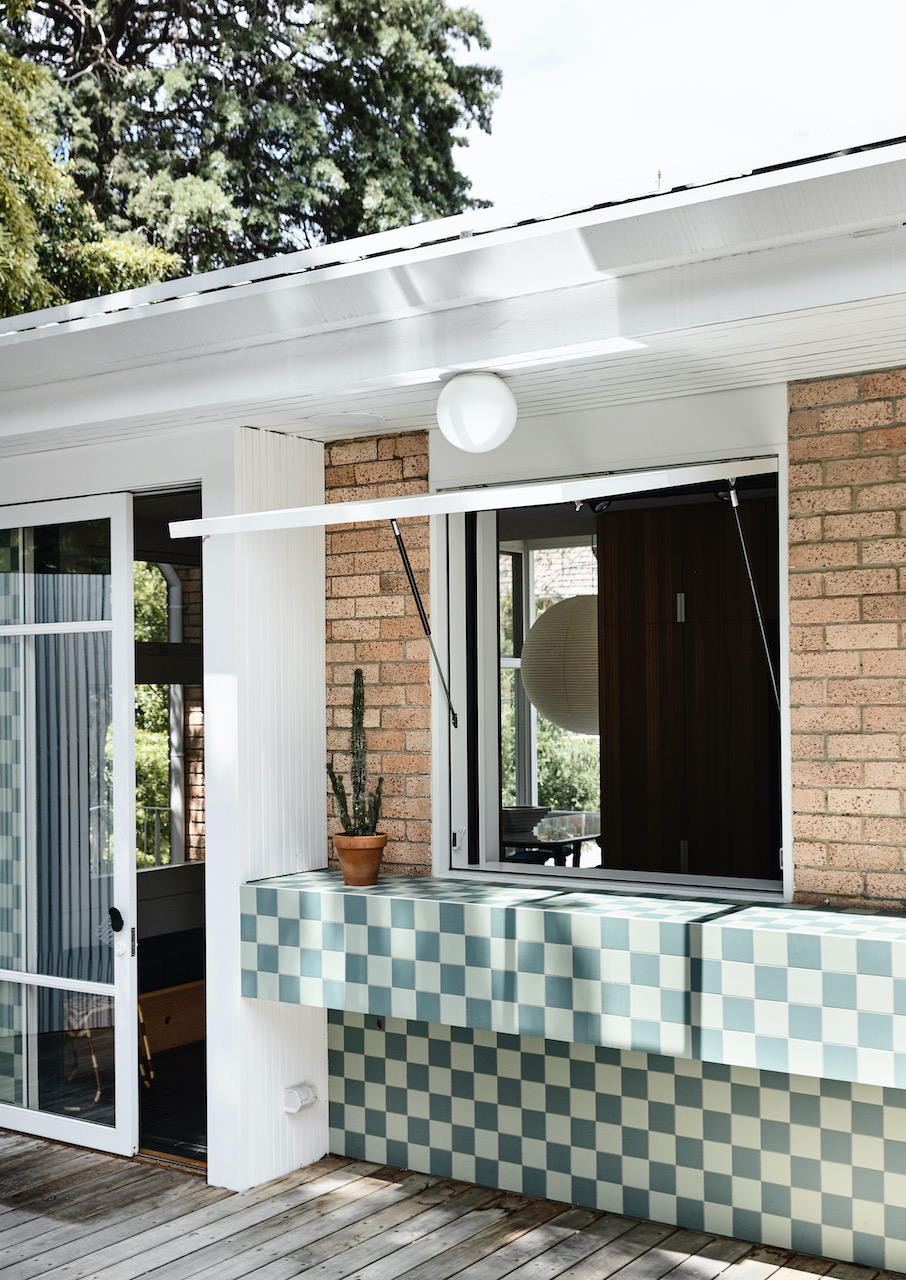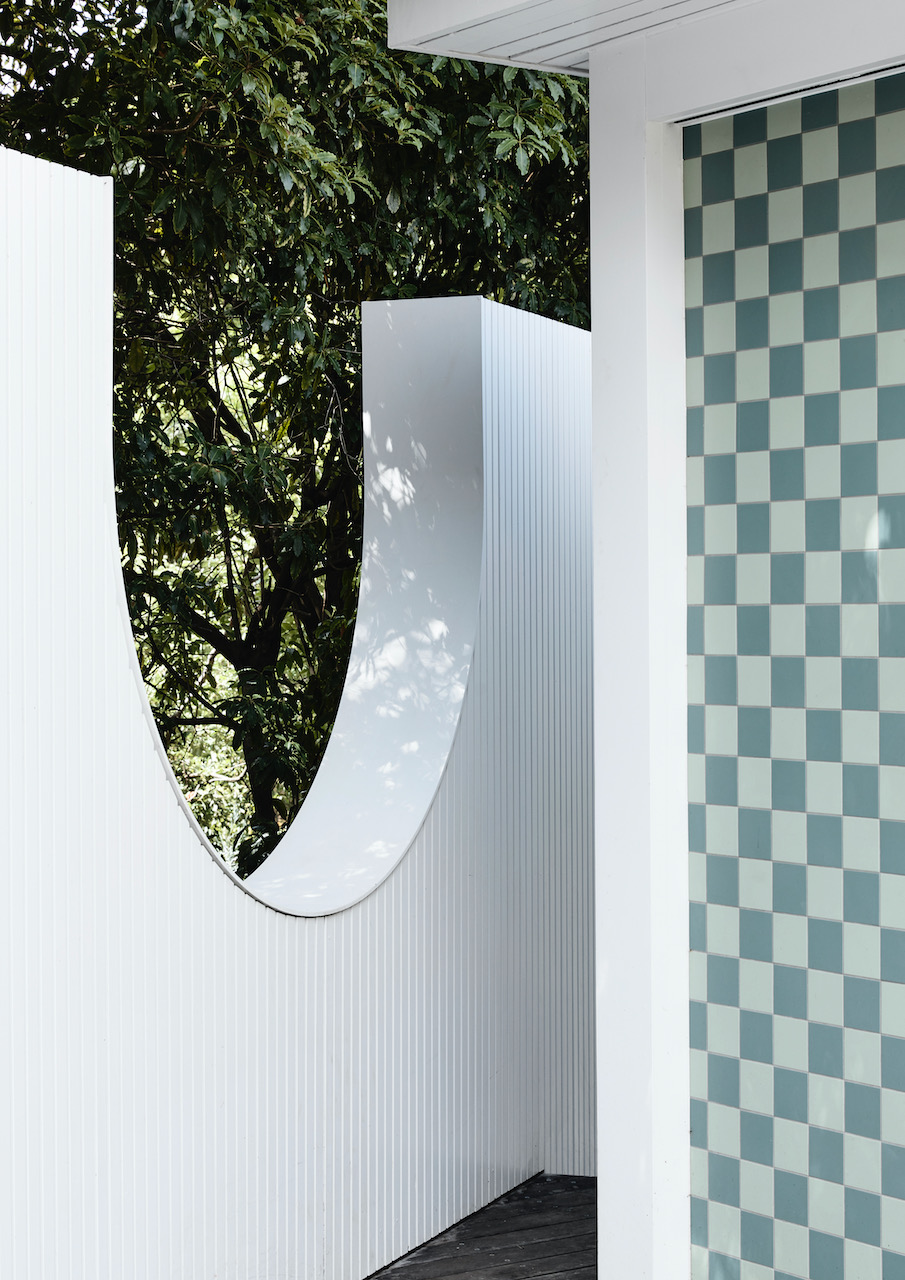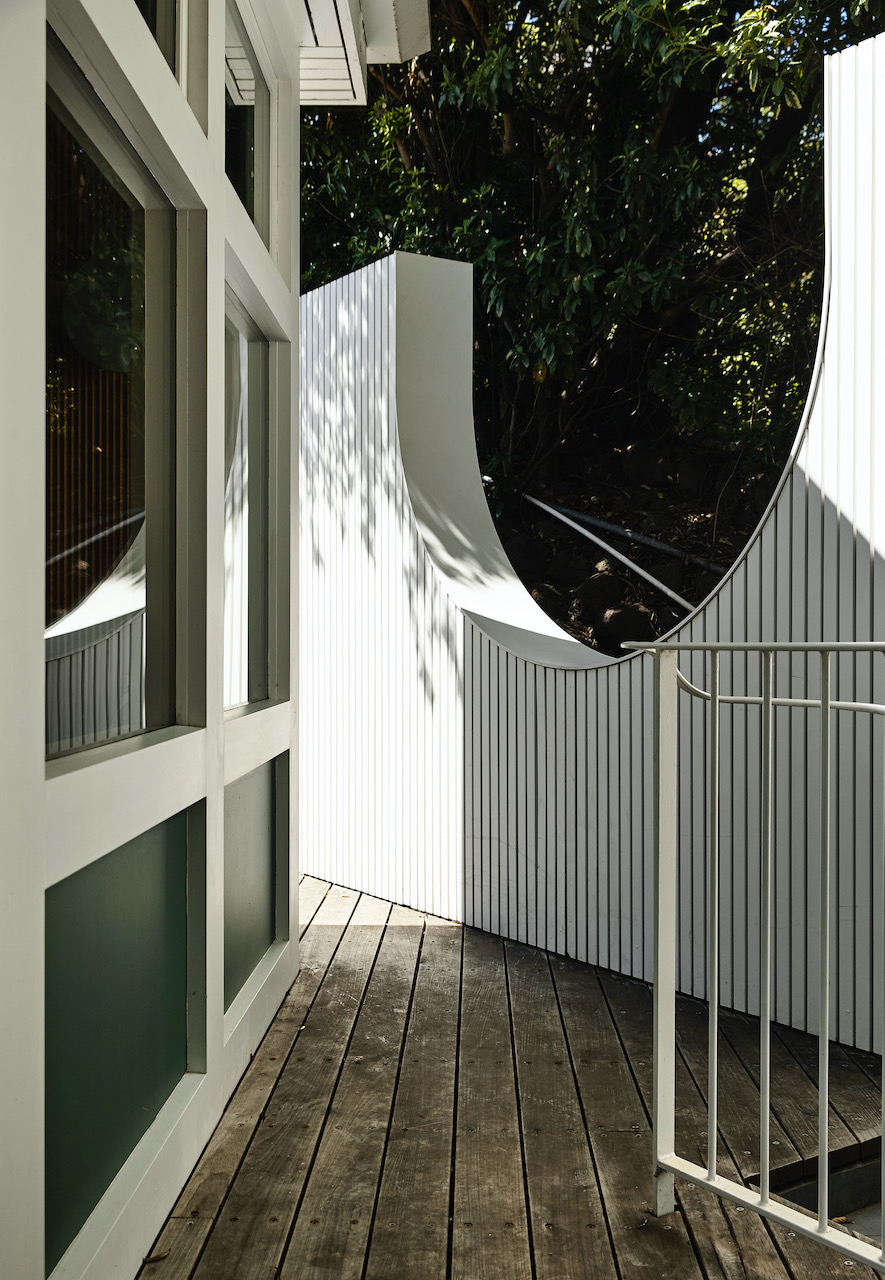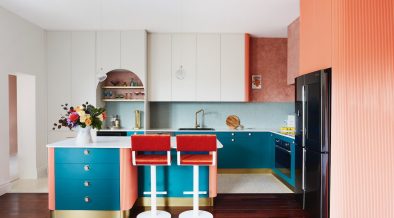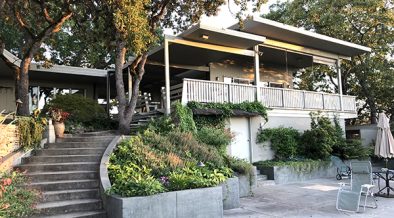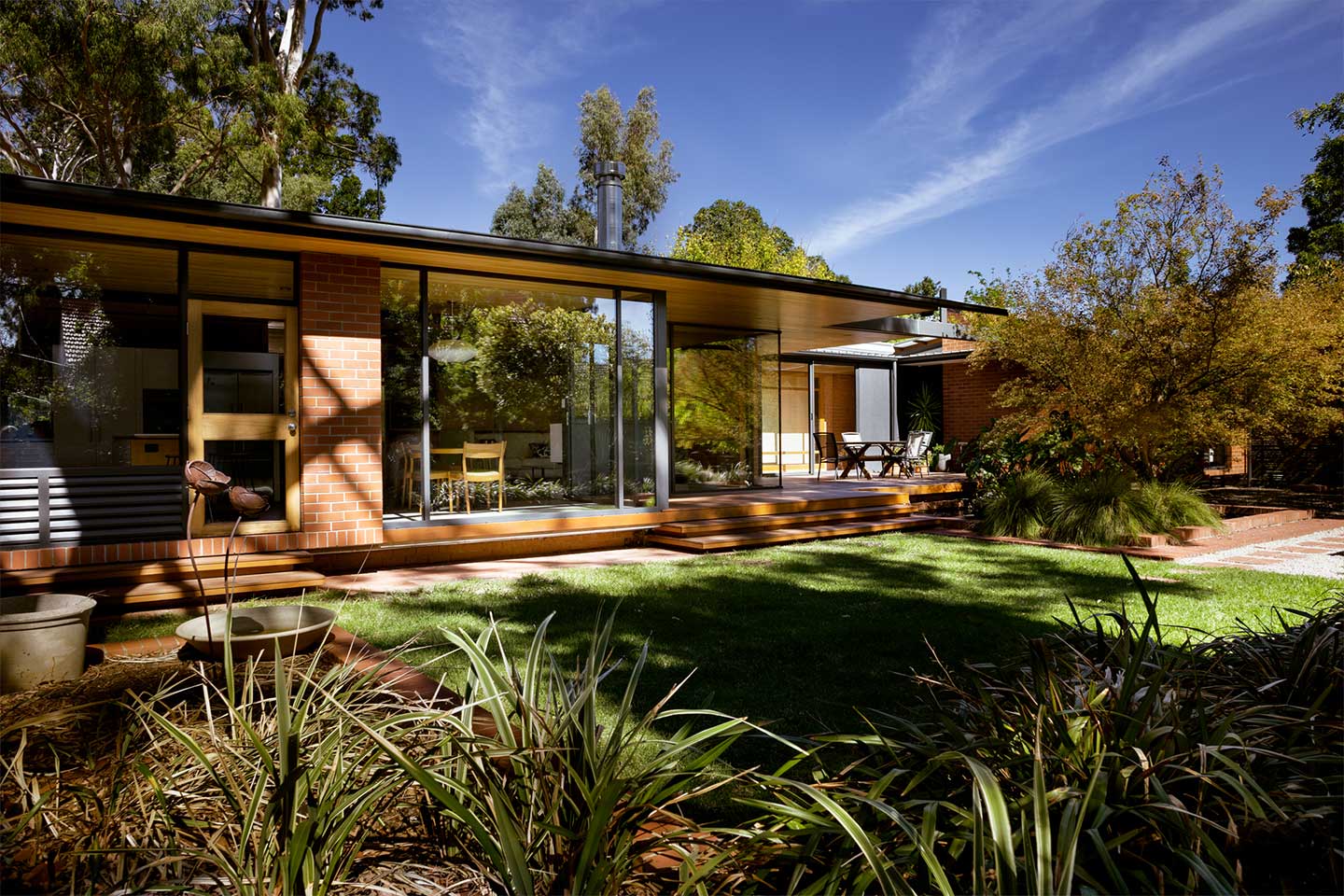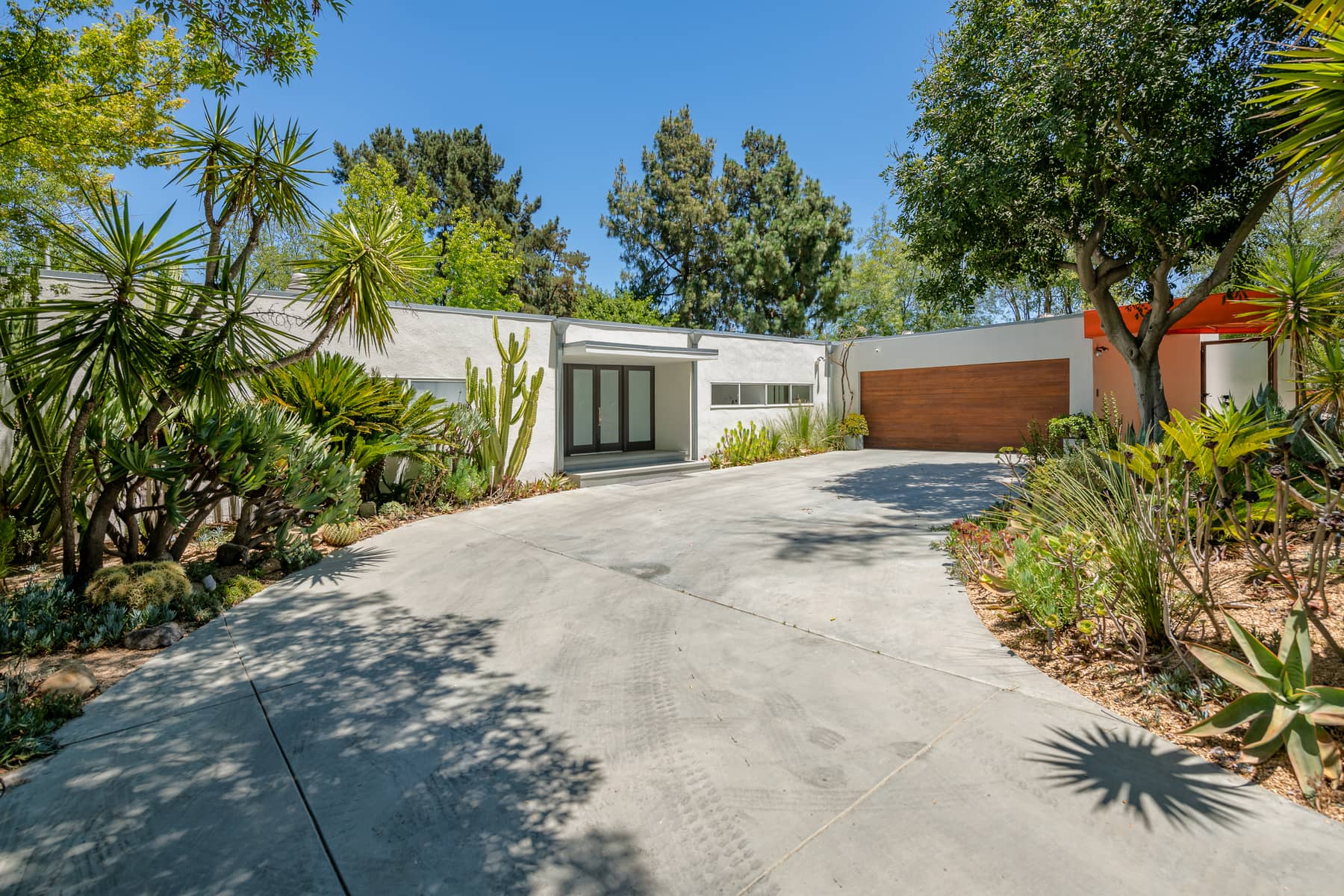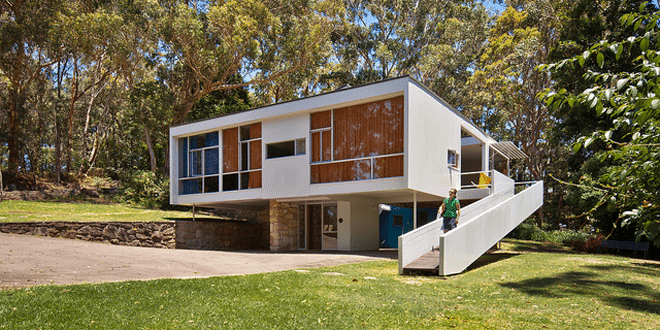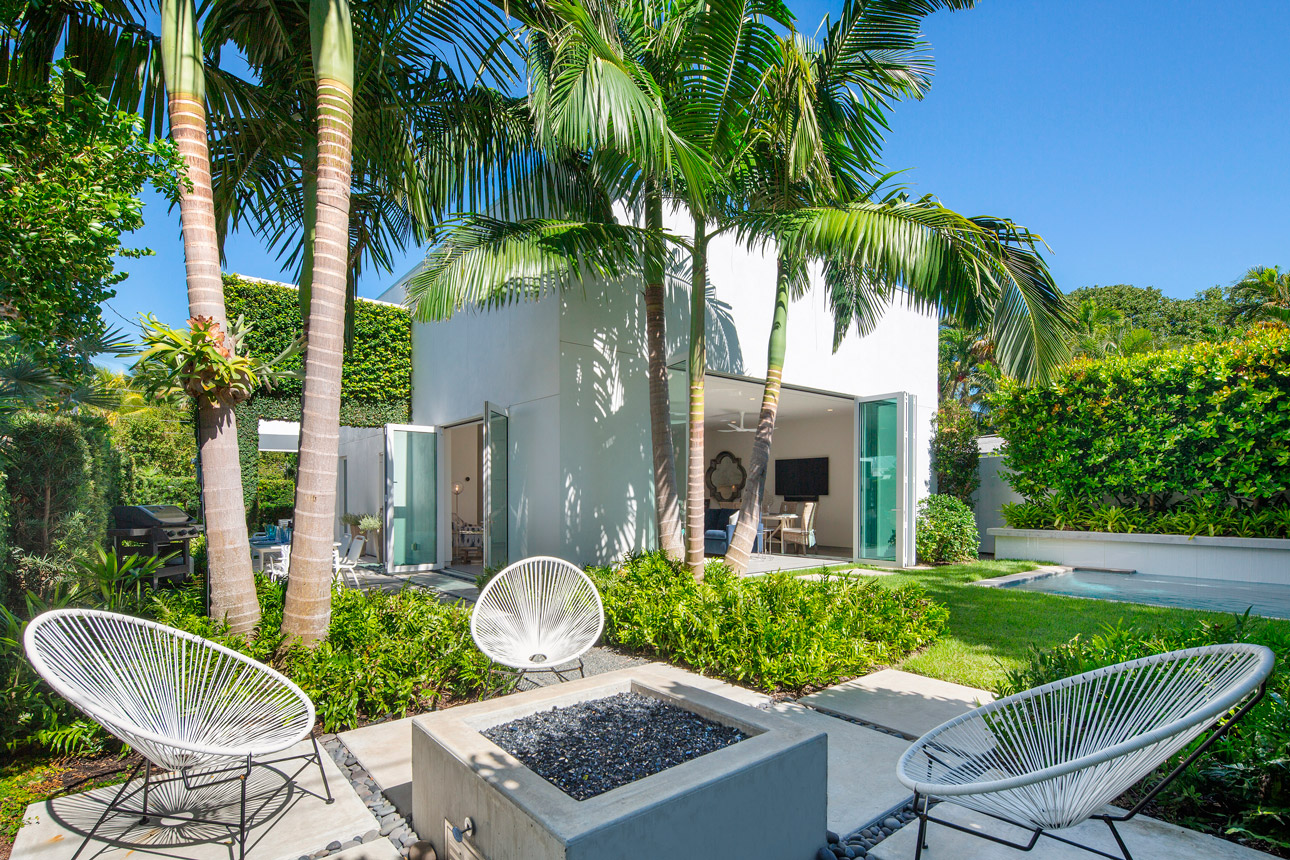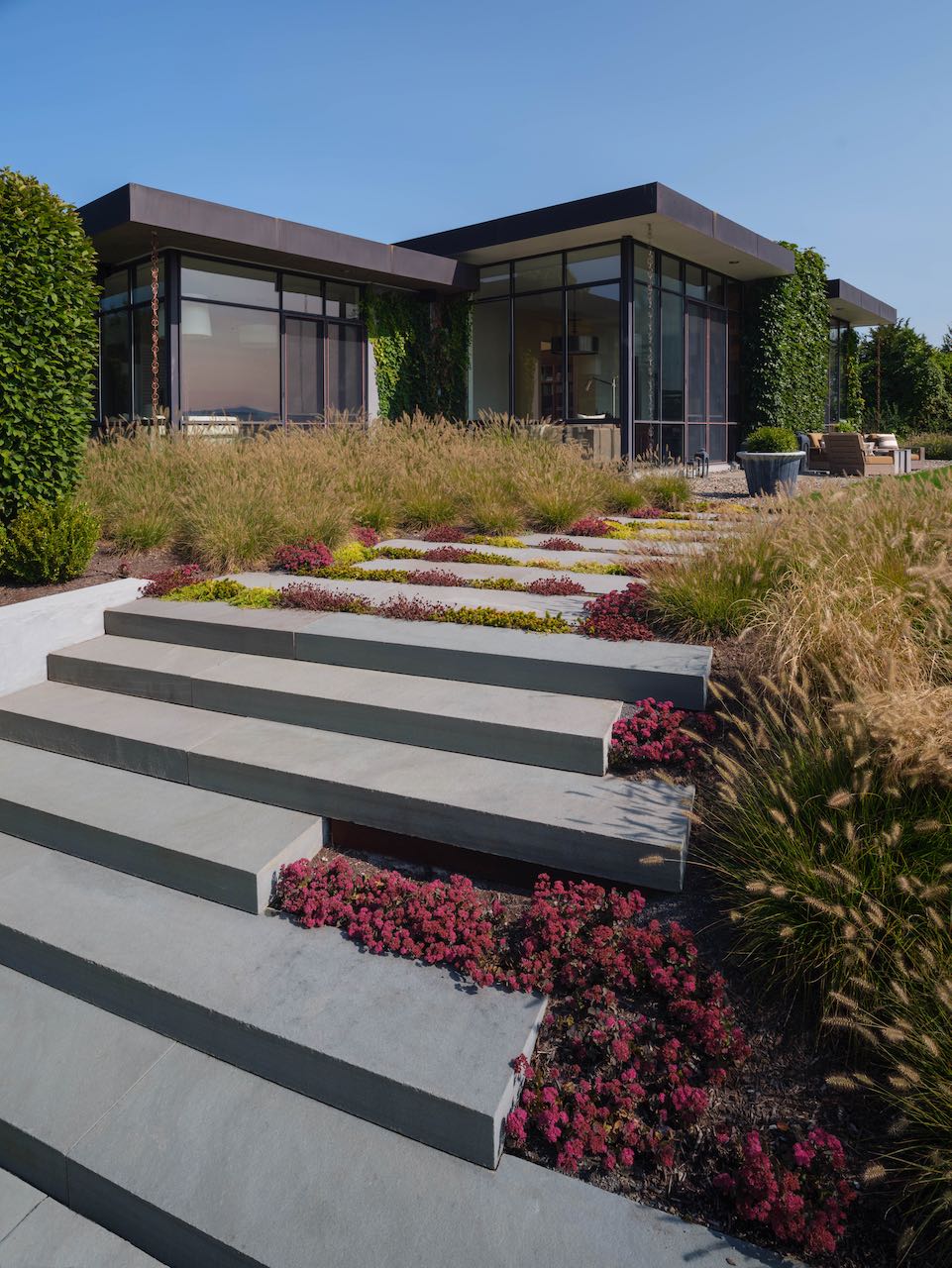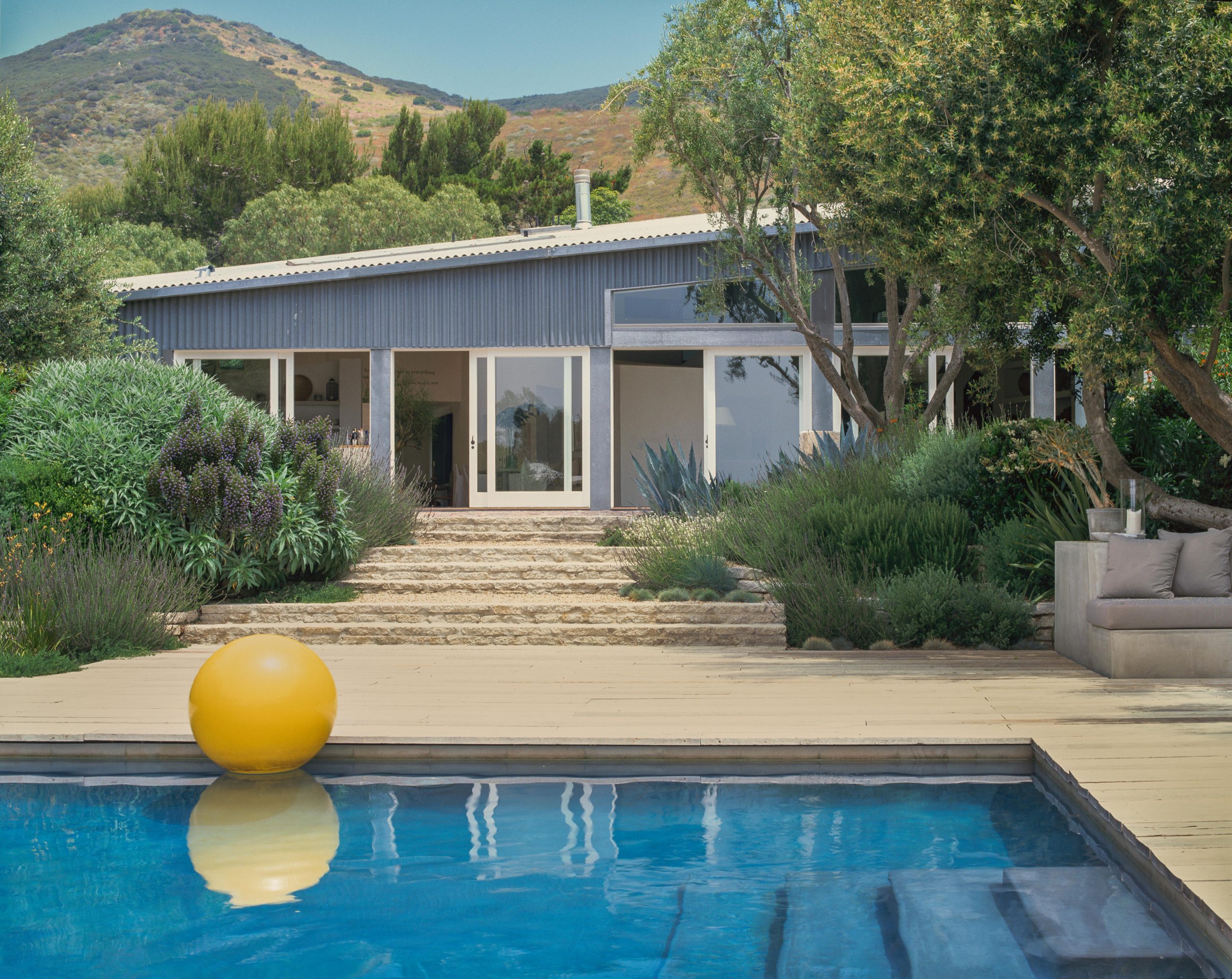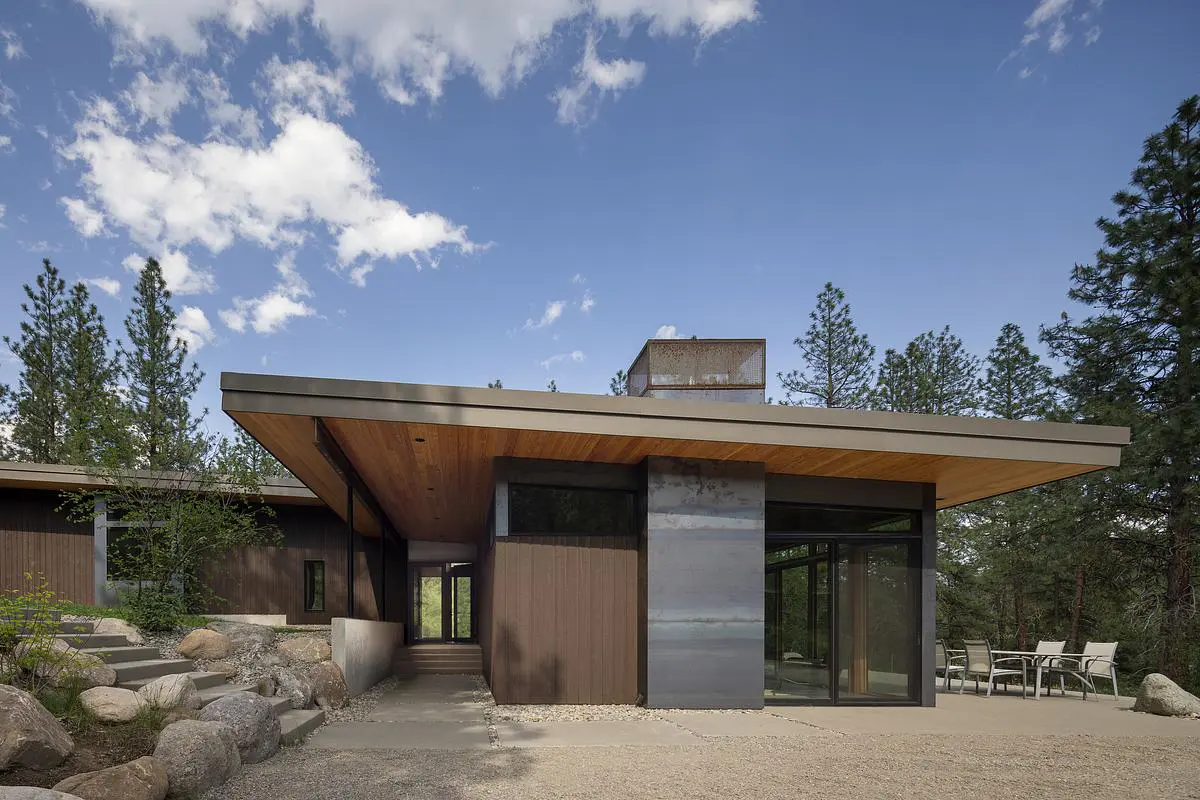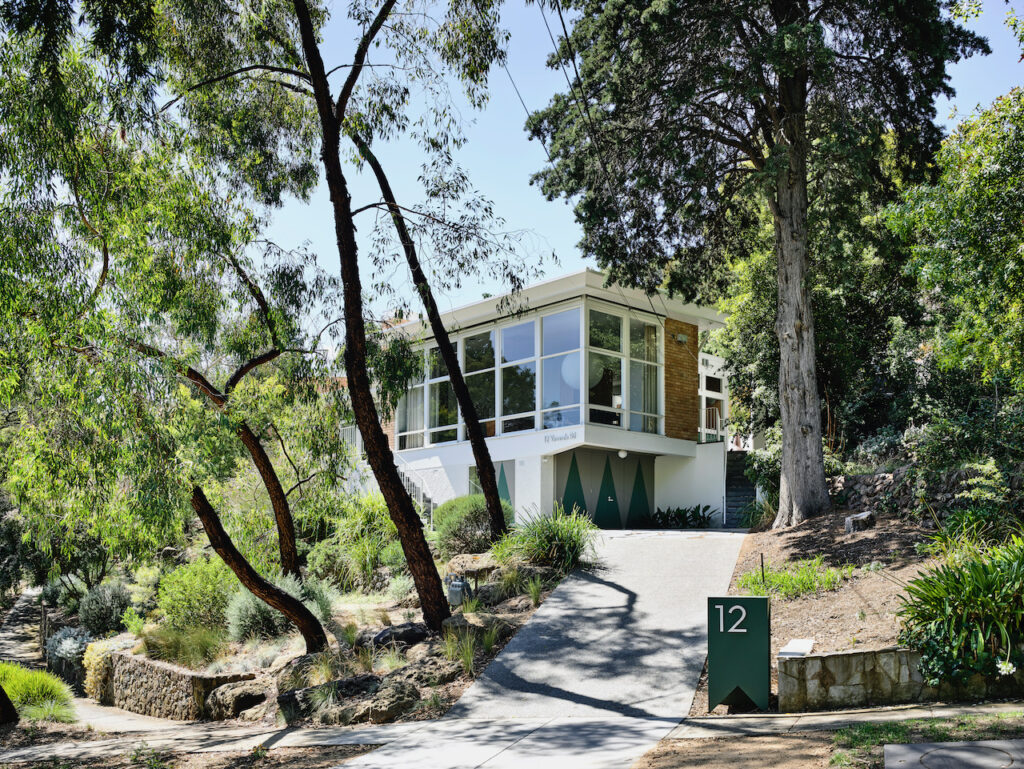
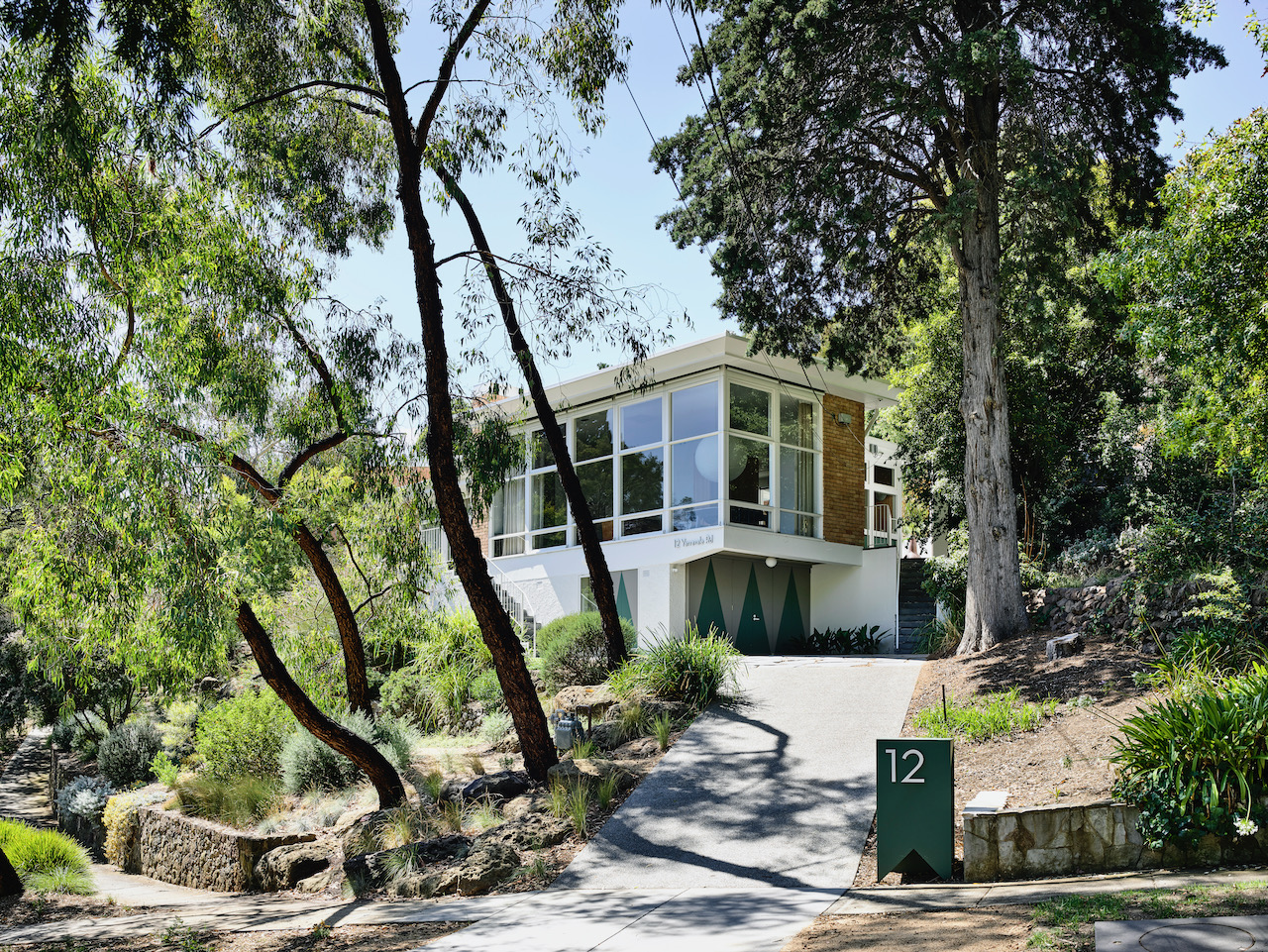
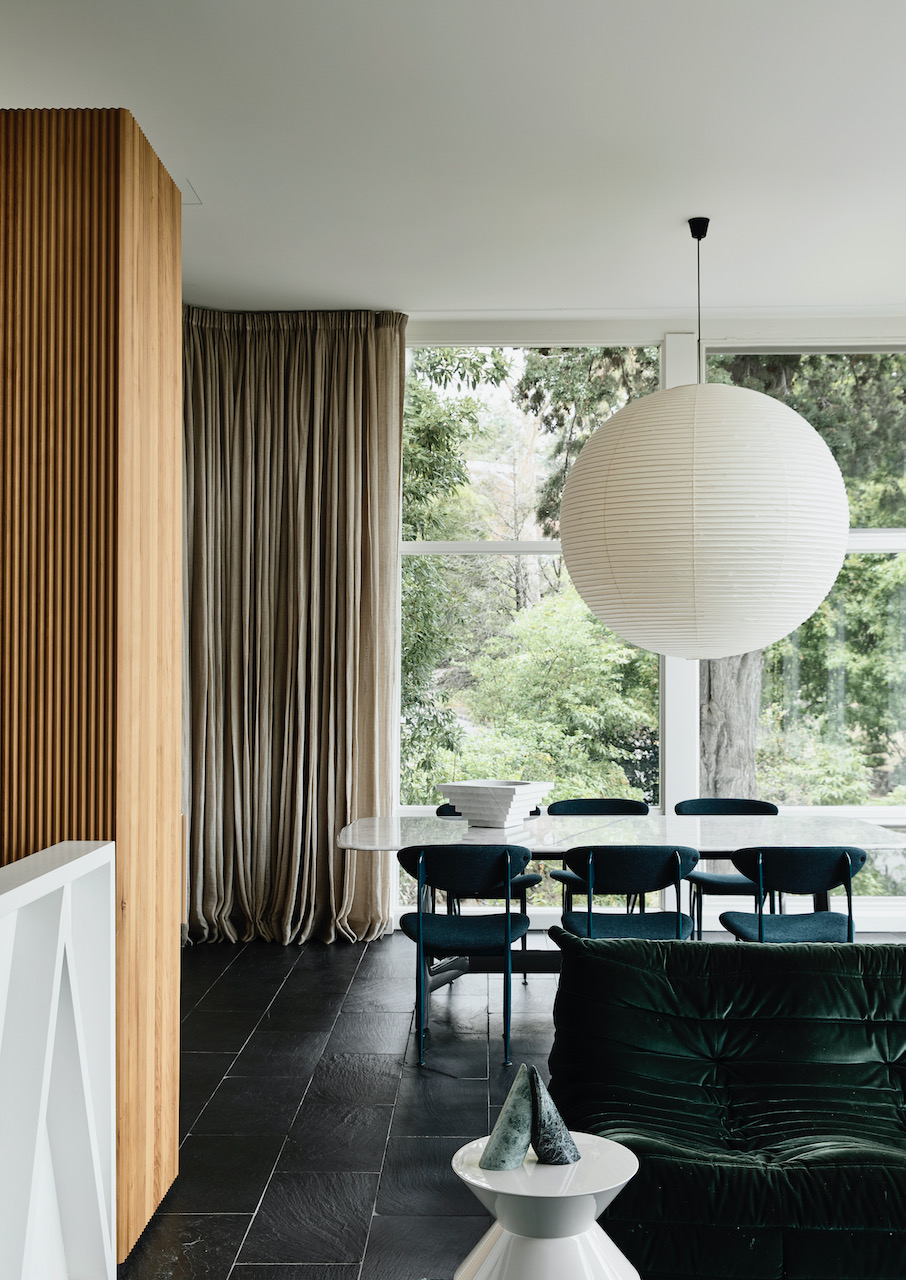
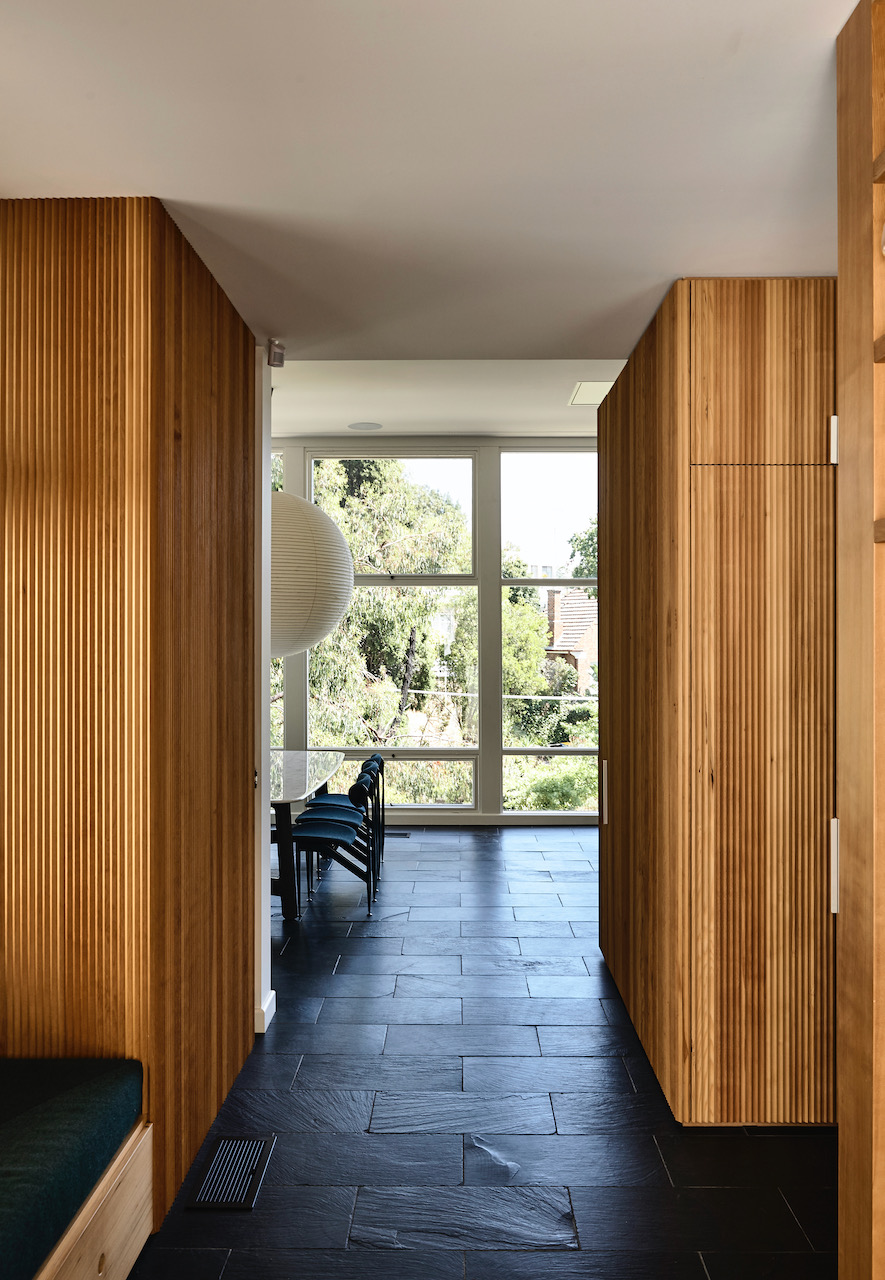
In a suburb of Adelaide, this family home by Kennedy Nolan Architects explores how modernism can be reworked for contemporary living. The project does not aim to replicate the past. Instead, it builds on its principles, using space, light, and material to shape a house that feels grounded and open at once.
The design begins with a clear structure. The plan is organized to separate shared and private spaces, while keeping a strong sense of connection throughout. Living areas sit toward the garden, where they open up through large glazing. Bedrooms are more contained, set back to provide privacy. This balance allows the house to support daily life without relying on rigid boundaries.
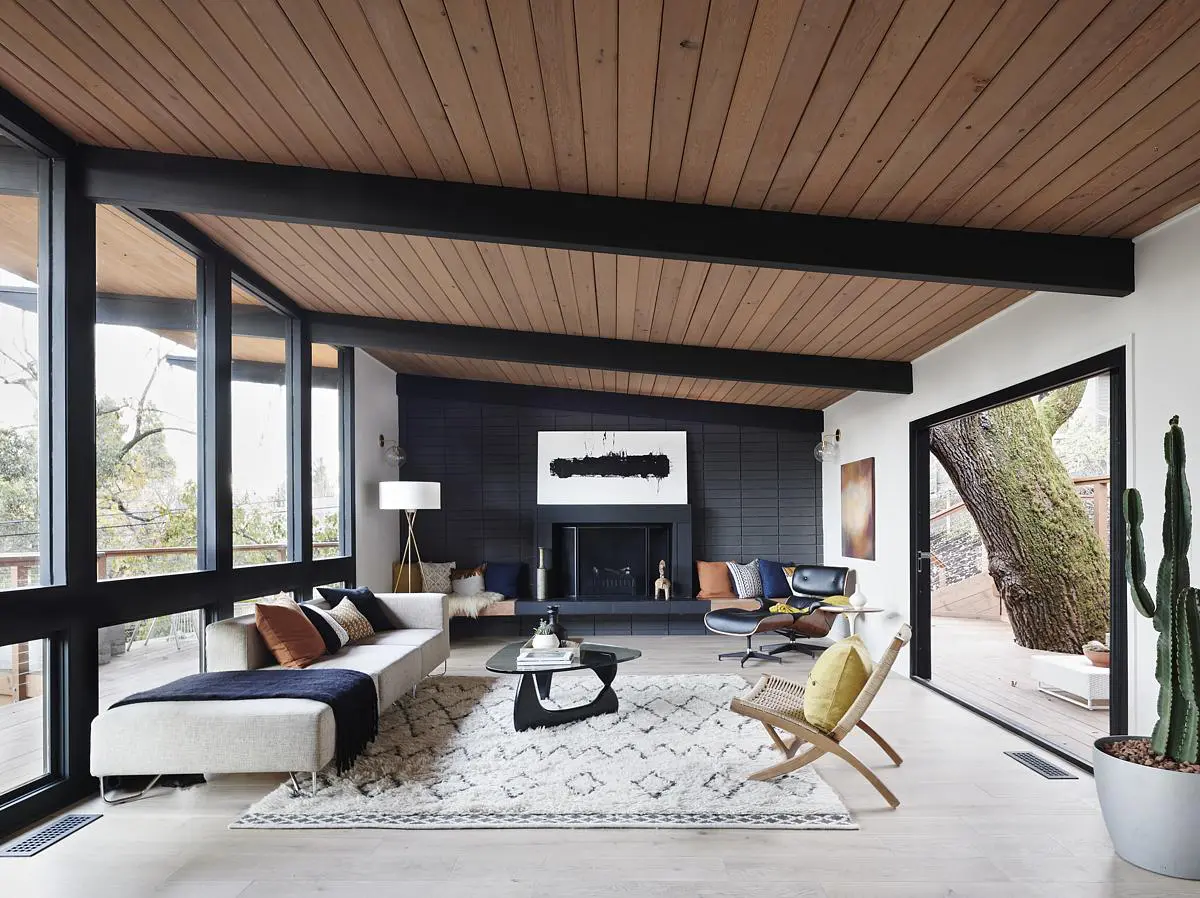
At the center of the house, the main living space acts as a point of continuity. It is where movement slows and views extend outward. The garden becomes part of this space, framed through openings that bring in light and shift throughout the day. Rather than a single gesture, this relationship unfolds gradually, room by room.
Material plays a key role in holding the house together. Timber lines the ceilings and extends across key areas, creating a sense of rhythm. Its presence is consistent but not dominant, working alongside stone and glass to define the interior. These elements are left visible, allowing their texture and tone to shape the atmosphere of the house.
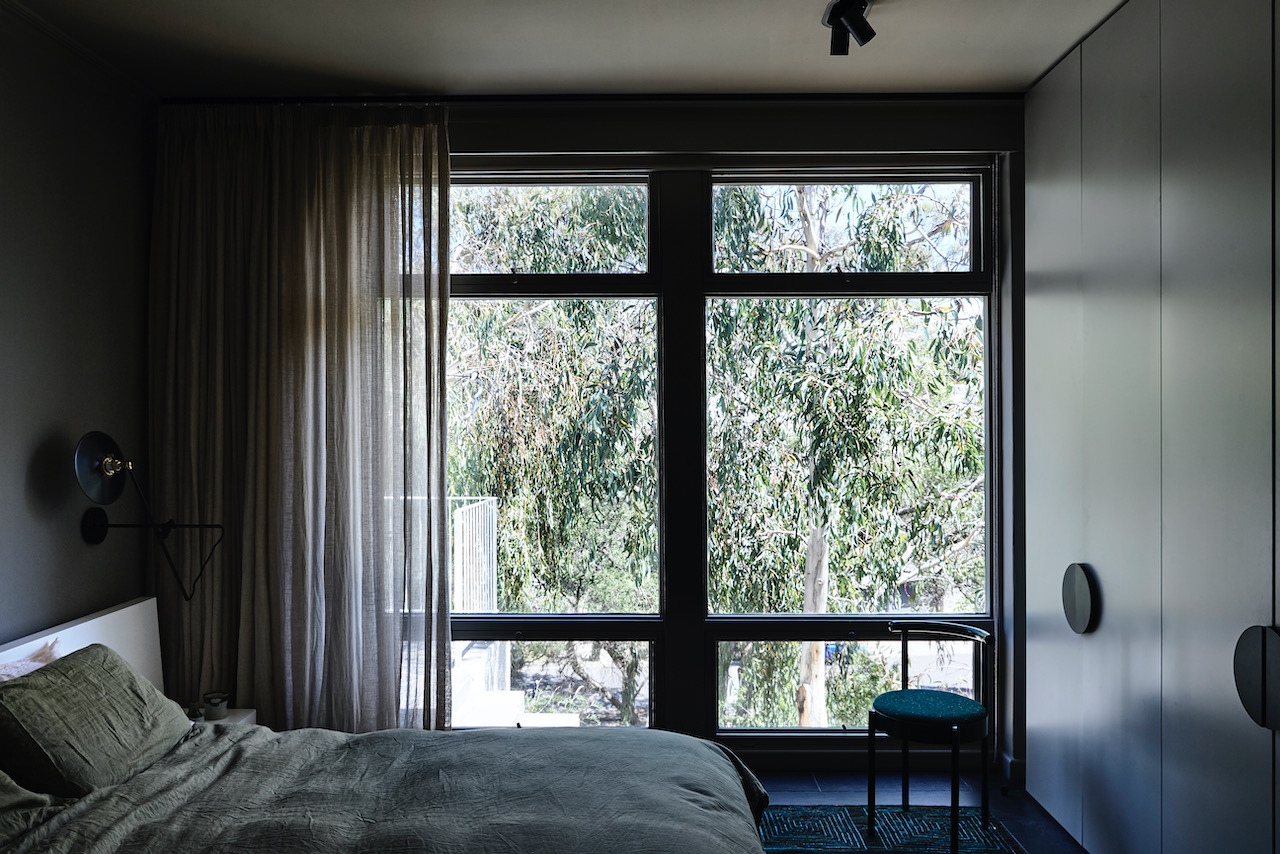
The connection to the outside is carefully controlled. Openings are placed to frame specific views, while transitions between interior and garden remain direct. There is no sharp threshold. Instead, movement flows between spaces, with the exterior always within reach. This approach reflects a clear reading of mid-century ideas, where the house sits within its landscape rather than apart from it.
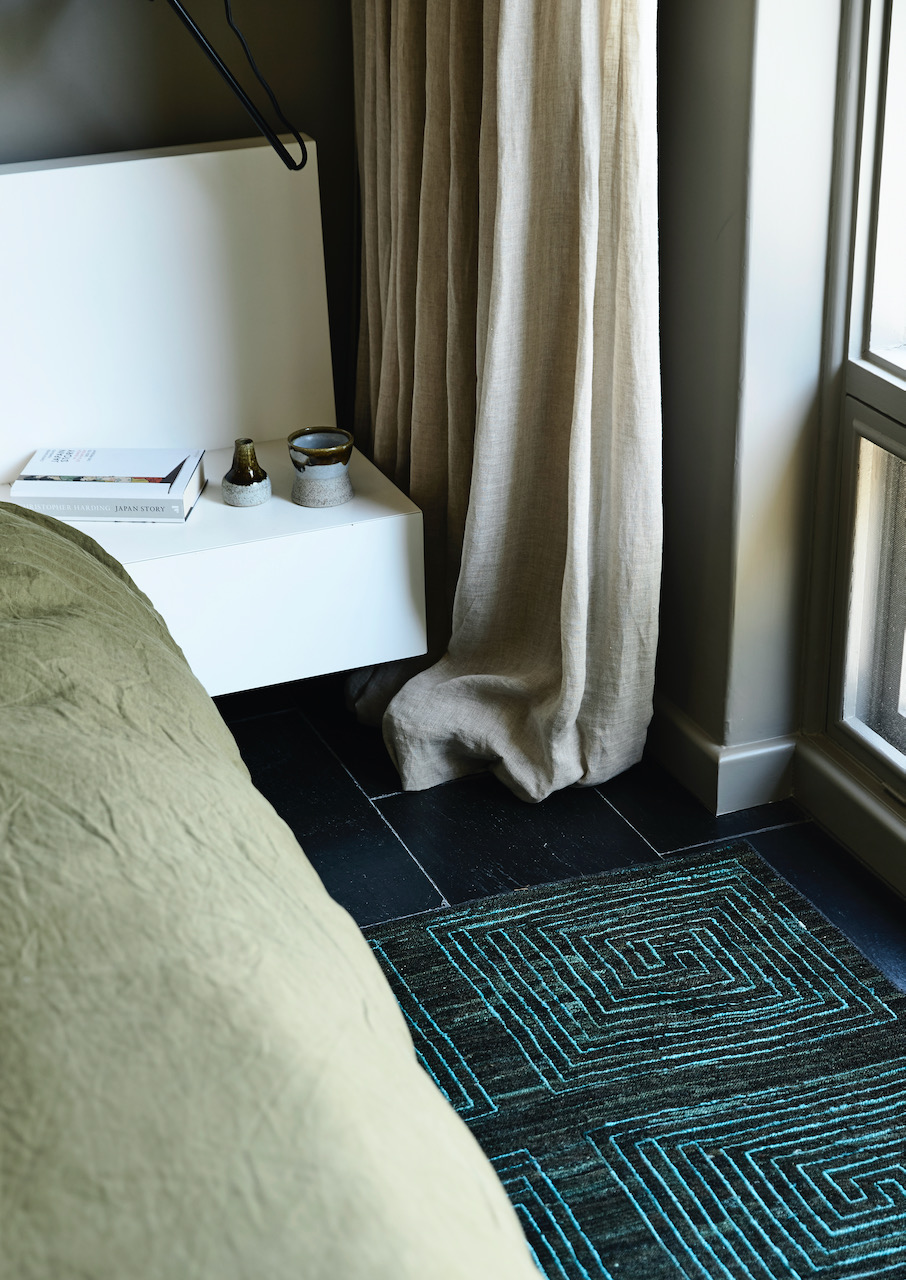
Light reinforces this relationship. It enters from multiple sides, moving across surfaces and marking the passage of time. In the living areas, it brings depth and variation. In more private rooms, it is softer and more contained. This variation gives each space its own character while maintaining an overall sense of cohesion.
The house avoids strong contrasts or formal statements. Its strength lies in consistency. Proportion, material, and light are used with control, allowing the spaces to feel resolved without excess. The result is a home that supports everyday use, where rooms can adapt over time without losing clarity.
In this way, the project shows how modernist principles can be carried forward. It does not rely on reference or style, but on how the house is used and experienced. The architecture remains quiet, but precise, creating a framework for living that feels both current and familiar.